A court mistook a private decision for a public victory
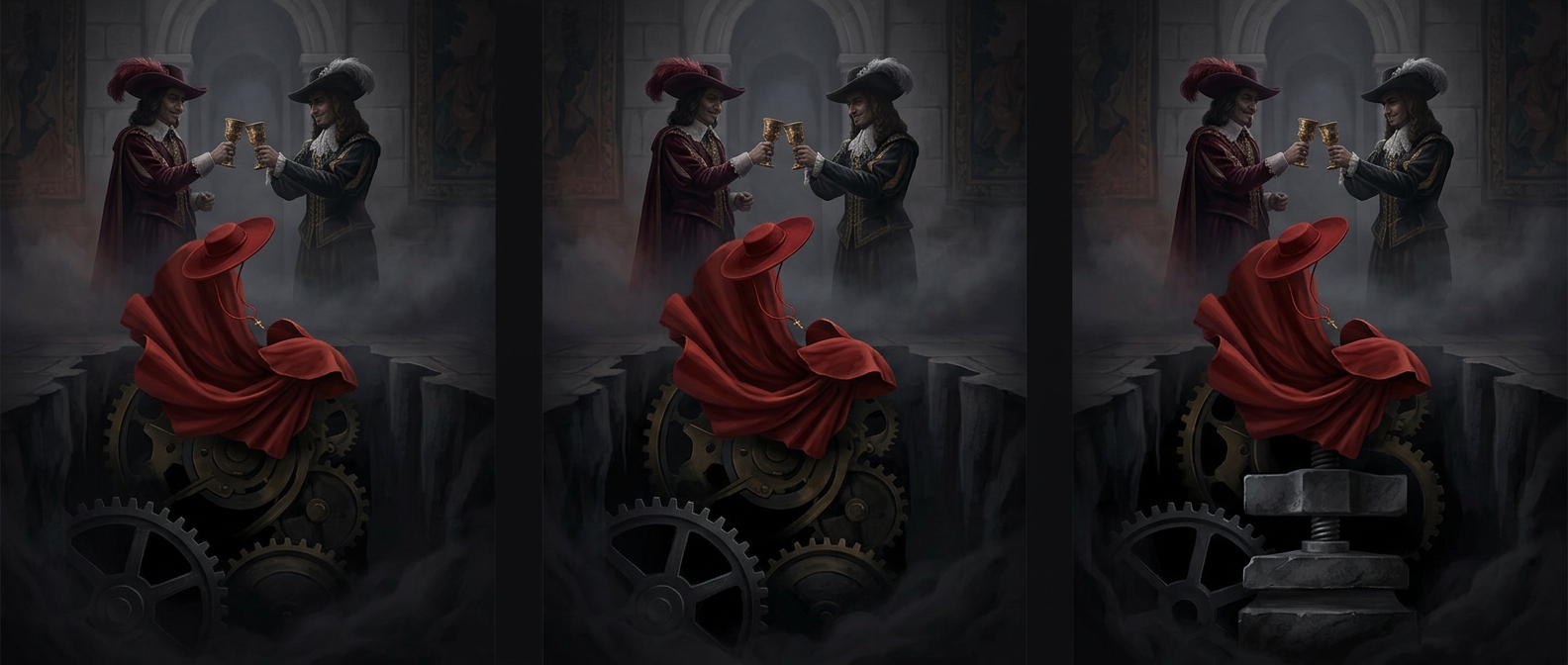
The “Day of the Dupes” was not a battle but a sudden reversal at the French royal court in November 1630. “Dupes” means people who have been fooled. Richelieu’s opponents, led by the king’s mother, Marie de’ Medici, believed they had persuaded Louis XIII to dismiss his powerful chief minister. They celebrated before the decision was secure.
Marie had helped bring Richelieu into government, but she later came to oppose his policies and influence. Their conflict involved more than personal rivalry: Richelieu was pursuing a forceful foreign policy that included resisting Habsburg power, while Marie favored a less confrontational course. The dispute also raised a question at the heart of court politics: who would shape the king’s decisions?
Louis’s choice changed the balance of power
The apparent dismissal did not hold. The next day, Louis reaffirmed his support for Richelieu. That choice mattered because the minister’s authority depended on the king’s backing; without it, his enemies could plausibly expect his removal. With it, their celebration became evidence that they had misread the king—and that opposing Richelieu could carry serious consequences.
The reversal weakened Marie’s position and strengthened the minister’s. Some of Richelieu’s opponents fled, while others faced the prospect of arrest. Marie herself was eventually forced from court and spent the rest of her life away from France.
Why the episode endured
The episode became memorable because it compressed a larger change into a single courtly miscalculation. Richelieu’s opponents thought they had won by influencing the king. Instead, Louis’s decision showed that the king would use his authority to keep the minister whose policies he had chosen to support. Their mistake was treating a moment of apparent agreement as a settled royal decision.