A low-friction way to change course
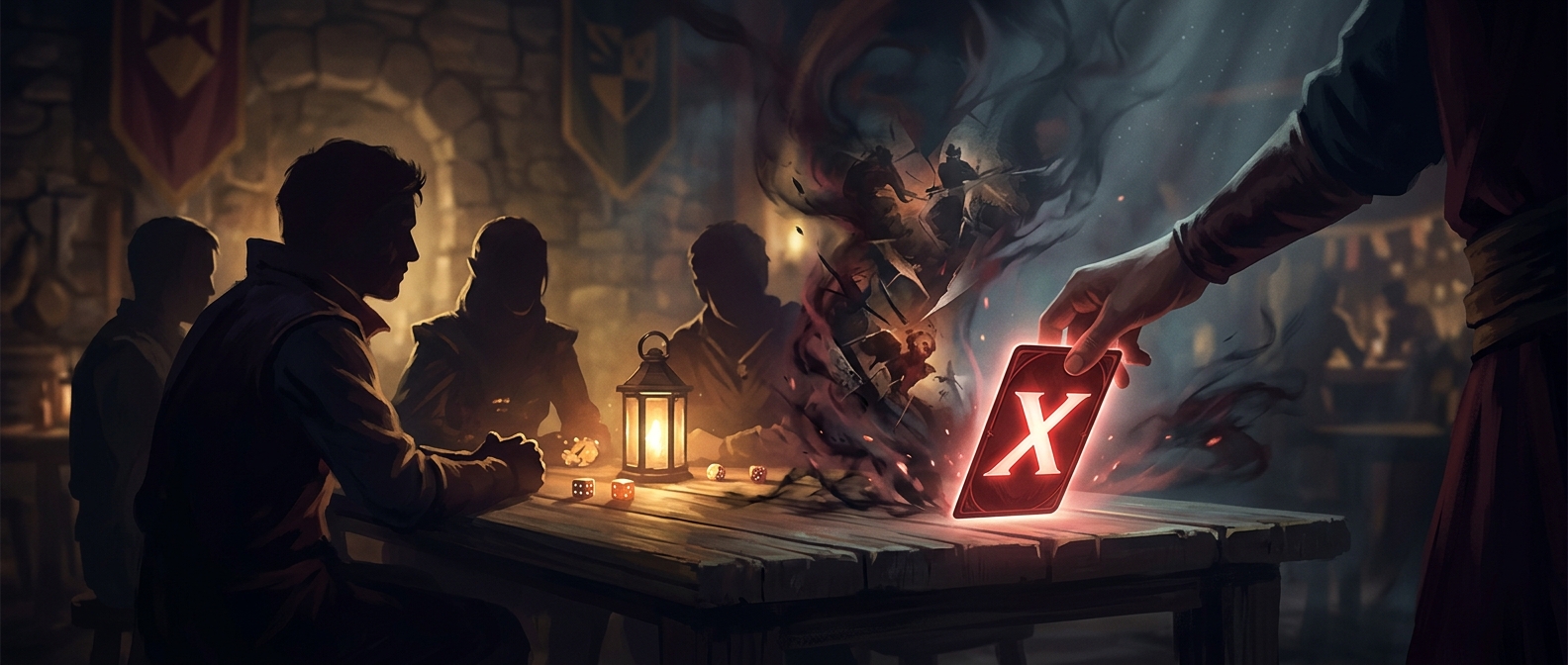
In a tabletop role-playing game, the group builds a story together: the game master describes a situation, and players respond as their characters. Because scenes can develop spontaneously, a moment that seemed fine in preparation may land differently once it is acted out. The X-Card gives anyone at the table a simple way to interrupt that momentum.
Its value is partly in what it does not require. A player can signal discomfort without naming a personal experience, defending a boundary, or persuading the group that the concern is serious enough. The table treats the signal as a request to adjust, not an invitation to investigate.
Editing the scene, not the player
The adjustment can be small: skip a detail, move past the moment, or change what happens next. The group can then return to the game without making the person who raised the concern responsible for rewriting the whole story. That keeps the focus on a shared creative choice—what belongs in this scene—rather than on why someone reacted to it.
The card works best as a known part of play, not a surprise procedure introduced only after a problem arises. When everyone understands that it can be used and that explanations are optional, players have a clearer route to intervene before an uncomfortable scene grows more intense. The important design choice is that changing course does not depend on winning an argument.