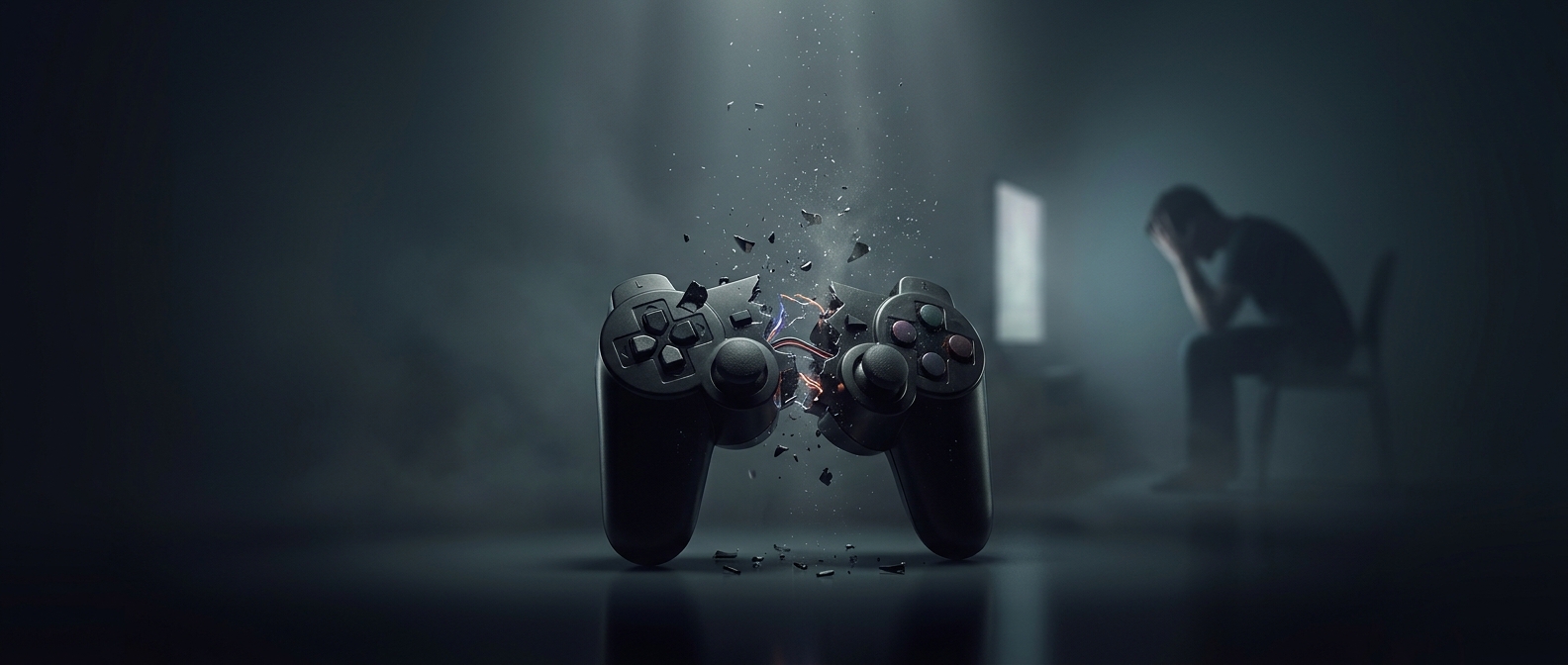
Why a small loss can feel enormous
A defeat is not always experienced as just one point on a scoreboard. A player may have spent several minutes building toward a win, concentrating intensely, or trying to recover from earlier mistakes. When the match ends suddenly, that investment has nowhere to go. The setback can feel less like a minor result and more like the collapse of an effort that was still underway.
Frustration looks for something it can reach
Games often put the player in a loop of action and feedback: press a button, see a result, adjust, try again. That sense of agency makes play engaging, but it can also sharpen irritation when an outcome feels unfair, uncontrollable, or just out of reach. In a heated moment, the controller is physically close and easy to grab. Throwing it can become an immediate outlet for anger, even though the device did not cause the loss.
That reaction is not inevitable, and it does not require a player to be generally violent. Fatigue, stress, repeated frustration, or a particularly important match can make it harder to pause before acting. A brief break can interrupt the sequence between anger and the next physical impulse.
The cost arrives after the match
A controller is built to register precise inputs, not to absorb impacts. A hard landing can crack its case, damage buttons or triggers, or loosen internal parts—turning a fleeting outburst into a repair or replacement. The wall may fare no better. The mismatch is part of why the moment is memorable: the game ends, but the damage remains.