How a Lucky Landing Becomes Leverage
In Monopoly, property is more than a space to collect: owning every property in a color group lets a player build houses and, eventually, a hotel. That changes the rent dramatically. A single purchase may earn little, but a complete group turns each later landing into a much more expensive bill.
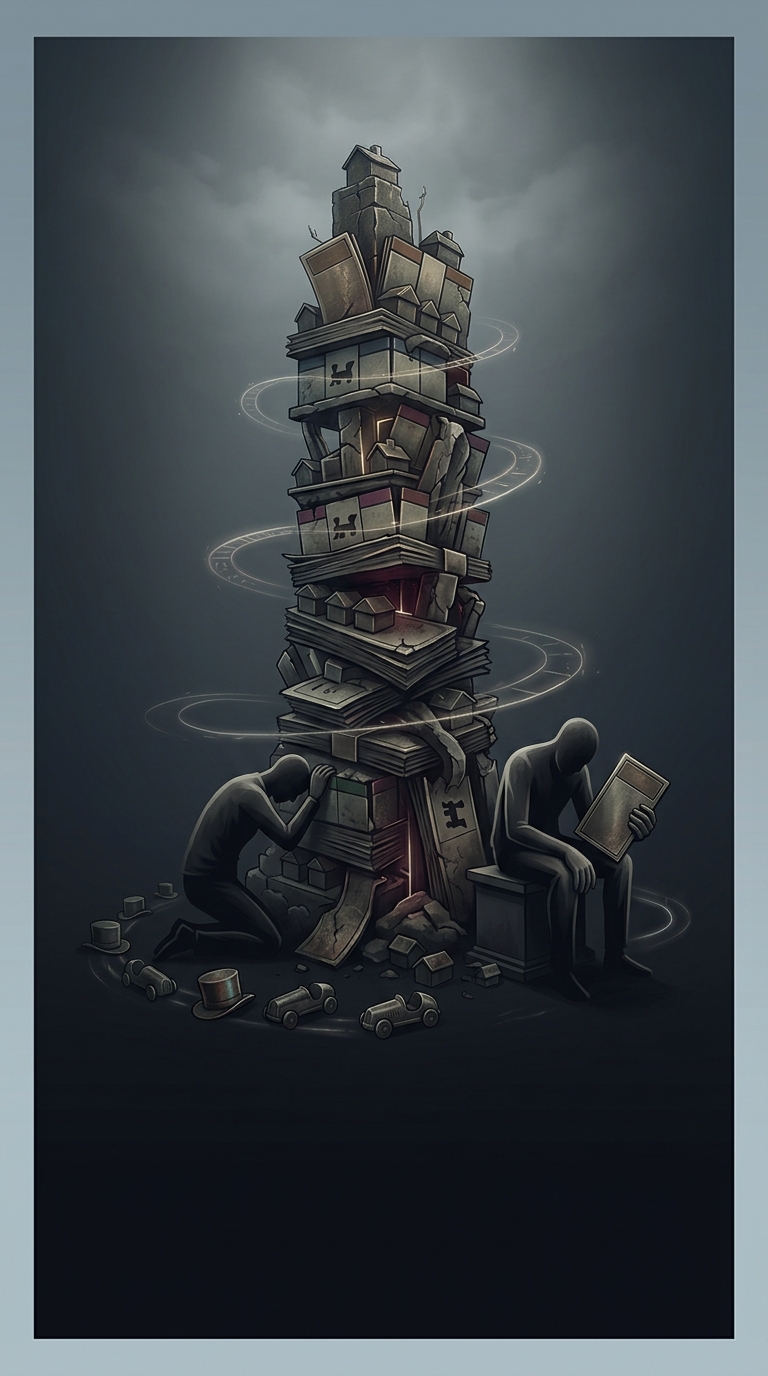
The pressure comes from the game’s loop. Players move by dice roll, so they cannot simply avoid an opponent’s developed properties. Rent drains their cash; selling buildings or mortgaging property can buy time, but it also weakens their position. One player’s growing portfolio therefore becomes another player’s shrinking set of options.
Why the Table Gets Tense
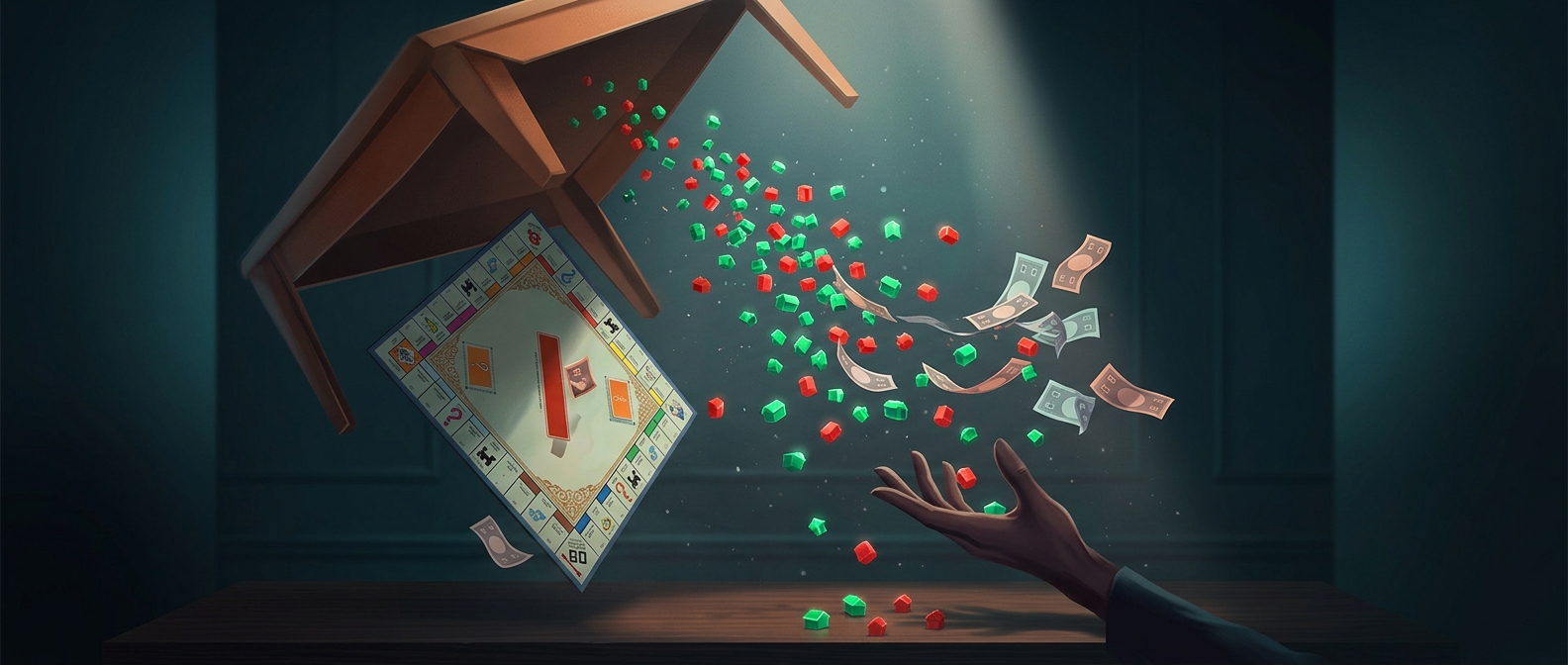
The game makes financial power visible. Deeds mark ownership, buildings show how much a property has been developed, and cash changes hands immediately. A trade that once seemed harmless can help someone complete a color group, while refusing to trade may leave both players waiting for a lucky roll. Those choices can feel personal even though they arise from the rules.
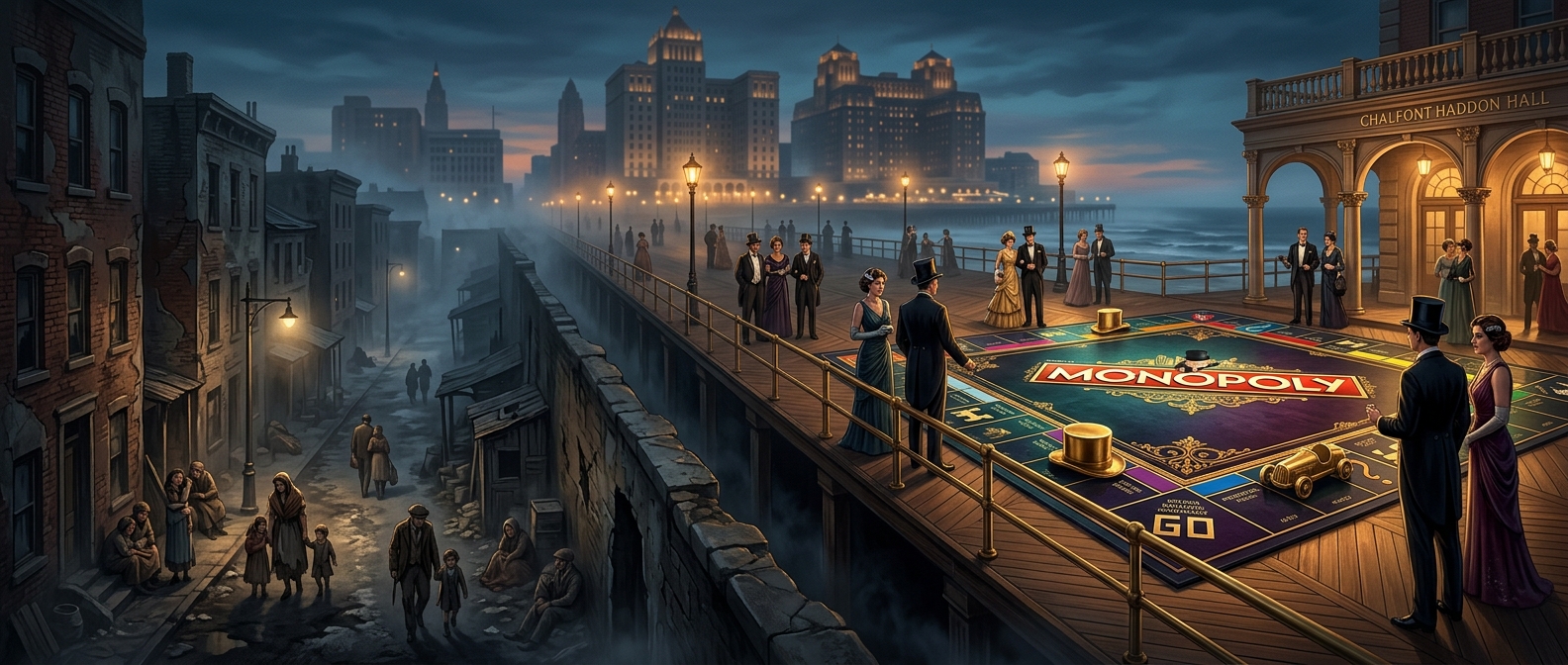
Monopoly also gives players uneven fortunes: early purchases and favorable rolls can create an advantage that compounds. As one player collects more rent, others have less money to buy property or recover from a bad landing. The result is a familiar social mismatch: everyone is still playing together, but some players are making plans while others are trying to stay solvent.
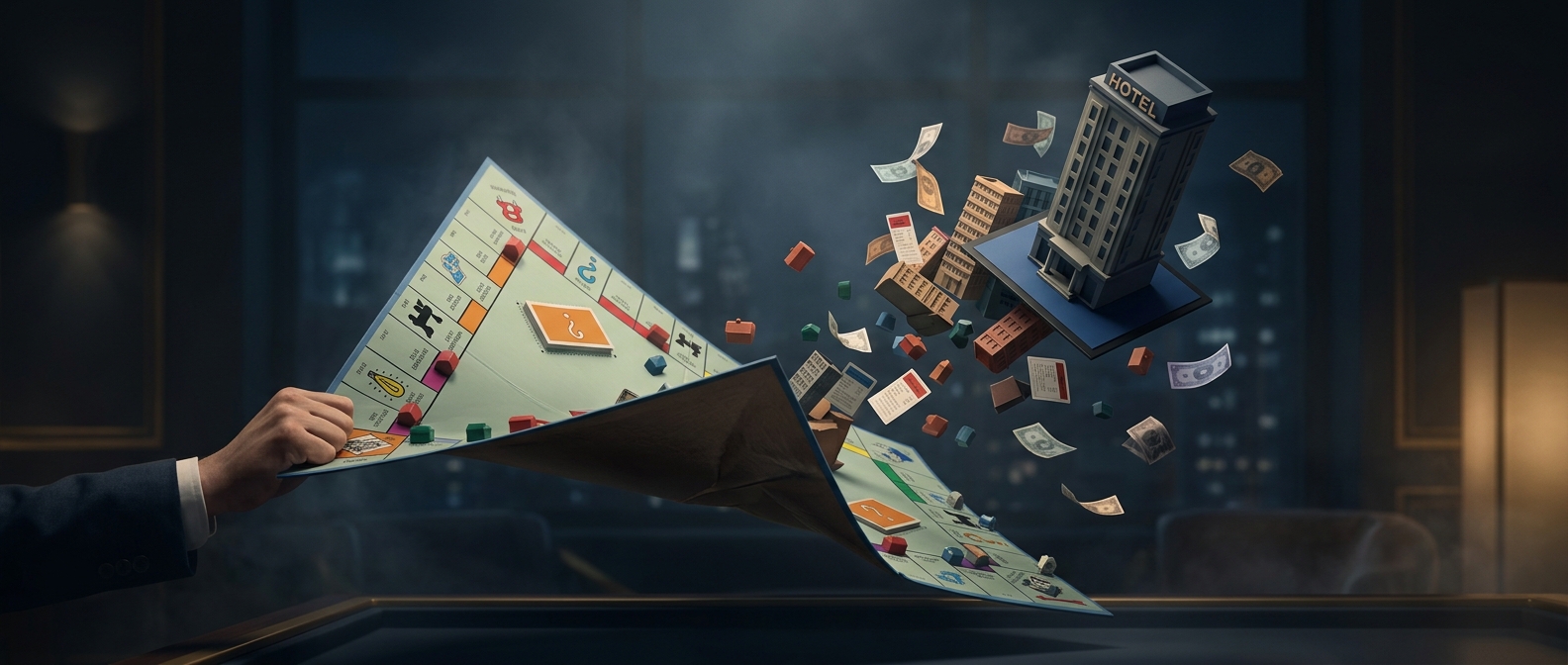
That is why a tiny plastic hotel can change the mood of a room. It is not just decoration; it is a visible warning that the next roll may cost someone a turn, a trade, or the game.