Why a Monopoly Game Can Keep Going
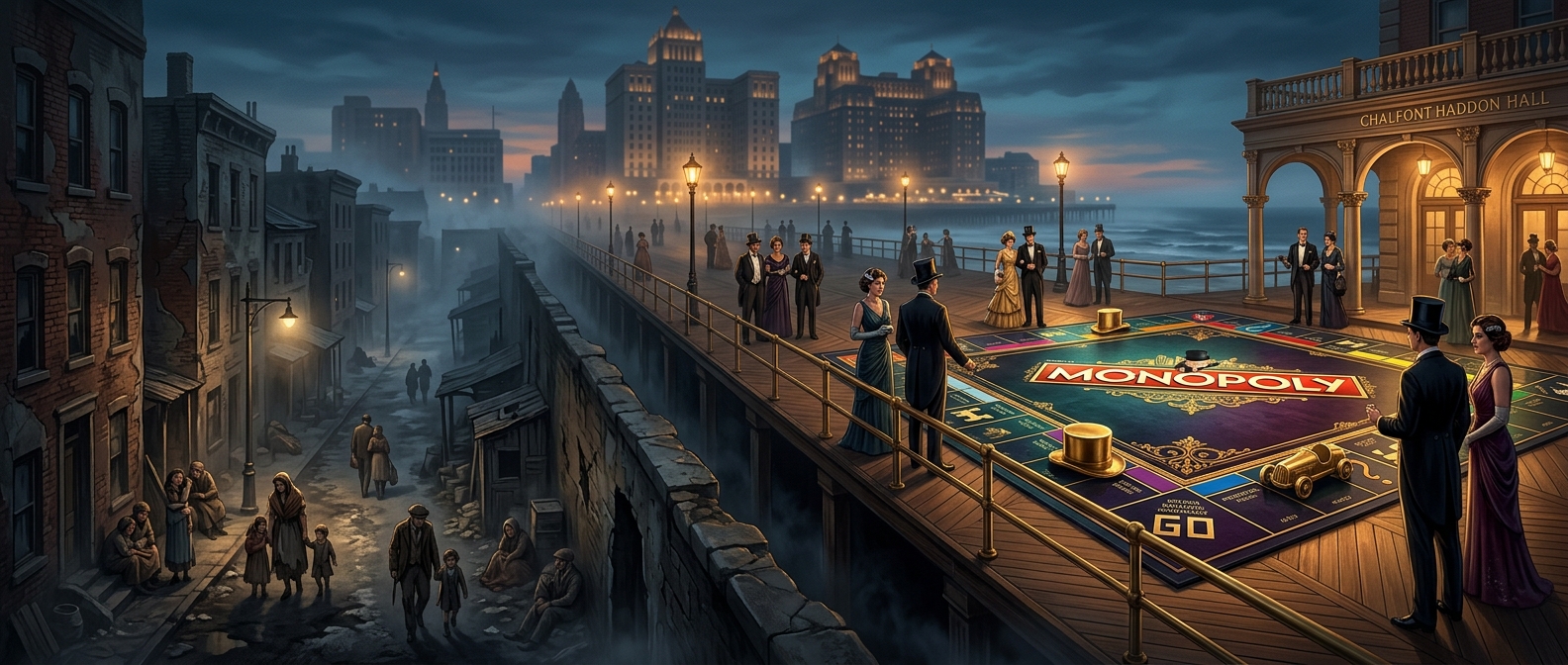
Monopoly has no built-in timer. In the standard game, play ends when every player but one has gone bankrupt. Until that happens, players can keep moving around the board, collecting rent, buying property and making deals. The rules provide a route to an ending, but no deadline for reaching it.
That leaves room for a long stretch of survival. A player who avoids bankruptcy can remain in the game even while fortunes shift, and trades can move properties between players without eliminating anyone. The central drama is not simply who owns the most at a given moment; it is whether anyone runs out of money and is forced out.
What a 70-Day Record Implies
Parker Brothers has cited a 70-day continuous game as the longest recorded. The striking part is the gap between Monopoly’s simple turn structure and its open-ended finish: rolling dice takes seconds, but a game can continue as long as players keep finding a way to stay solvent.
“Continuous” describes the record’s span, not necessarily how participants spent every hour of it. The essential point is that the game remained in progress rather than reaching its normal end. With no clock to force a decision, the board can keep circulating players past the same properties and rent payments day after day—until bankruptcy finally settles the matter.