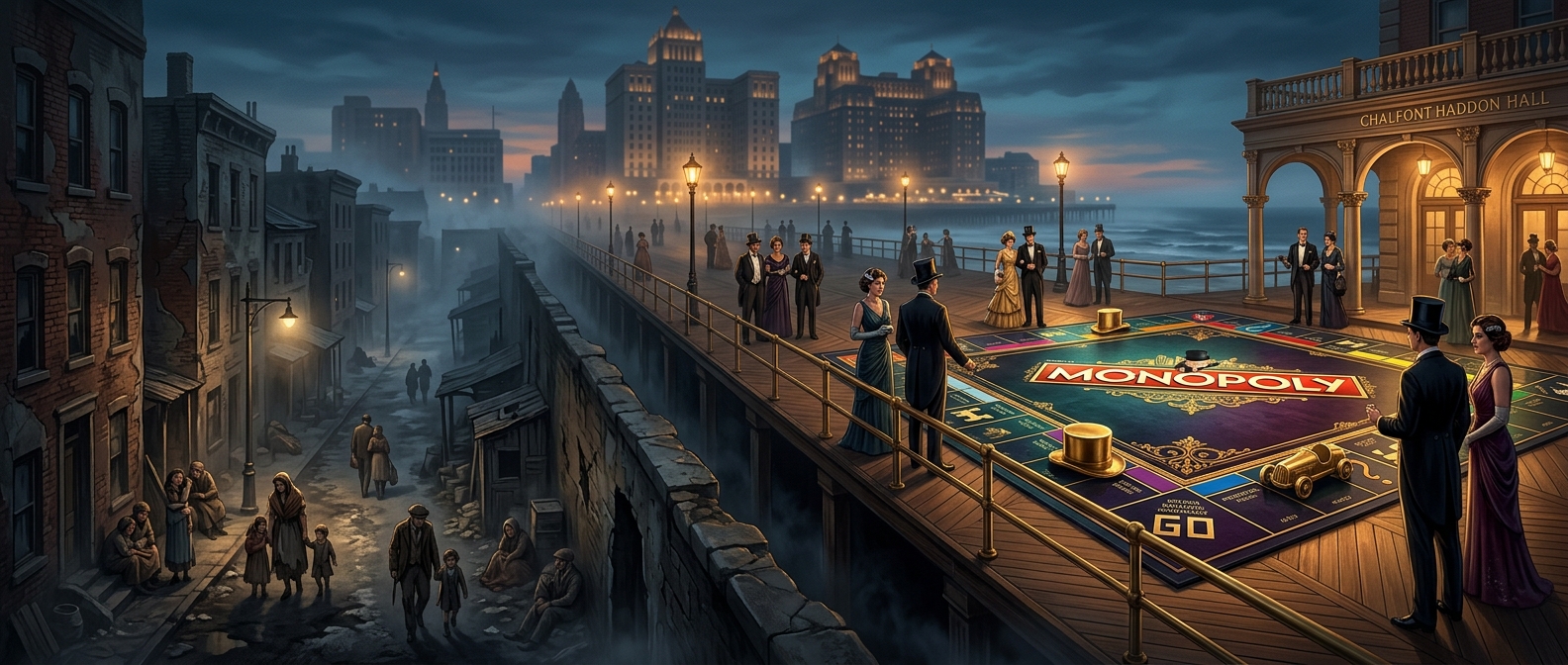
How Atlantic City’s racial divide became a property ladder
Monopoly turns a city into a simple economic map: buy a property, collect rent, and charge more as the properties become more valuable. Its Atlantic City street names came from a city where Black residents faced housing discrimination and were concentrated in neighborhoods with fewer resources. That divide shaped which parts of the city were regarded as valuable—and which were not.
The inexpensive Mediterranean and Baltic avenues sit at the bottom of the board’s property ladder. The costly Boardwalk and Park Place sit at the top. The gap echoes an urban pattern in which racial segregation and unequal investment helped depress property values in minority-populated neighborhoods while wealth and prestige clustered elsewhere.
A game mechanic with a real-world shadow
The board does not reproduce a real estate appraisal. Its prices are also game rules: low-cost properties are easier to buy early, while expensive ones promise larger rents but require more money. Still, using actual street names gives that abstract ladder a local reference. The game’s progression from cheap avenues to luxury addresses can make a city’s racialized geography feel like a natural ranking of worth.
That is the uneasy detail: Monopoly makes the divide playable. A player may see only a bargain at the start of a game, but the board’s cheap-to-expensive sequence reflects a city shaped by unequal access to housing, investment, and opportunity.