The toy was a set of parts, not a figure
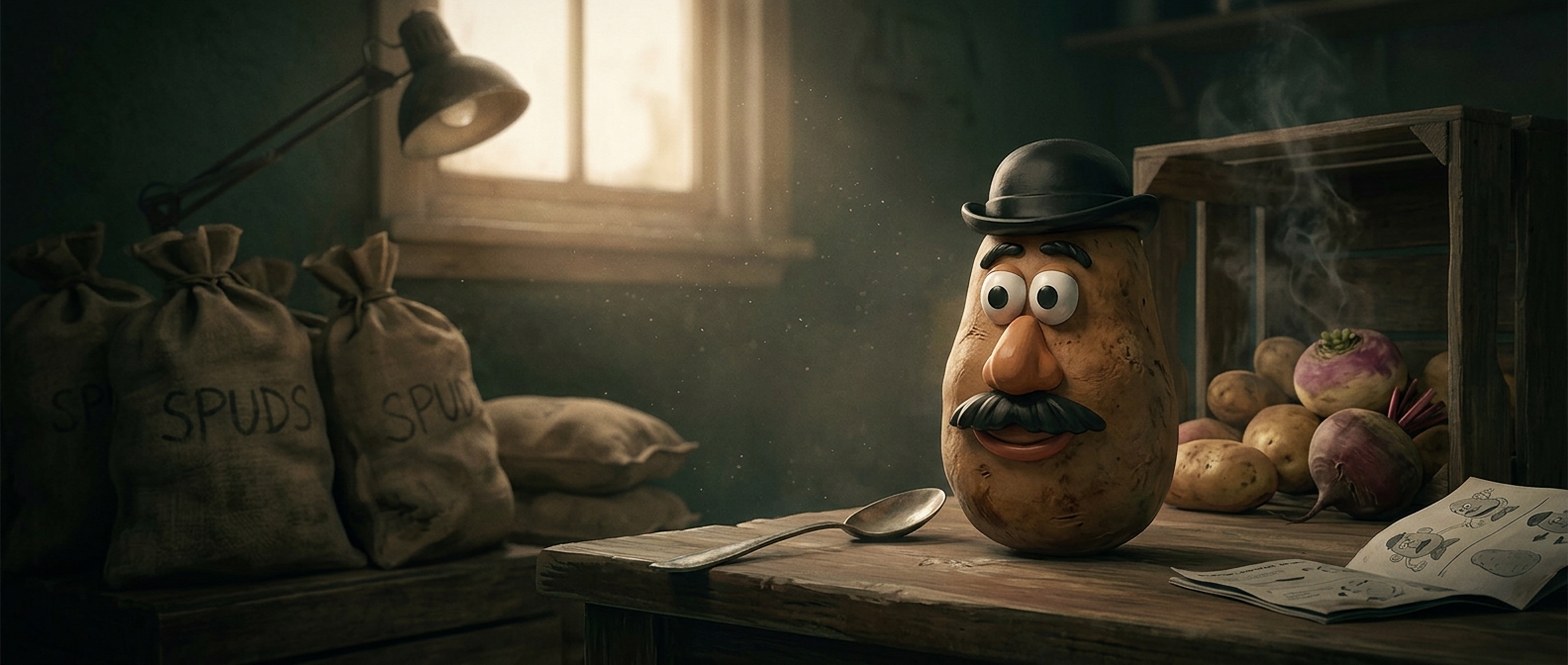
When Mr. Potato Head first went on sale, the box supplied the plastic features—such as eyes, a nose, and a mouth—but not the potato-shaped body. A child had to find a real potato or another perishable root vegetable and push the pieces into it. The familiar character was assembled at home from toy parts and groceries.
That arrangement made the vegetable more than a prop: it was the body that held the face together. The features could be pulled out and rearranged, turning one potato into a succession of expressions or characters. Once the vegetable was no longer usable, the plastic pieces could be saved for another one.
A playful idea with a practical catch
The kit’s low-tech design also came with a household requirement. Families needed a suitable vegetable, and the finished creation was temporary: unlike a molded plastic toy, its base could spoil. The toy’s lasting component was the collection of reusable features, while the body came from the kitchen.
That contrast helps explain why the original kit could feel so different from the toy people recognize today. The character was not a ready-made figure waiting in the box; children made one by borrowing a perishable object and giving it a face. A potato salad could eventually reclaim the star of the play session.