How the Trampoline Changes the Rally
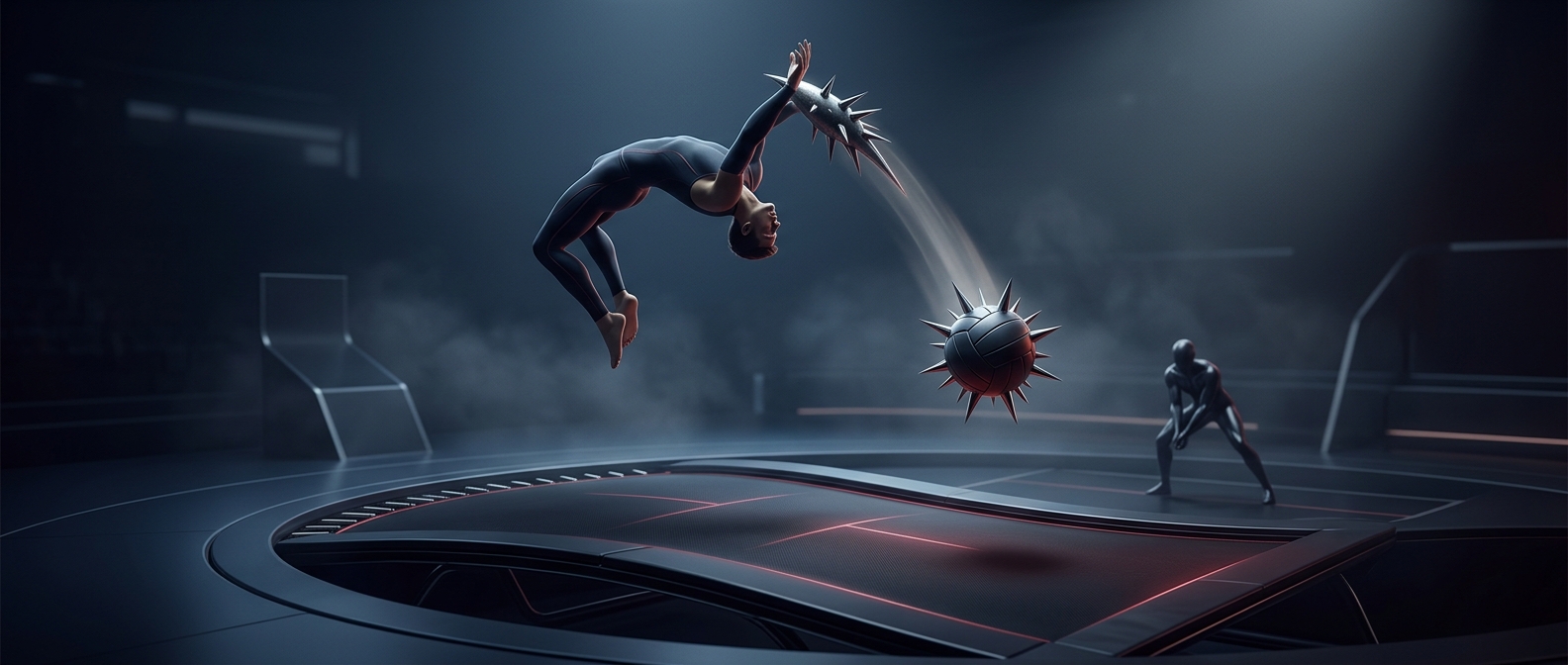
In bossaball, the trampoline is not just a prop for spectacular jumps: it changes where players can reach and how an attack is made. A player can use the bounce to rise above the net and hit the ball sharply downward, while teammates try to keep the rally alive and send it back across. The inflatable court cushions landings and keeps the playing surface springy.
That extra lift makes timing central. Players have to read the ball while moving on a surface that gives beneath their feet, then coordinate a jump, a hit and a safe landing. A higher contact point can make a return harder to defend, but going for an aerial attack also leaves less time to recover if the ball comes back quickly.
More Than a Volleyball Spike
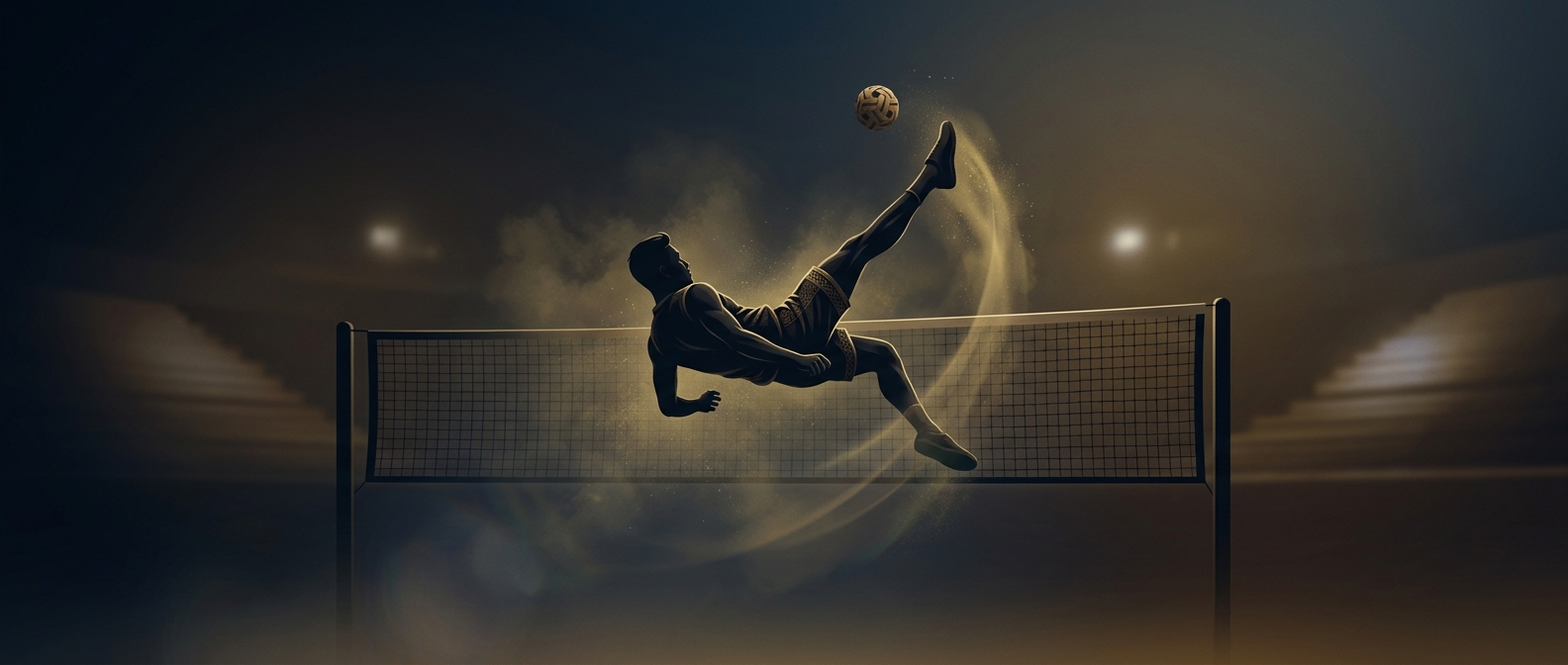
The ball can be played with different parts of the body, so rallies need not follow the hand-passing pattern familiar from standard volleyball. Feet and head can be part of a play, bringing soccer-style control into the exchange; the trampoline adds the aerial movement associated with gymnastics. These elements change the available ways to keep the ball moving, not just the look of the game.
The result is a sport in which the court itself shapes strategy. Players must manage both the ball’s flight and their own momentum: the same bounce that helps someone reach a difficult shot can carry them out of position for the next one. A rally is therefore a contest of placement and teamwork as much as height and acrobatics.