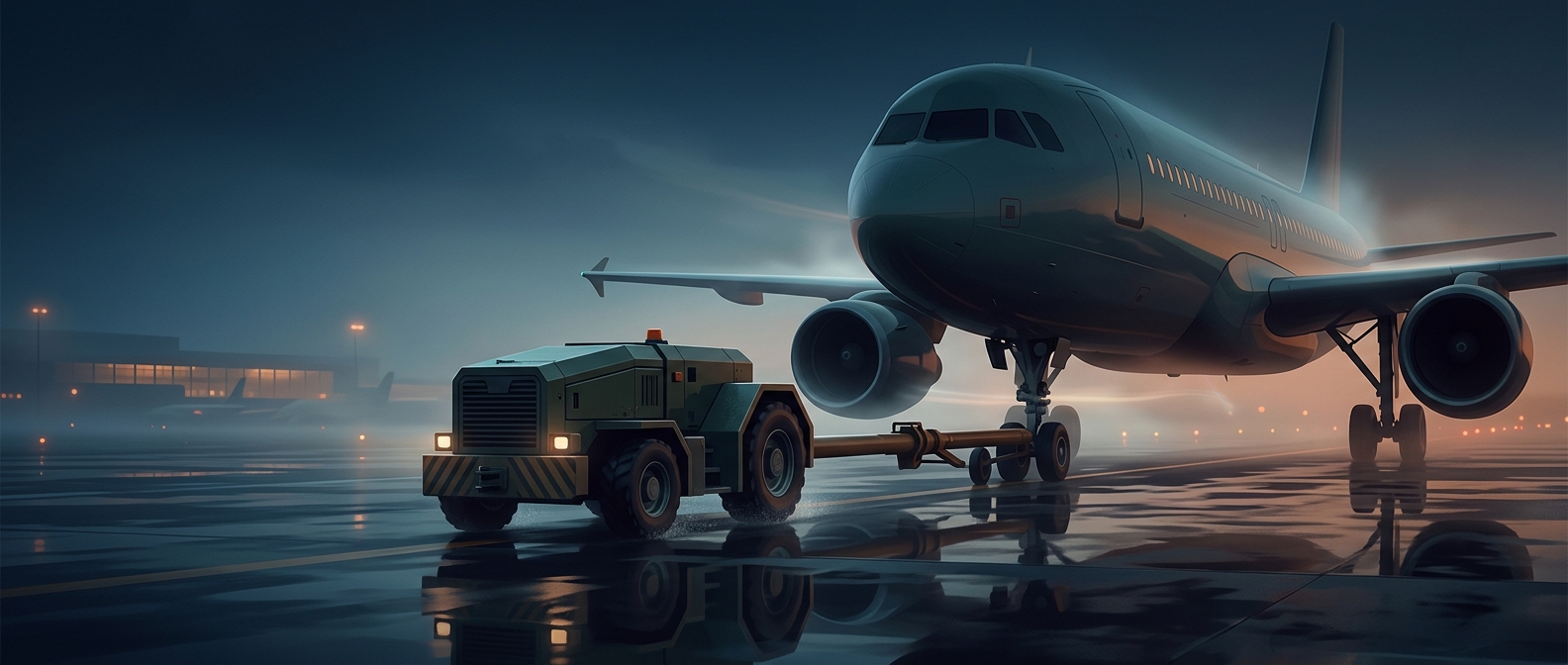
How a tug moves an aircraft without its engines
On a normal taxi, the aircraft’s engines push it forward, while the nose wheel steers it along the ground. A powered tug takes over the pushing: it connects to the aircraft’s nose landing gear and supplies the force needed to roll the plane away from the gate.
The connection has to hold the nose wheel securely without interfering with its steering or damaging the gear. The tug operator and flight crew coordinate the movement, because the aircraft is still a large vehicle whose path and braking must be managed carefully. The tug is not lifting the plane; it is overcoming the resistance of its tires on the pavement and controlling its slow movement.
Why shut the engines down?
Jet engines are built to propel an aircraft through the air, but they can also provide thrust while it taxis. Using them on the ground means burning fuel for a job a smaller vehicle can do. With the engines off during the tug-assisted portion, the aircraft avoids that taxiing fuel burn and the noise and exhaust produced by running them near the terminal.
The tug’s battery shifts some of the work to a ground vehicle that can be recharged between uses. It does not eliminate the need for the aircraft’s engines: once the plane reaches the point where it is ready to taxi under its own power, the crew starts them and the tug disconnects.
A handoff, not a replacement
This arrangement depends on the aircraft being within the tug’s operating limits and on the airport being able to coordinate the tow. The tug must move a very heavy aircraft at low speed, then get clear so the plane can proceed safely. The practical change is small but visible: at the gate, the aircraft can begin its journey without first waking the engines that will carry it into the sky.