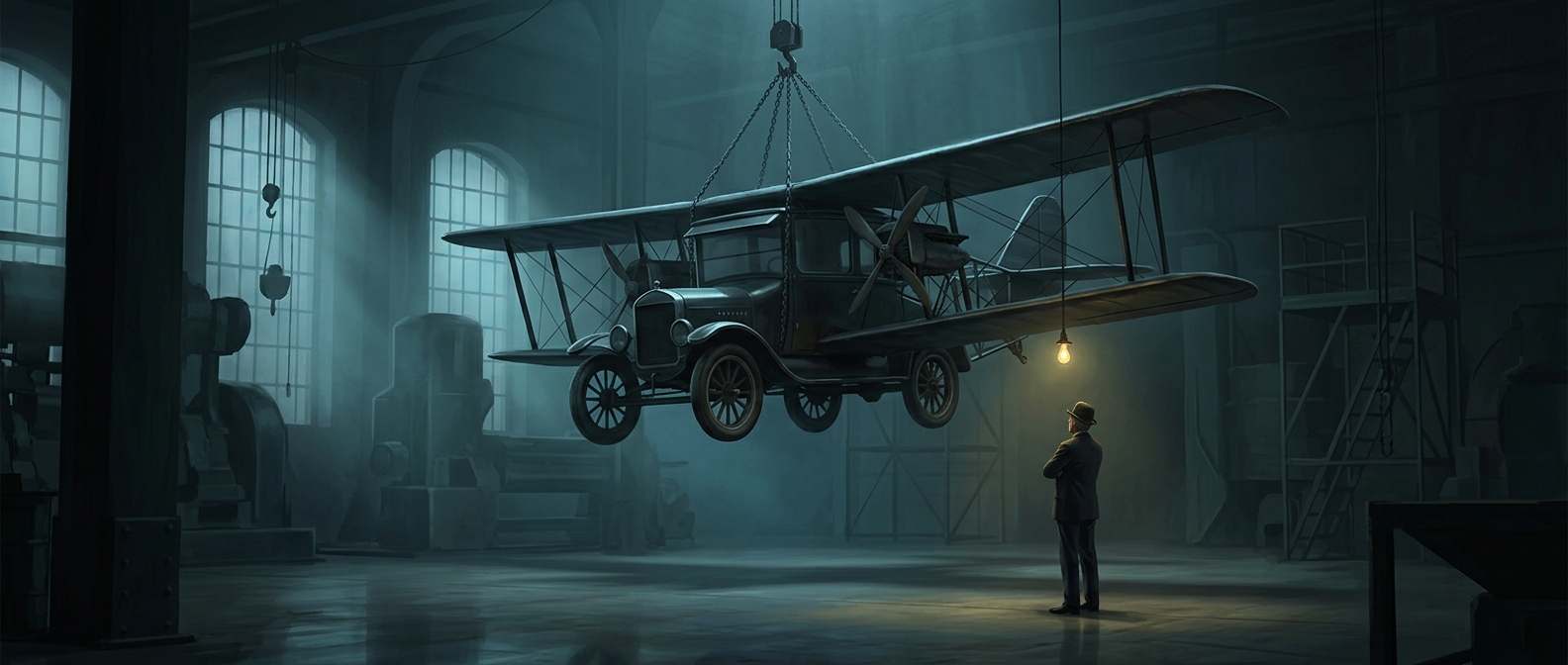
A Model T for the sky
In the 1920s, cars were becoming familiar personal machines, while airplanes still seemed like specialized equipment. Ford’s Flivver was an attempt to shrink that gap: make an airplane so compact and straightforward that one person could imagine owning and operating it much as they might a car.
The design traded room and capacity for lightness. It carried one person, and its small size made it seem less like a passenger aircraft and more like a personal vehicle for short trips. But being small did not make flying as simple as driving. A pilot still had to manage takeoff, landing, weather, and flight controls—skills that a road vehicle does not require.
Why the idea stayed in the air
The Flivver was an airplane, not a car with wings. Its compact form could suggest easy storage, but it could not simply leave a road and take off: it needed the space and conditions for an aircraft to fly. Turning the idea into a practical road-and-air vehicle would have meant solving a different set of engineering problems, including how to make wings and flight controls compatible with ordinary driving.
Ford’s experiment therefore exposed the gap between a memorable concept and an everyday transport system. A small plane could make personal flight look approachable, but it could not remove the training, operating demands, or infrastructure that separated flying from motoring. The Flivver’s lasting appeal lies in that tension: it made the airplane feel almost as personal as a car, without making the two interchangeable.