How a resting stick becomes a walking character
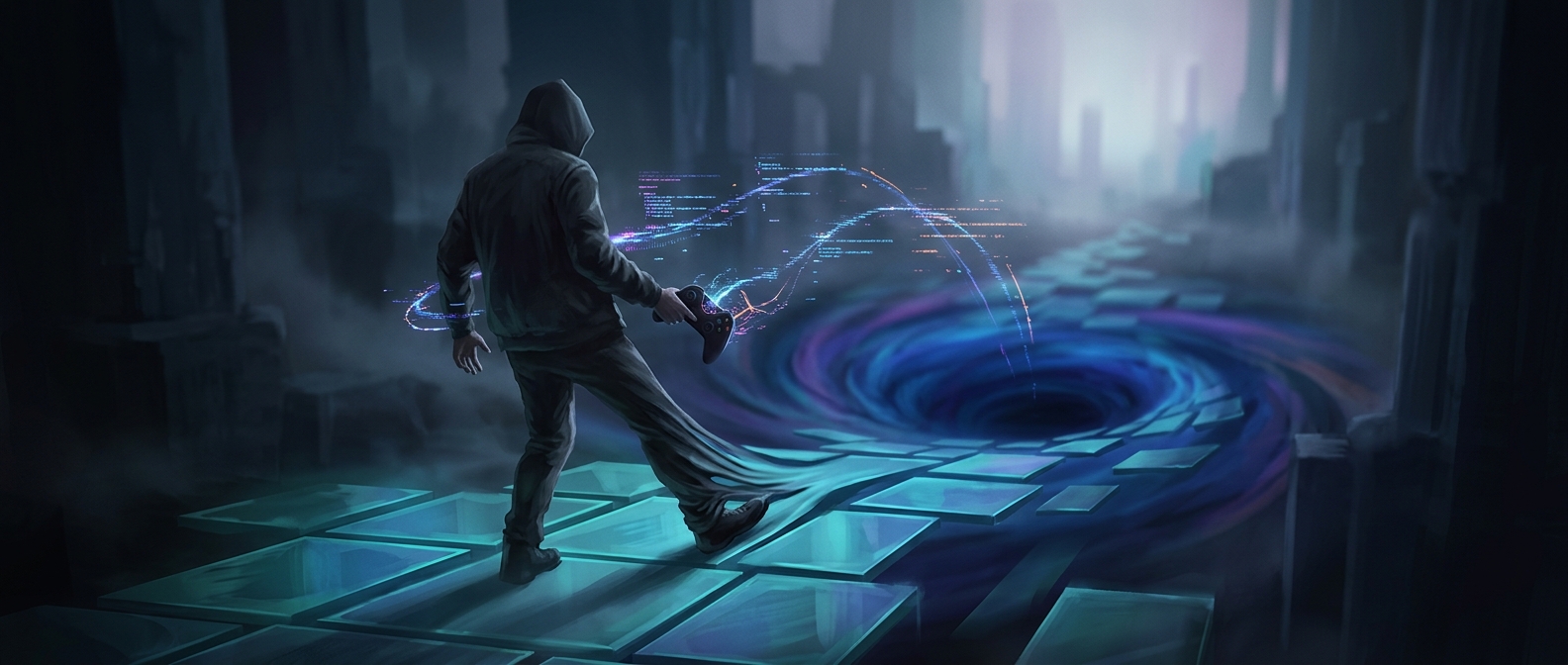
An analog stick does not simply tell a game “left” or “right.” It reports a position along two axes, and the game turns that position into movement. When the stick is centered, the controller is supposed to report a value near zero on both axes. If it reports even a small offset, the game may treat that as a command to move.
Many sticks use sensors that track the movement of internal parts. With use, those parts can wear; dust or other debris can also interfere with the reading. The result may be a drifting signal even though the stick looks centered. The character’s motion is the game faithfully following a signal the player did not intend to send.
Why a tiny error matters near a ledge
Games often ignore very small inputs using a dead zone: a range around the stick’s center that counts as neutral. A wider dead zone can hide mild drift, but it also means the player must push farther before movement begins. A narrow one makes controls more responsive, yet can let a small offset move a character continuously.
That tradeoff is easy to miss while running across open ground. At a cliff edge, though, even slow movement can carry a character past the point where the player can recover. Checking the game’s stick settings or controller calibration may help when the drift is slight; if the signal has become unstable from wear or damage, changing the dead zone can mask the symptom without fixing the controller.