Why Button-Mashing Can Work—Briefly
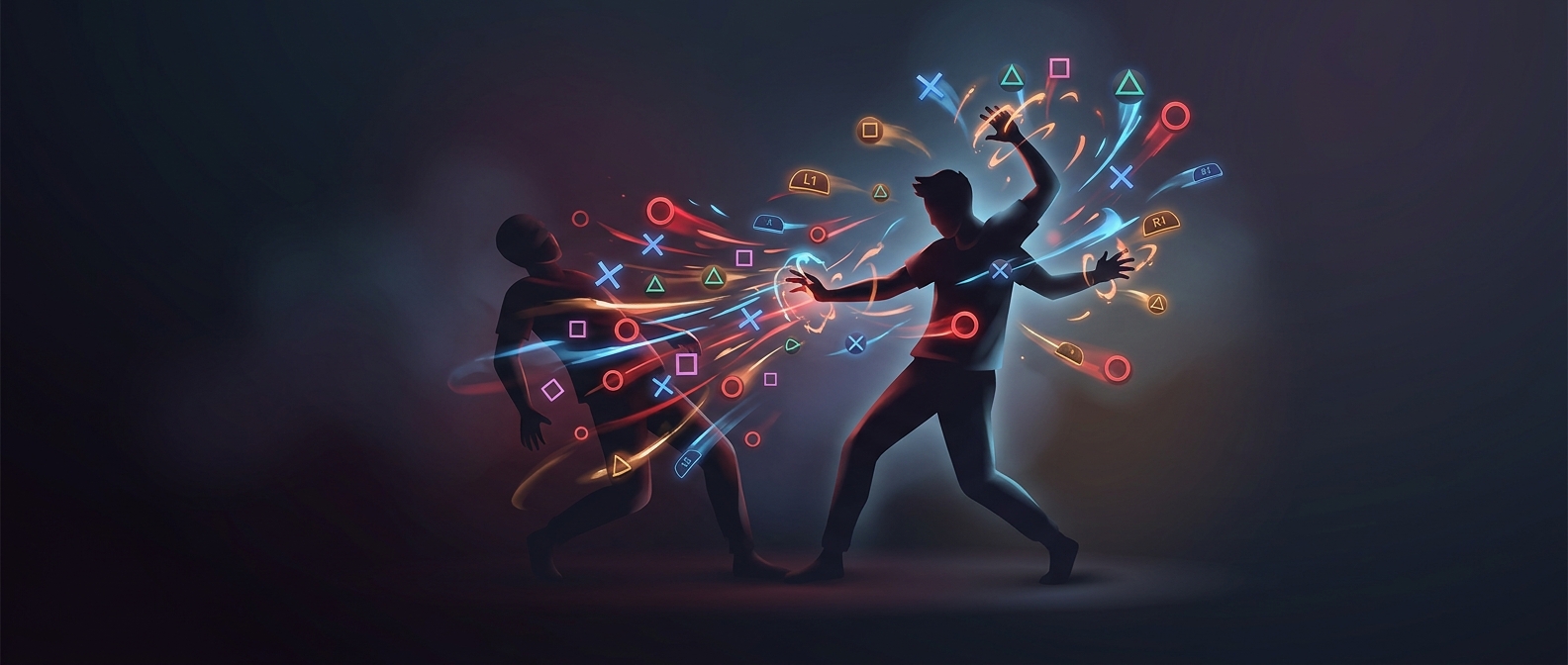
A fighting game does not know whether a move was chosen thoughtfully or by accident. It responds to the controller inputs it receives. If a player rapidly presses attack buttons, the game may produce a stream of punches, kicks, or other moves—and one can connect if the opponent is close, exposed, or in the middle of an attack.
That can make frantic input look surprisingly effective in a close match. The opponent may be trying to anticipate a familiar combo or wait for a deliberate opening; a messy sequence can disrupt that plan. Meanwhile, repeated attacks give a beginner more chances to stumble into a hit than a single, carefully timed move would.
The Game Still Keeps Score
A landed hit is not the same as a sound strategy. Fighting games often give attacks different ranges, speeds, and recovery times—the pause after a move when a character cannot immediately act again. A player who keeps attacking can leave openings that a calmer opponent can exploit. Random inputs may also fail to produce the move the player needs, especially when a special attack requires a particular sequence or direction.
The difference becomes clearer as opponents learn to block, move out of range, or punish predictable attacks. Strategy means choosing an action for the situation; button-mashing mostly trades control for a burst of attempts.
Pressure Makes the Shortcut Tempting
In a tense final exchange, remembering a tutorial and entering a precise sequence can feel harder than simply pressing buttons. That is a familiar cost of playing under pressure: the player falls back on the easiest action available. If the flurry happens to catch an opponent off guard, it can win the moment—not because randomness is secretly optimal, but because even an unplanned move can meet the right opening.