Why Venice kept Poveglia apart
Poveglia sits in the Venetian Lagoon, near a city that depended on boats to bring in people and goods. That closeness made it useful as a quarantine station: when ships arrived during outbreaks, authorities could keep passengers and crews on the island before allowing them into Venice. Quarantine—temporary separation to limit the spread of disease—turned a small patch of lagoon into part of the city’s defenses.
The arrangement made practical sense, but it also gave the island a lasting association with exclusion. People sent there were removed from ordinary city life, and the water around them became a boundary between the crowded streets and those judged a possible danger.
From quarantine ground to eerie landmark
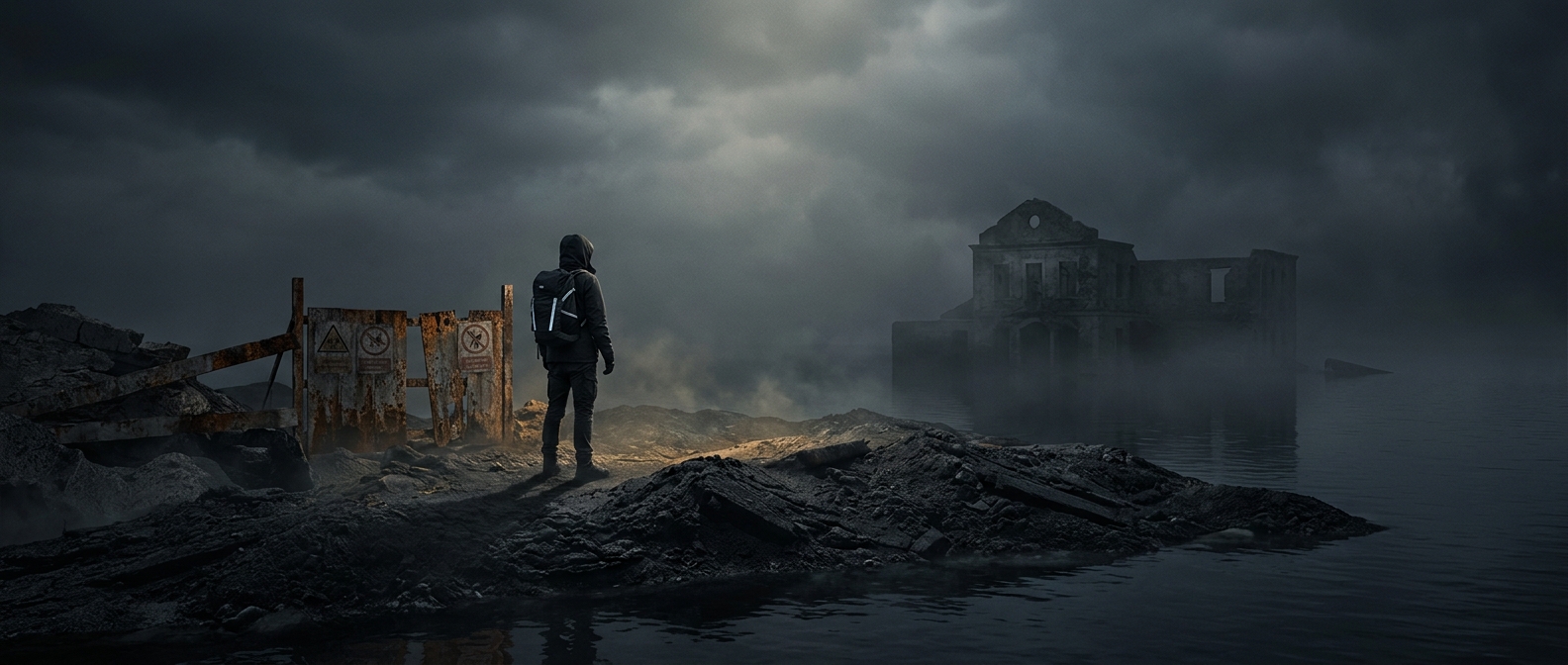
Poveglia’s role changed over time. It later housed a medical institution, extending its connection to confinement and care outside the city. When the buildings were eventually left empty, the setting did much of the work that a ghost story needs: isolated structures, an overgrown landscape, and a history tied to illness and separation.
That combination helps explain why stories about the island became so macabre. The legends do not need to be treated as evidence of supernatural events to understand their appeal. They amplify a real unease already built into the place: Poveglia was close enough to Venice to serve it, yet designated as somewhere people should be kept away from.
Its most unsettling feature is therefore also its original purpose. The island’s silence is not just a dramatic backdrop; it recalls how a busy city used the lagoon to draw a line between those allowed in and those held outside it.