A temporary art file became a character’s name
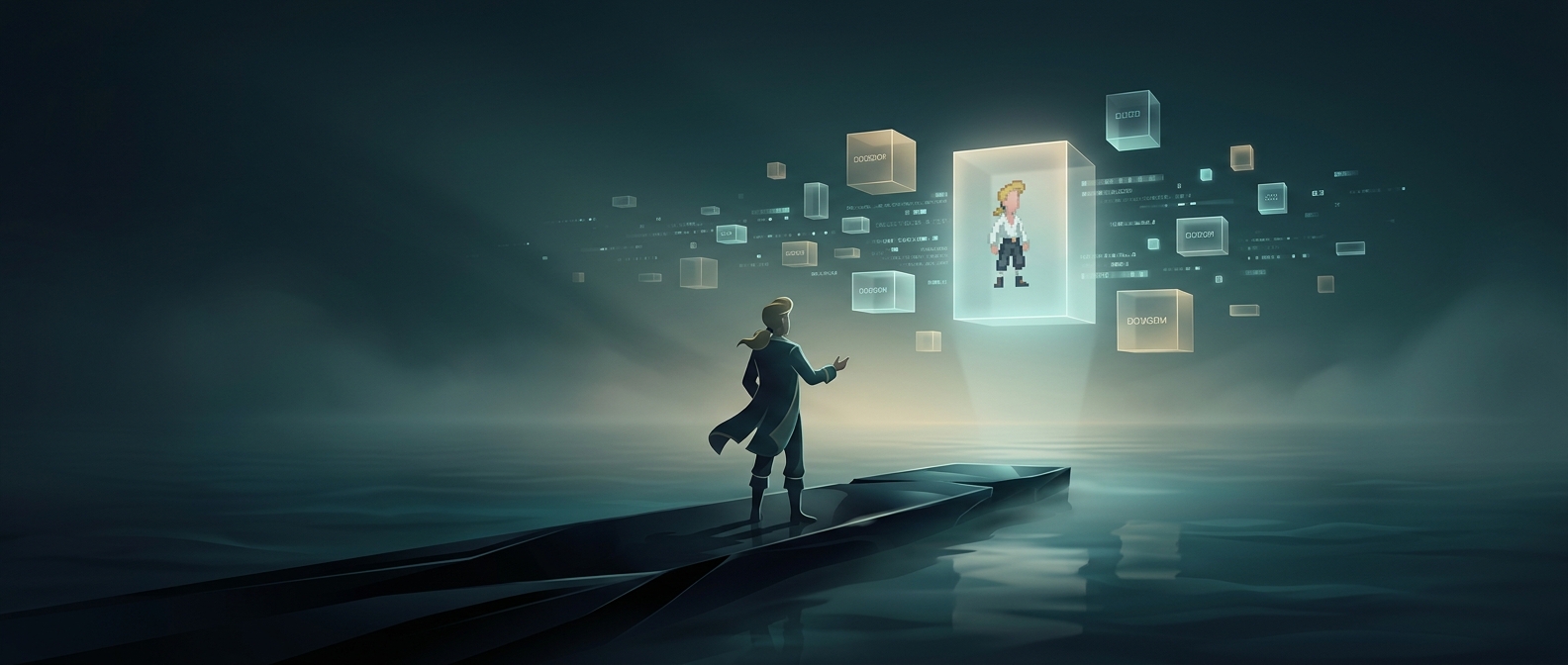
The name “Guybrush” began as a label attached to a piece of pixel art, not as the result of a long search for the perfect pirate name. The artist saved the protagonist’s image as “guy.” The animation software then added its own file extension, “.brush,” producing the full filename guy.brush.
A file extension is the short ending that helps a computer or program identify what kind of file it is. Here, it also happened to look like a second word. Read aloud, “guy.brush” became “Guybrush”—an accidental name with a jaunty sound.
Why the accident stuck
A working filename is usually meant to organize an artist’s files, not to define a fictional character. But the developers heard something usable in this one: it sounded silly in a way that suited an aspiring pirate. Instead of replacing the placeholder with a more conventional name, they kept the software-generated joke.
That choice turns a mundane step in making a game—saving an image—into part of its creative history. The name carries traces of both the artist’s practical shorthand and the team’s taste for comedy. It also fits a character who is still on the way to becoming a pirate: “Guybrush” sounds less like a grand, established hero than like an oddball setting out to make a name for himself.