A Mouse on One Side of the Story, You on the Other
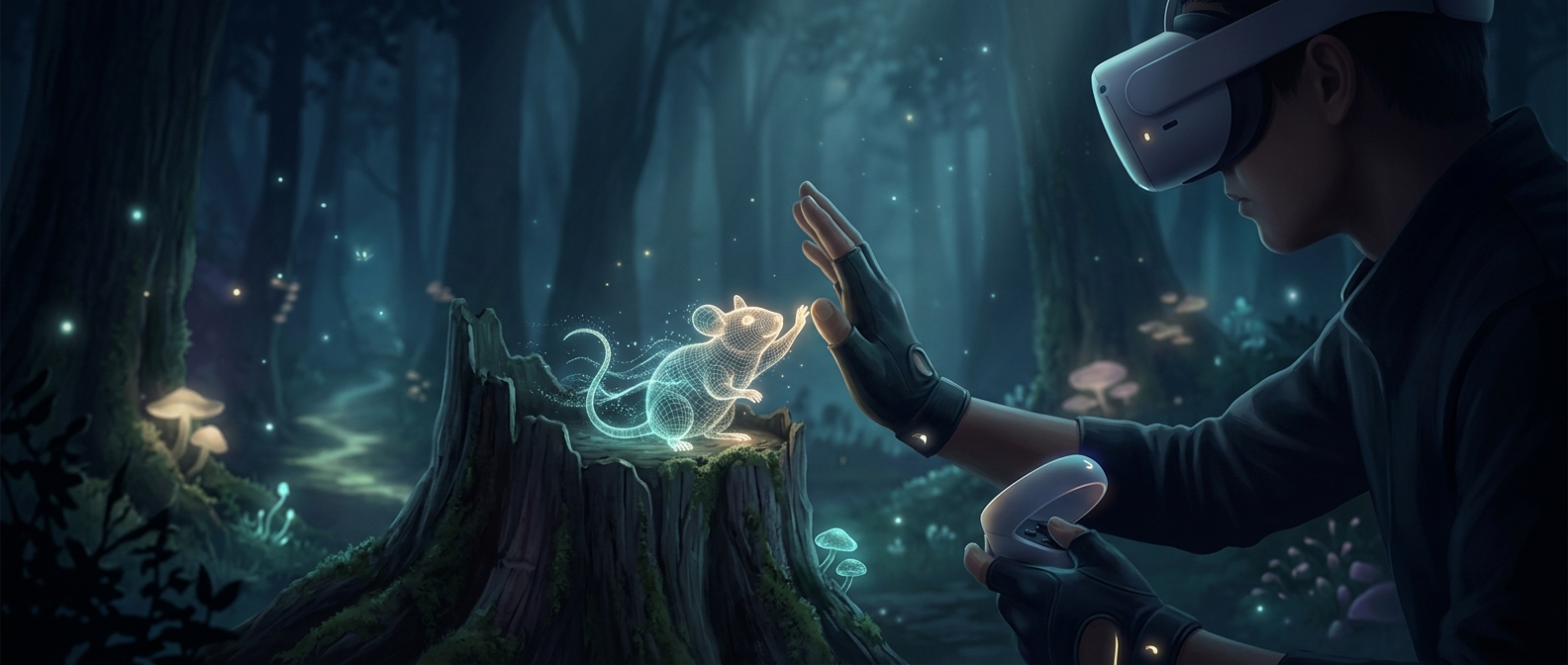
Moss is built around a split in perspective: Quill is a character moving through a world of platforms, enemies, and puzzles, while the player occupies the space around that world in virtual reality. Instead of seeing everything through Quill’s eyes, you look down into her miniature environment and help from outside it. The setup makes the forest feel less like a flat screen and more like a tiny stage you can lean into.
That division also shapes how puzzles work. Quill can jump, climb, and fight, but some obstacles call for the player to intervene directly—such as moving or manipulating elements in the environment. Solving a problem is therefore a collaboration, not simply a command to a character on screen.
Why a High-Five Matters
The glowing hand makes that collaboration visible. It is not just another tool for shifting objects: reaching toward Quill turns the player’s physical gesture into a social one. A high-five lets the game acknowledge the player as someone alongside her, rather than an invisible force operating the level.
That small exchange helps bridge a design challenge in VR. The player has more physical presence than a conventional game camera, but Quill remains the hero of the adventure. Direct interaction gives the player a role without taking away her agency. When she works something out, the high-five makes the success feel shared—and gives the miniature world a moment of connection beyond its puzzles.