Why a virtual world can linger after the headset comes off
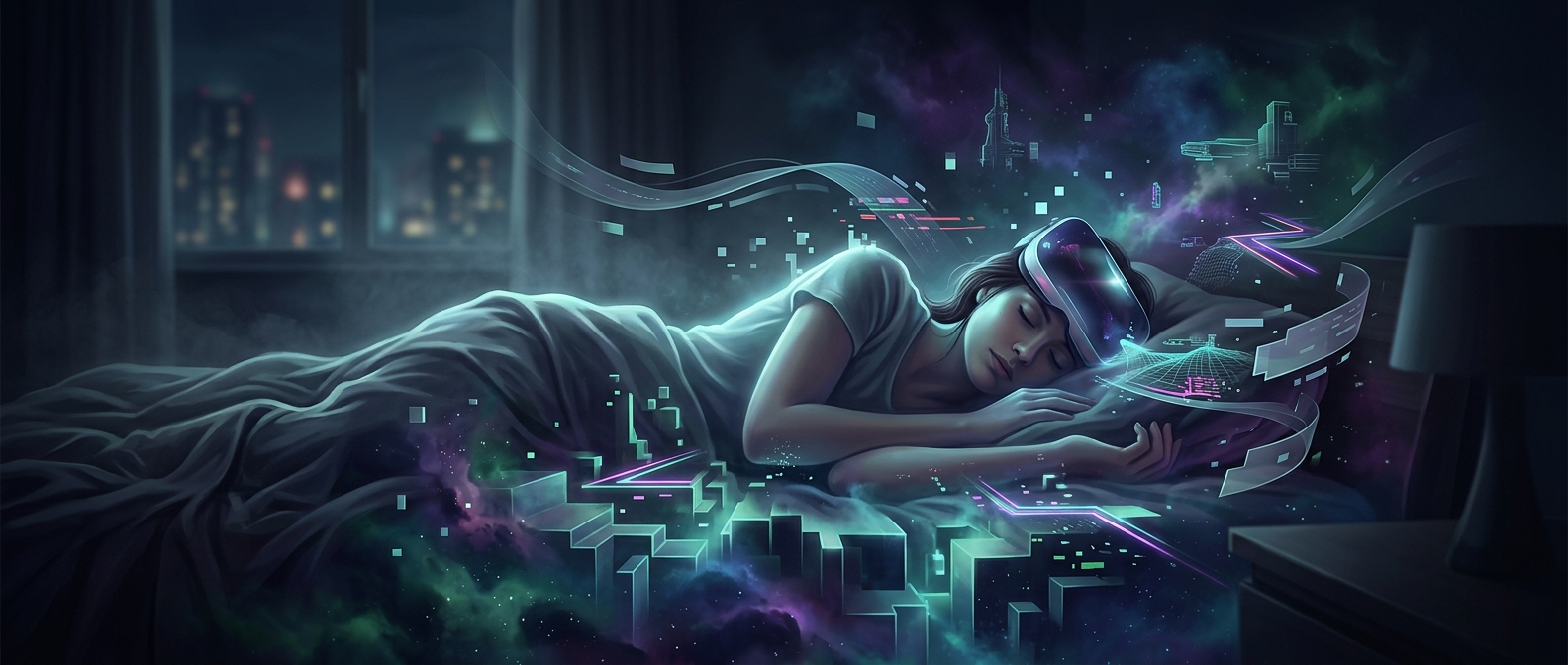
A VR session gives the brain a vivid bundle of recent material: moving scenery, repeated actions, spatial layouts, and characters that seemed to occupy the room. Afterward, the eyes return to an ordinary, stationary view, but the experience does not vanish from memory at the same instant. During sleep, recent experiences can be replayed and recombined with older memories. A dream may borrow a fragment—a familiar avatar, a rushing sky, or the sensation of a room shifting—without reproducing the game exactly.
The body helps make the memory vivid
In VR, a player may see a virtual turn or sudden drop while the inner ear and body remain mostly still. The inner ear is the system that helps track balance and motion. That mismatch can make some virtual movements feel unusually noticeable, even after play ends. It does not mean the headset has changed the brain or that a dream is a literal replay; it gives the mind memorable sensations and images to draw on.
Dreams also remix material rather than preserve it like a recording. A tilting floor or chasing character can be the brain fitting a recent game element into a dream’s shifting scene. The practical consequence is simple: a vivid session can supply dream imagery, but it cannot dictate what the dream becomes.