Why the Load Must Rest on the Shoulders
A draft collar works by changing where the pulling force enters an animal’s body. A rope or narrow strap around the throat bears against the windpipe and soft tissues. The animal may strain, but it cannot transfer much force comfortably—and breathing can be restricted.
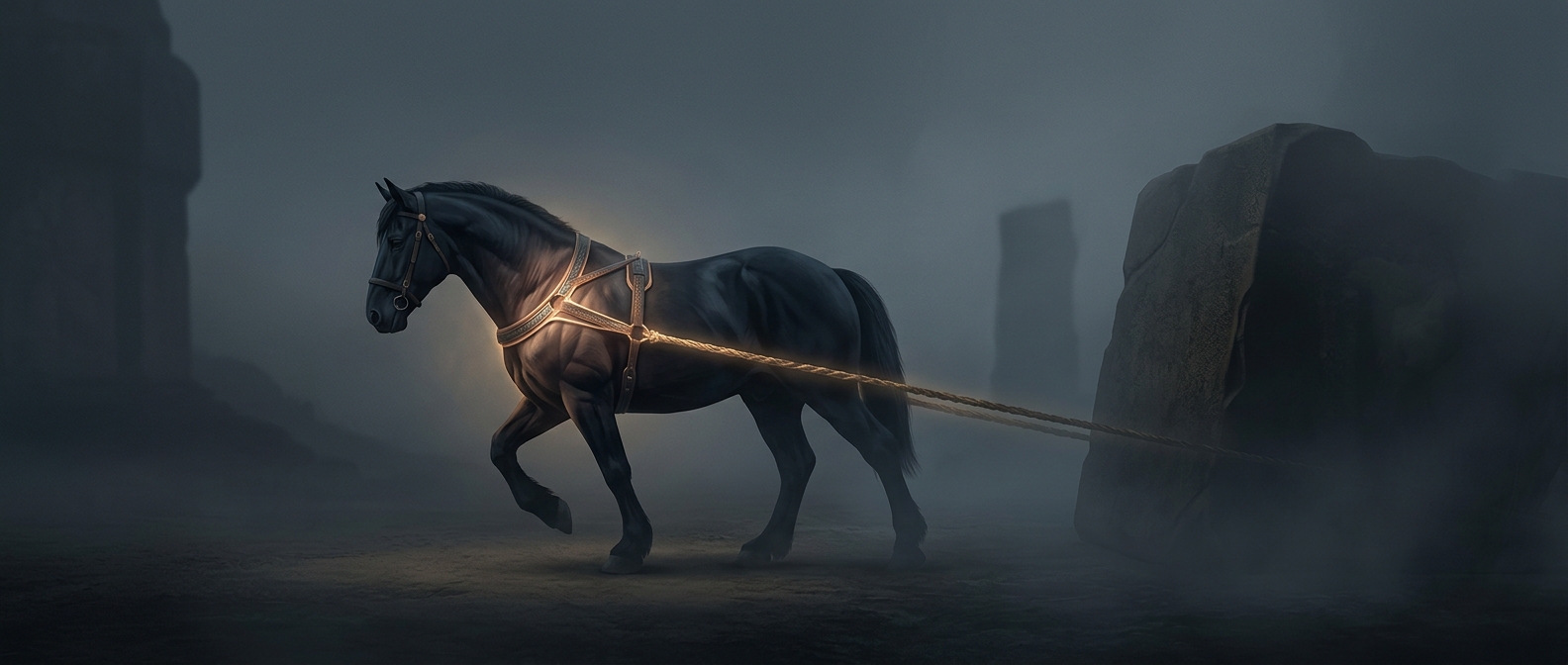
A fitted collar instead sits around the base of the neck, against the shoulders. When the animal leans forward into the harness, the collar presses on the broad chest-and-shoulder area. Those large muscles can push against the collar while the animal’s legs drive against the ground. The harness carries that effort back to the load.
Turning a Lean into a Pull
The collar is only one part of the system. Straps and traces—the long connections running from the harness to a plow or wagon—keep the load aligned behind the animal. As the animal steps forward, the traces tighten and the collar bears the resistance. A well-fitted collar spreads pressure rather than concentrating it at a painful point.
That geometry matters most when the load resists movement, as a plow does in packed soil. The animal must overcome that resistance continuously, not just tug the equipment once. By letting it brace with its shoulders and chest, the collar makes sustained work possible without asking the throat to serve as a pulling surface.
The practical result is more than comfort: it is a better transfer of muscle power to equipment. A collar that fits poorly can still create pressure and sores, so its shape and size must suit the animal. But when it fits, the animal’s forward lean becomes useful force—enough to move a plow through earth or haul a heavy load.