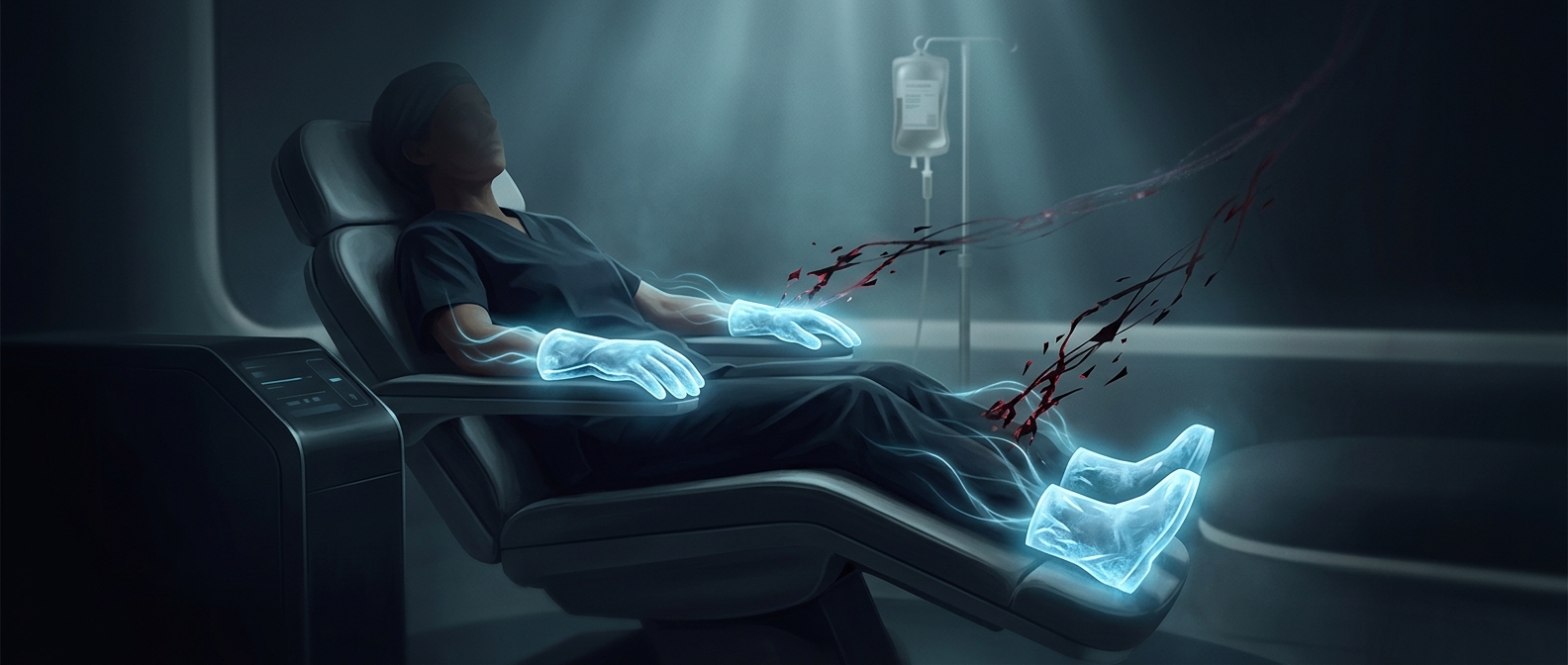
Why cooling the hands may spare nerves
Some chemotherapy drugs can injure peripheral nerves—the nerves outside the brain and spinal cord—causing tingling, numbness, or pain in the fingers and toes. These symptoms can interfere with tasks as ordinary as fastening a button, and sometimes persist after treatment ends.
A frozen glove is intended to change how much medicine reaches the tissues in the hand. Cooling narrows nearby blood vessels, temporarily reducing local blood flow. If less blood circulates through the hand while a drug is being delivered, the hand’s nerves may be exposed to less of that drug. The glove does not neutralize chemotherapy or protect nerves throughout the body; it aims to limit exposure in a small area.
A local measure, not a guarantee
The approach is most relevant to medicines that can cause nerve problems, and it does not work equally well for every drug or patient. Cooling also has to be timed around the infusion, and the cold itself can be uncomfortable. Care teams need to monitor the skin and circulation, since prolonged or intense cold can harm tissue.
The practical tradeoff is localized protection without changing the treatment throughout the body. A patient considering frozen gloves should ask the oncology team whether cooling is appropriate for their specific chemotherapy and how it should be used; it is a possible way to reduce risk, not a promise that neuropathy will be prevented.