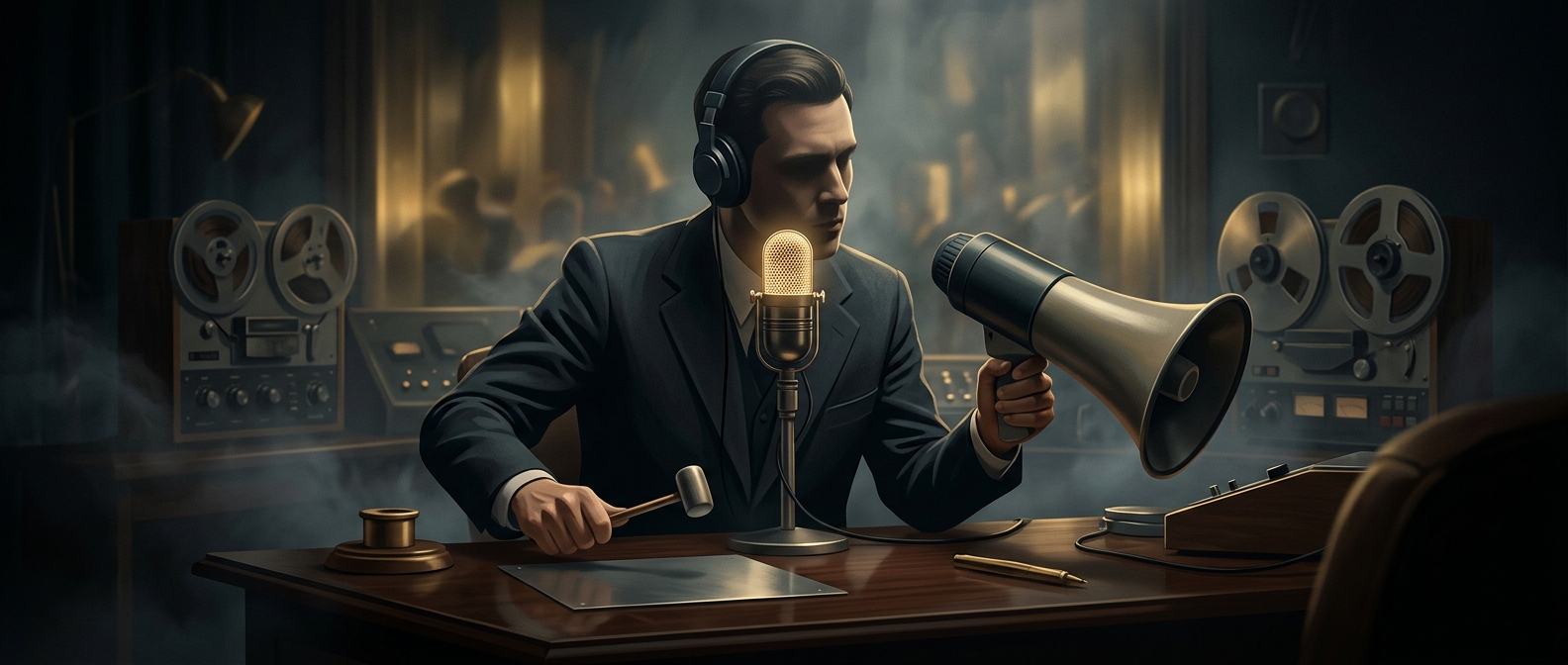
How a staged call can hold a show together
A live morning program has to fill time while keeping its energy up. A genuine caller may have a compelling story—or may be hard to hear, lose their train of thought, or offer little for the hosts to respond to. A performer or intern posing as a listener gives producers more control over the exchange: the caller can arrive with a clear grievance, push back when challenged, and keep the conversation moving.
That control can create the feeling of spontaneity without leaving the segment entirely to chance. The hosts get a ready-made dispute to react to, and listeners get a simple question to follow: who has the better argument? The performance can also supply a sharp transition into the next topic or commercial break.
The tradeoff behind the illusion
A staged argument is not just a louder version of an ordinary call. It changes what the audience is hearing: instead of an unplanned disagreement, listeners are hearing a scene designed to sound like one. If the performance feels convincing, it may serve the show’s pace. If listeners recognize the setup, the same moment can make the program seem less candid.
That tension is the point of the device. Producers gain a dependable burst of conflict, but they risk spending audience trust to get it. The next time a caller seems perfectly prepared to deliver the exact argument a host needs, the exchange may be entertainment engineered to sound like a real interruption.