Why nighttime changes AM reception
AM radio waves can travel along Earth’s surface, a route called groundwave. During the day, they can also reach the ionosphere, a region of electrically charged gas high above the planet. But a lower layer of the daytime ionosphere absorbs much of the energy of AM signals that enter it, limiting how far they can travel by skywave.
The nighttime skywave path
After sunset, that absorptive layer weakens as sunlight stops replenishing its charged particles. Higher ionospheric layers can then bend AM waves back toward Earth. A signal that would have faded into space during daylight may instead land far beyond the station’s normal groundwave range. It can sometimes travel onward by repeating the journey between the ionosphere and the ground.
This path is variable, not a dependable long-distance connection. The signal may fade or fluctuate as the ionosphere changes, and waves arriving by different routes can interfere with each other. Weather in space, the season, and the time of night all affect what a listener can receive.
Why distant stations appear on the dial
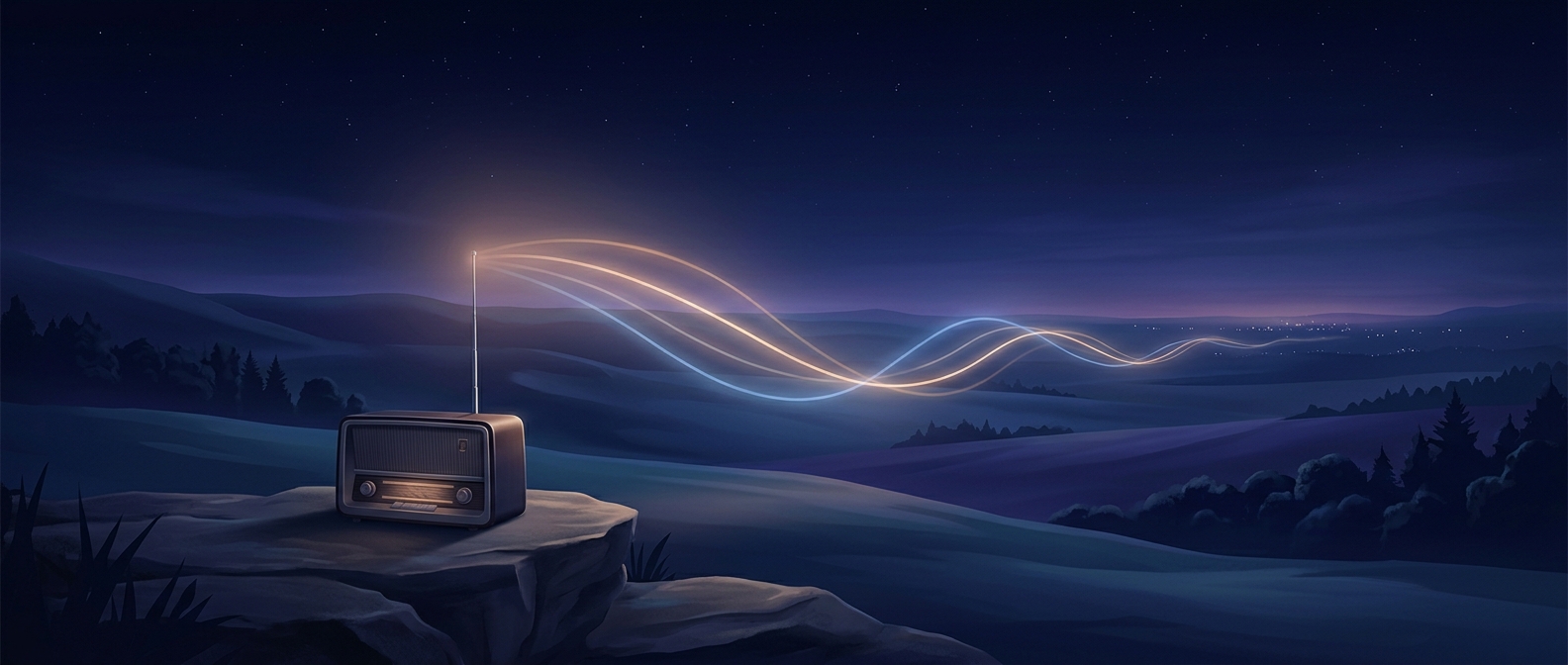
At night, a radio tuned to one frequency may pick up stations from hundreds of miles away. That can make listening more surprising, but it also means stations on the same frequency are more likely to overlap. Broadcasters may change their nighttime power or antenna patterns to reduce interference with other stations. The same disappearing layer that opens a longer path for one signal can therefore make the AM dial crowded for everyone.