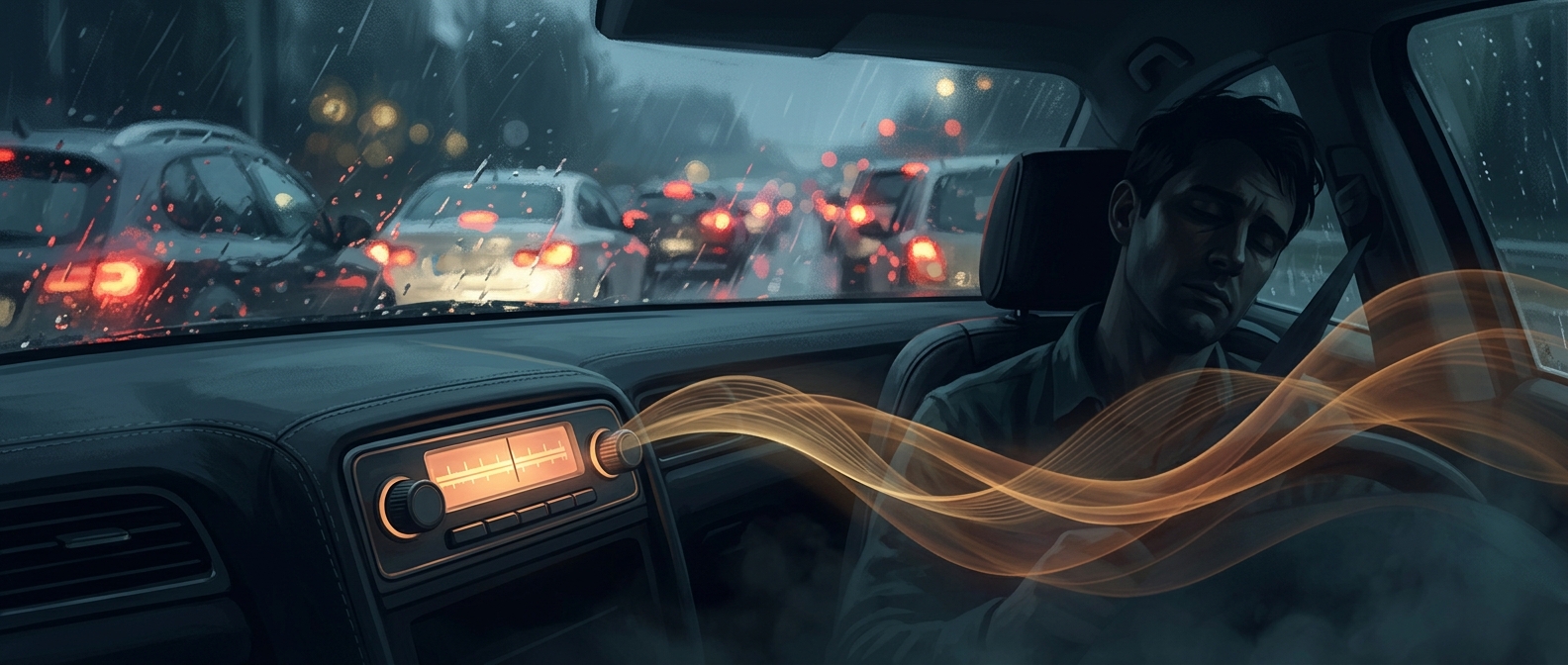
Why drive-time radio sounds so awake
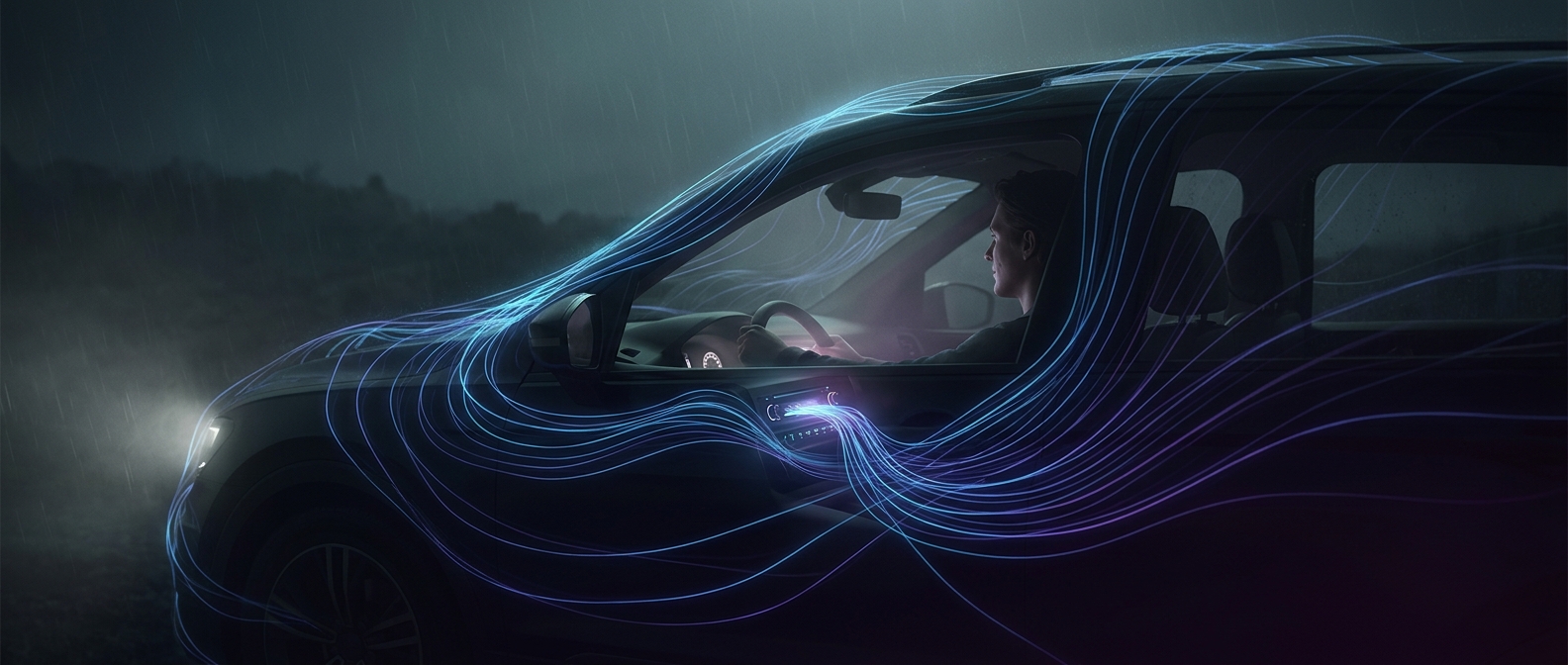
A commute gives broadcasters a recurring window when many people are in the same situation: traveling, often early or late in the day, with limited ability to look at a screen. The challenge is not simply to fill the car with sound. It is to make a program that listeners can join halfway through and still follow.
That favors a brisk, clearly signposted style. Hosts use lively delivery and quick transitions; music, conversation, and brief updates provide changing points of attention. A listener who missed the start of a segment can still catch the next song or exchange. The energy is part of the format’s practical design, not just a reflection of a host’s personality.
A familiar voice in a fragmented commute
Drive-time shows also compete with silence, other stations, and the interruptions of the trip itself. An alert presentation helps a program register in the background, while recurring hosts and routines make it easy to recognize when someone tunes in. The aim is to feel companionable without requiring the driver to concentrate on every moment.
There is a tradeoff: a sound that feels lively to one listener may feel overwhelming to another, especially when someone is already tired. But the format is built around a simple constraint—people may be listening while doing something else. Its most useful skill is making each passing moment feel like an easy place to rejoin.