A magnet reaches inside the picture
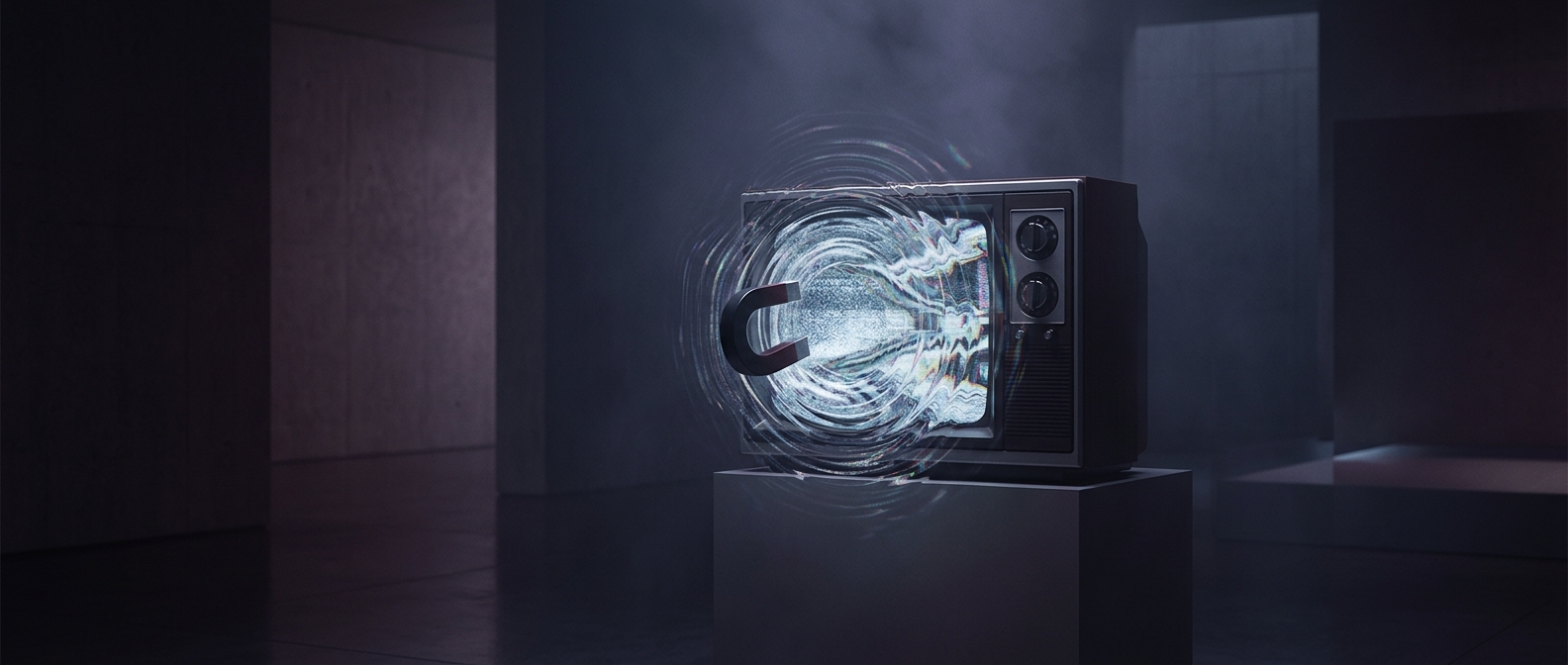
In a cathode-ray television, an electron gun fires a narrow beam across the screen in a rapid pattern. The beam makes a phosphor coating glow, rebuilding the broadcast image line by line. Paik’s horseshoe magnet changed that path: its magnetic field bent the moving electrons, so they struck different parts of the screen and the picture rippled into abstract forms.
The broadcast was still arriving, but the screen no longer showed it in its ordinary shape. A familiar household device had become a material to work with, like paint or clay.
The viewer becomes part of the circuit
The distortion made television’s hidden machinery visible. Viewers usually treat a screen as a transparent window onto programs; Paik’s intervention exposed the physical process that produces the image. The picture was not fixed content simply delivered to the viewer. It could be altered by changing the conditions inside the set.
That shift also made the artwork unusually direct. A magnet, a television, and the movement of a hand were enough to turn a mass-medium appliance into an image-making instrument. The television was no longer just showing the artwork; its own operation was the artwork’s subject.