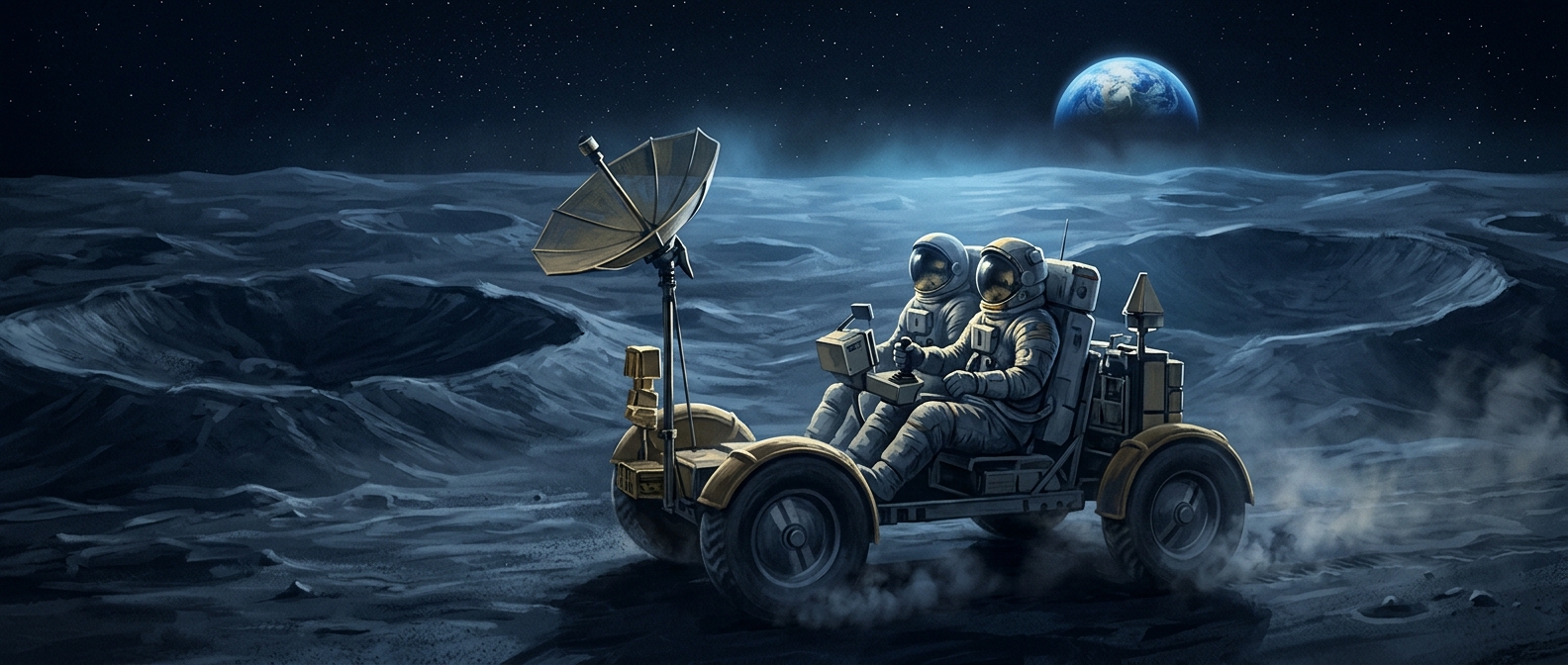
A customs form built for an impossible origin
A standard customs declaration asks where travelers have been and what they are bringing into the country. For Apollo 11, those ordinary questions ran into an extraordinary gap: the astronauts and their cargo had come from the Moon, a place no routine form was designed to handle.
So the paperwork named the Moon as the point of departure and listed lunar samples among the items being brought back. The form did not need a special lunar customs system; it needed a readable record of what was entering the United States and where it came from. In that sense, the astronauts’ return turned a familiar administrative task into a small test of how far ordinary procedures could stretch.
Customs was not the same as quarantine
The declaration documented the samples; it was not the main safeguard against possible lunar contamination. That concern was handled separately. After splashdown, the crew was recovered and placed in quarantine, while the returned material was handled under controls intended to keep it isolated until it could be examined.
The distinction matters: customs paperwork tracks goods across a border, while quarantine limits contact with people or environments. Apollo 11 needed both kinds of procedure, for different reasons. The customs form recorded a cargo from beyond Earth; the quarantine measures addressed the possibility—however uncertain—of what that cargo might carry.
The memorable detail is how mundane the first step looks: even a sample from another world had to be declared before it could become a scientific specimen.