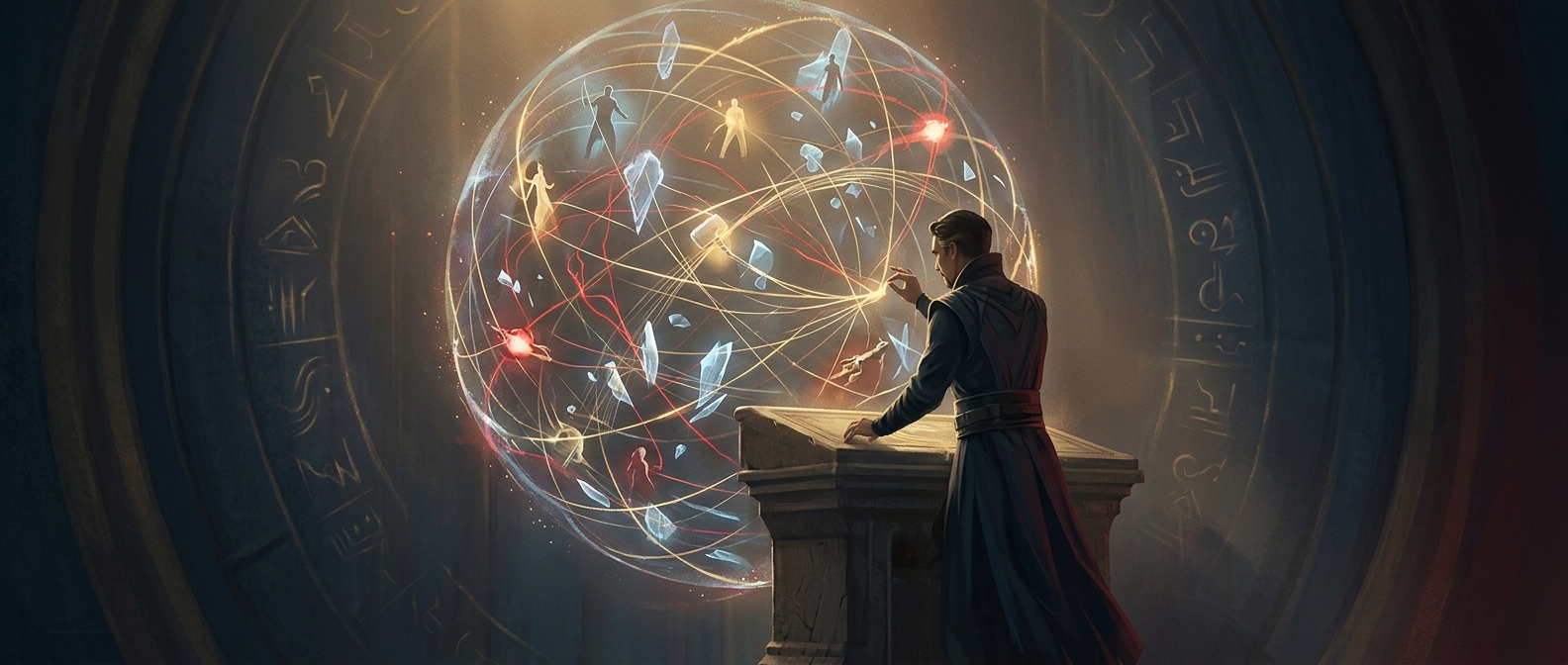
The five-year gap turns continuity into calendar math
In Avengers: Endgame, much of the story jumps forward five years. That means later MCU stories cannot treat the gap as a simple pause: characters have aged, relationships have changed, and events from before the jump may now sit years in the past. A continuity keeper helps track those connections so new stories fit the timeline already established on screen.
One date can affect many details
A timeline is more than a list of release dates. It distinguishes when a story happens from when audiences watched it, then helps writers and production teams check what characters could know or have experienced by that point. If a later story refers to an earlier event, the timeline can reveal whether the reference makes sense—and whether a character’s age, history, or place in the sequence needs attention.
The five-year jump makes those checks especially important. A story set after Endgame may need to account for both the years before the jump and the years that passed afterward. A detail that sounds minor—a character’s age, a past meeting, or how long ago a crisis occurred—can create a mismatch if the dates are not aligned.
Keeping the universe usable
Continuity tracking does not mean every future story must follow a single rigid script. It gives creators a shared map of what has happened, so they can build on established events without accidentally contradicting them. In a franchise whose stories span many characters and installments, that map helps turn a five-year leap from a dramatic plot device into a consistent part of the world.