How a soldiers’ pastime became a game of its own
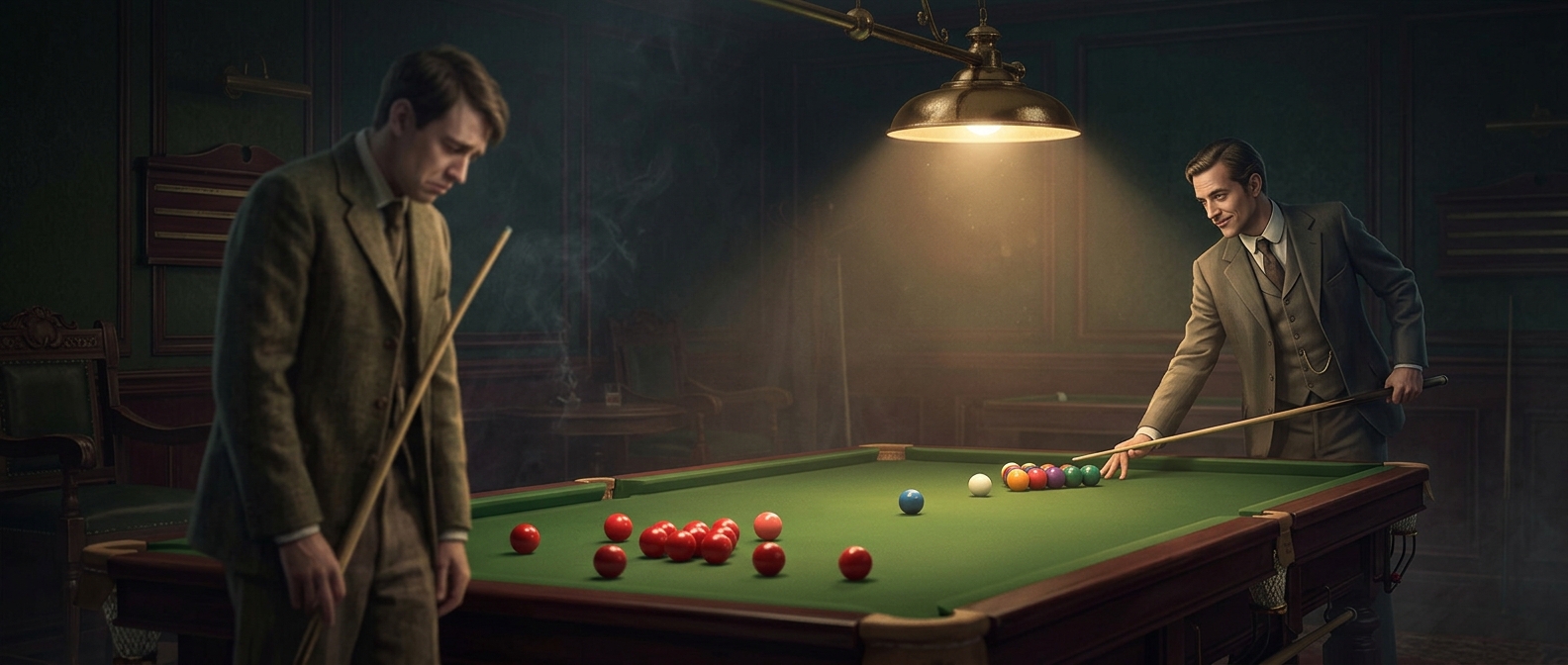
The officers who devised snooker were not starting from scratch: they were reshaping familiar table games. By adding colored balls and assigning them different values, they turned a straightforward contest of potting balls into one built around choices—what to aim for now, and what shot would set up the next.
That scoring system gives the game its distinctive rhythm. A player generally alternates between potting a red ball and a colored ball; reds stay off the table once pocketed, while colors are returned to their spots until the reds are gone. Only then must the remaining colors be potted in a set order. A player may lead by scoring often, but a carefully placed shot can also leave an opponent with no easy target.
Why “snooker” stuck
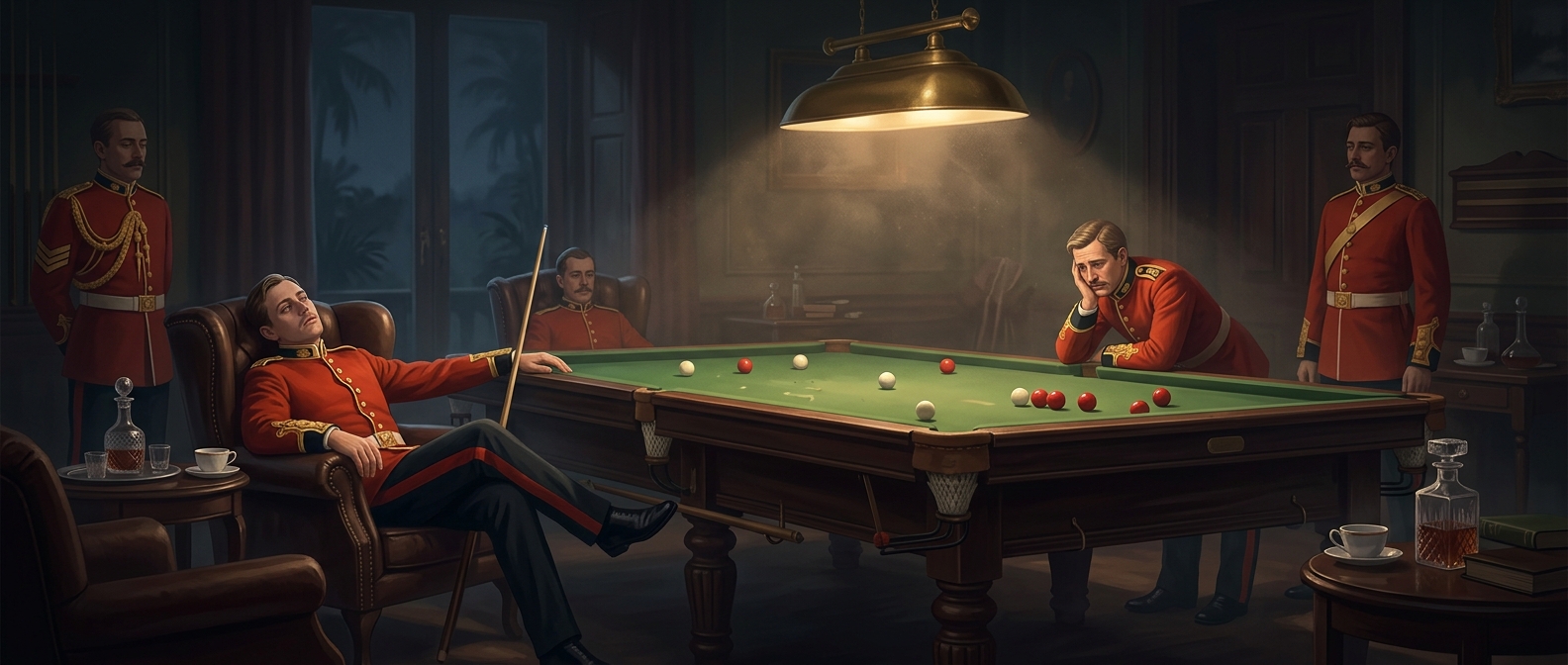
The name began as military slang for an inexperienced recruit. Calling a player a “snooker” suggested that he was still a novice at the new game. The label outlasted the joke and became the name of the sport itself.
The invention’s lasting effect was more than a larger collection of balls. The changing value and availability of targets made each turn part of a longer calculation: score while the reds remain, then navigate a fixed endgame after they disappear. What began as a variation on familiar games acquired a strategy—and a name—of its own.