From a Cadet’s Nickname to a Game’s Name
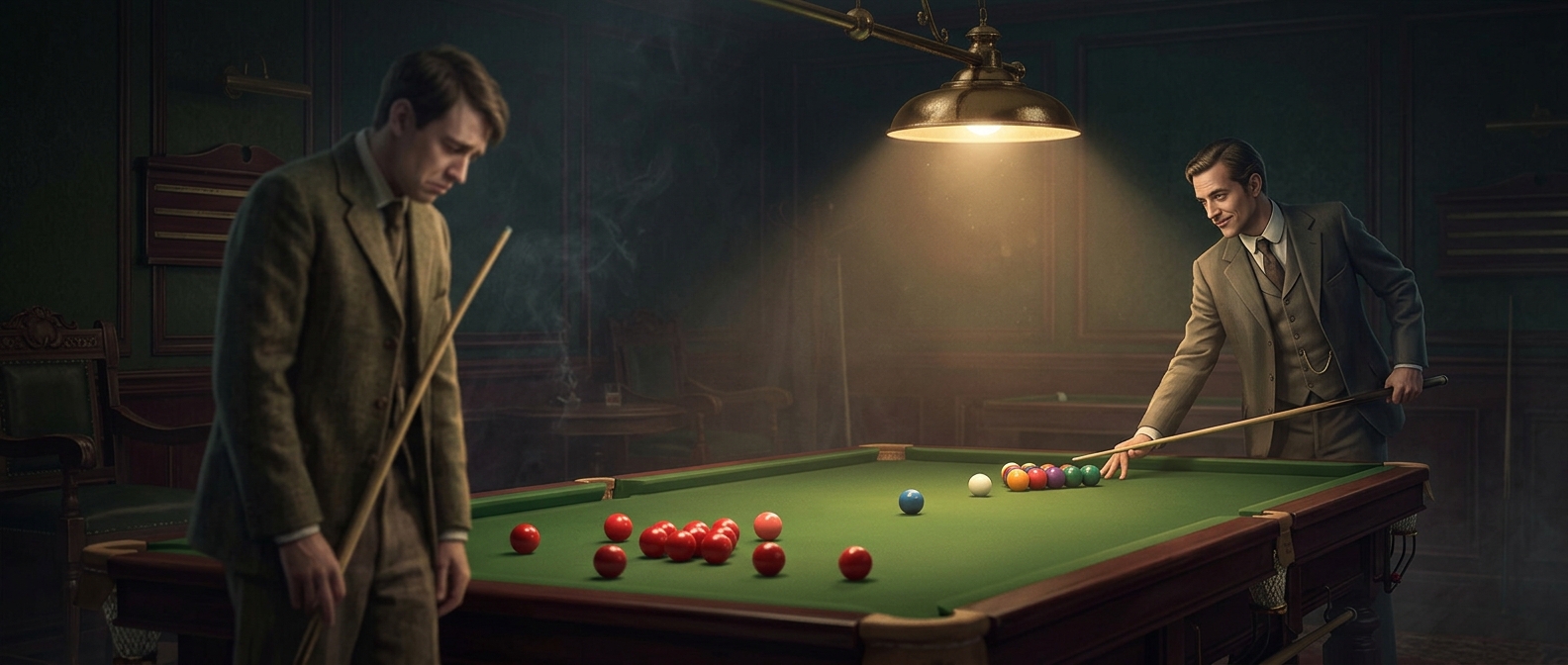
The word “snooker” began as a put-down, not a sporting term. In the familiar account of the game’s origins, British Army officers in India used it for an inexperienced cadet—a newcomer who did not yet know the ropes. Calling someone a “snooker” marked him as a beginner, much as calling a player a novice does today.
The story links the label to officers’ billiards play. When an inexperienced player made a mistake, an officer reportedly called him a snooker. The teasing word then became attached to the game itself. A military insult had found a second life as the name of a pastime.
How the Name Outlasted the Joke
The shift makes sense in the setting where the game took shape: officers were adapting familiar table games into a new form of competition. A label for a bumbling newcomer could readily become shorthand for the distinctive game being played. As the rules and identity of snooker became established, the original sting faded; players could use the name without implying that anyone at the table was a novice.
That change is the memorable part of the origin story. The game’s name preserves a trace of its social setting: a word once aimed at the least experienced player became the title of a sport that rewards careful, practiced play.