How a Loot Generator Makes Guns Feel Unpredictable
A procedurally generated gun is not usually a wholly new design invented from scratch each time. The game assembles a weapon from authored possibilities—such as a body, barrel, firing behavior, and modifiers—and combines them into a particular item. Those choices affect both appearance and performance, so two guns can look and handle very differently even when they belong to the same broad weapon type.
The challenge is making variety useful rather than merely random. A player needs to read a gun quickly: is it worth picking up, and what might it do? Familiar weapon shapes and categories provide that shorthand, while unusual combinations keep the next drop from feeling entirely predictable.
Why the Absurdity Works
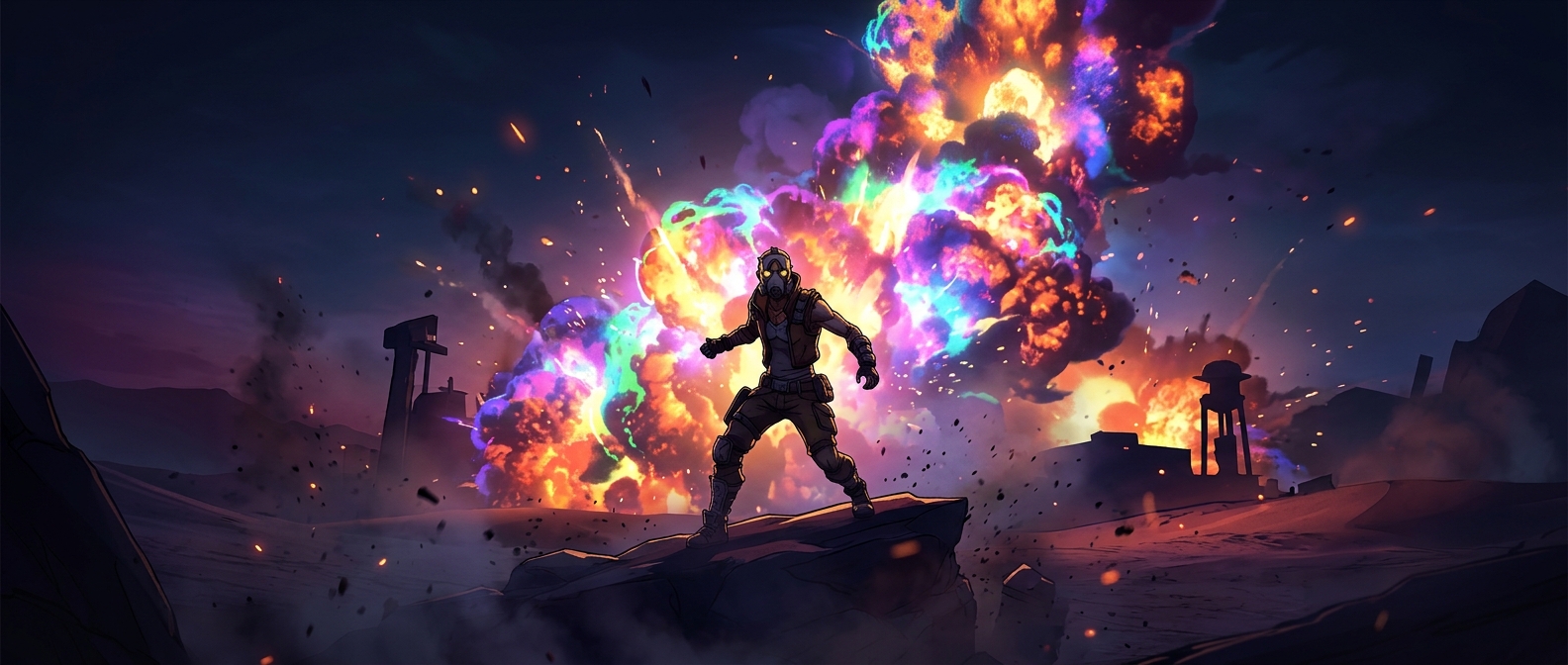
Borderlands pushes that contrast into comedy. A shotgun that fires exploding swords is startling because it splices together recognizable ideas—a close-range scatter weapon, a blade, and a blast—then makes them behave as one lootable object. The joke is also a gameplay promise: this is not just a strange-looking prop; its firing effect changes what happens when the player pulls the trigger.
That combination serves the series’ loot loop. Enemies and containers offer chances at another weapon, and each new drop invites a quick comparison with the gear already in hand. A huge pool of possible combinations makes those comparisons feel less like sorting identical upgrades and more like discovering a new trick. The memorable gun is the one whose ridiculous premise is immediately legible—and whose next shot proves it.