The race happens inside the signal system
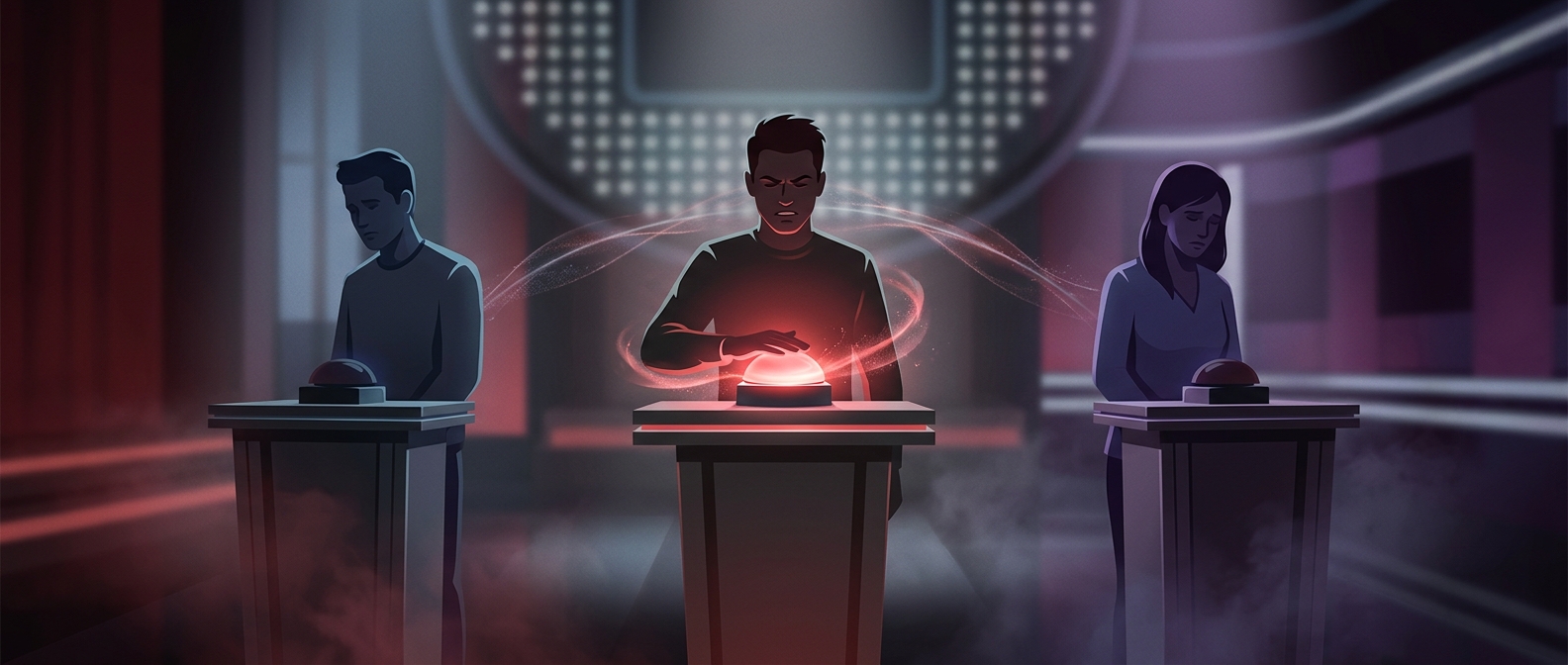
A buzzer looks like a simple button, but deciding who was first is a timing problem. When a contestant presses, the control system receives an electrical signal. It can register that event and compare it with signals from the other podiums, rather than asking a host or audience to judge whose buzzer sounded first.
That distinction matters because the sound heard in the studio is not the same thing as the moment the system detects a press. A buzzer tone has to be produced and heard; the contestants’ inputs can be compared directly by the equipment. The central system gives the show a consistent way to identify the earliest registered signal.
Why keep the decision off camera?
The timing equipment is part of the show’s production control. Technicians can monitor the system and relay its result to the host, while the audience sees the contestants and hears the buzzer. That separation helps keep the visible moment clear: the host can recognize who has control of the question without the audience needing to inspect wiring or interpret competing sounds.
It also provides a defined way to handle presses that happen very close together. The system can establish which input arrived first—or whether it cannot distinguish a clear winner—according to the show’s setup. The particular ruling depends on the rules in use; the equipment’s role is to supply the timing information, not to make every editorial or game-rule decision.
A small piece of broadcast control
The arrangement turns a noisy, human reaction contest into a signal the production team can track. Contestants still have to recognize the cue and react quickly, but the winner of that split-second race is determined by the system’s recorded input, not by which buzzer seems louder in the room.