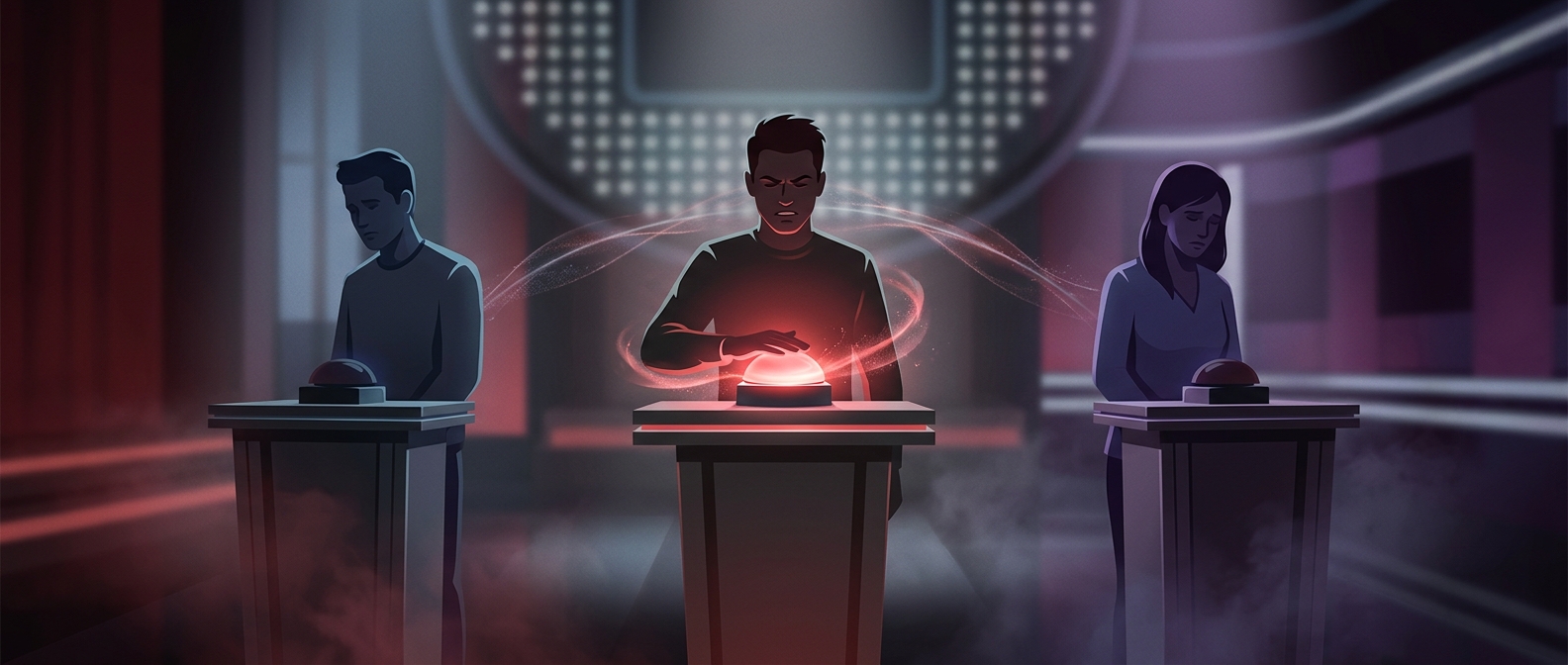
The buzzer can enforce a pause
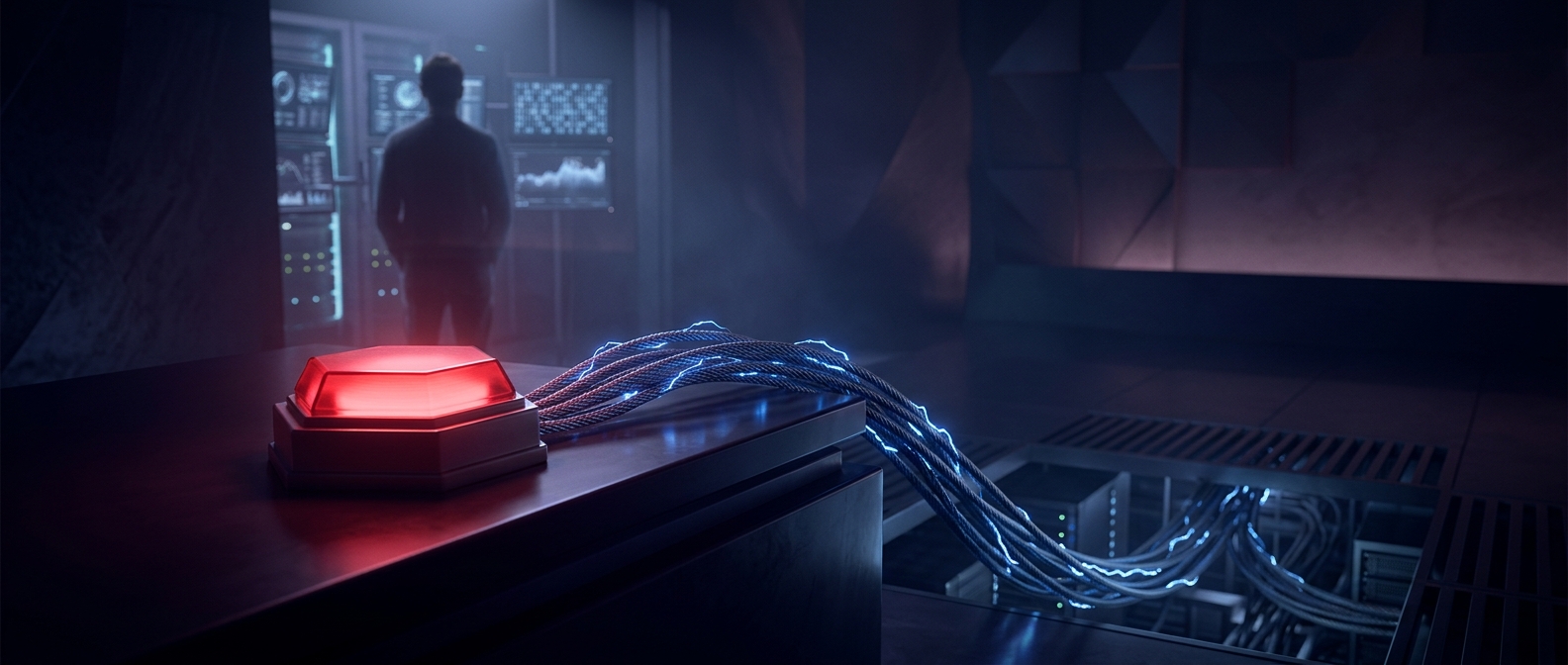
A quiz-show buzzer is more than a button that records who reacted first. In some formats, the system can register a press made before the host finishes reading and temporarily prevent that contestant from buzzing again. That brief lockout turns an early press into a penalty: the contestant has to wait while others remain eligible.
The rule addresses a basic problem with buzzer races. If contestants can answer as soon as they recognize a clue, someone who guesses from the first few words may gain an advantage over someone who waits for the complete question. A lockout discourages that gamble by making premature confidence costly.
Timing becomes part of the contest
This also changes what “fastest” means. Contestants are not simply racing to press at the first hint of a possible answer; they must judge whether they have heard enough, while tracking the host’s delivery and the risk of losing access to the buzzer. The electronic delay makes that judgment visible in the game: an eager press can leave a contestant watching while a rival gets the next chance.
The design is a tradeoff. Penalizing early attempts can reward careful listening, but it also makes the exact timing of a press matter as much as the contestant’s knowledge. One twitch before the question ends can turn a correct answer into an opportunity for someone else.