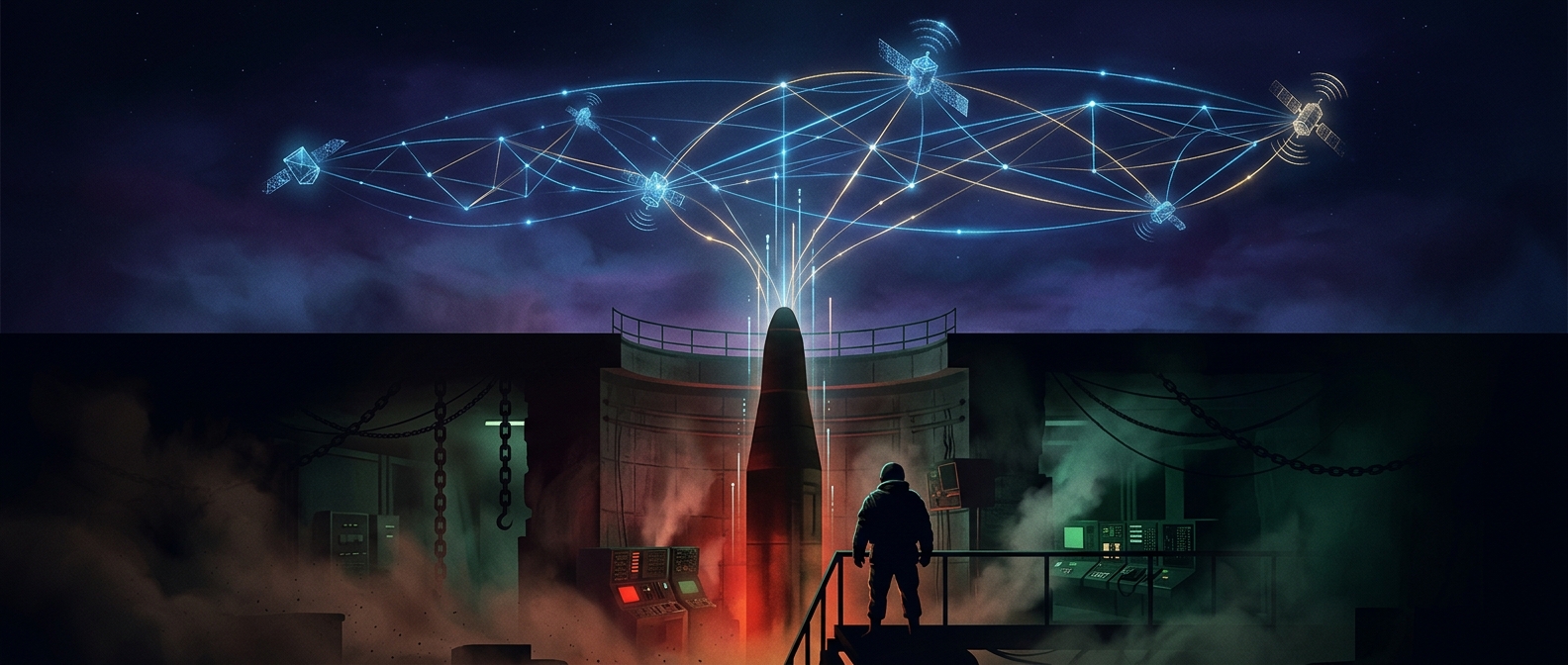
Why a single hub looked dangerous
In the early 1960s, RAND researcher Paul Baran was considering how military communications might continue after a nuclear attack. A conventional telephone network depended on dedicated connections routed through switching centers. If a crucial center or link were destroyed, calls that depended on it could fail.
Baran’s proposal changed the shape of the problem. Instead of sending every message through one central hub, a network could connect many nodes—switching points—with multiple paths between them. The aim was to make the system less dependent on any one vulnerable location.
Break messages into packets
Baran’s design treated a message as pieces, later known as packets. Each packet could carry information about where it was going and travel through the network independently. If damage blocked one route, surviving nodes could send packets along another; the receiving end would assemble them into the original message.
That approach traded the telephone system’s reserved, continuous connection for a more flexible one. The network did not need to keep a single line open from sender to receiver. It needed enough functioning nodes and paths to move the pieces around damage.
A proposal, not the internet itself
AT&T, which operated the dominant telephone network, dismissed Baran’s proposal. The idea challenged a system built around established switching technology, and a packet-based alternative was not simply a matter of changing a few wires. Baran’s network was not built as he had proposed, but the work helped establish the logic of distributed, packet-based communications.
That distinction matters: the internet was not created in one step as a nuclear-proof network. Baran’s contribution was a powerful design principle—a communication system can keep working even when parts of it fail—that later network builders could adapt for other needs.