A yawn is a whole-face stretch
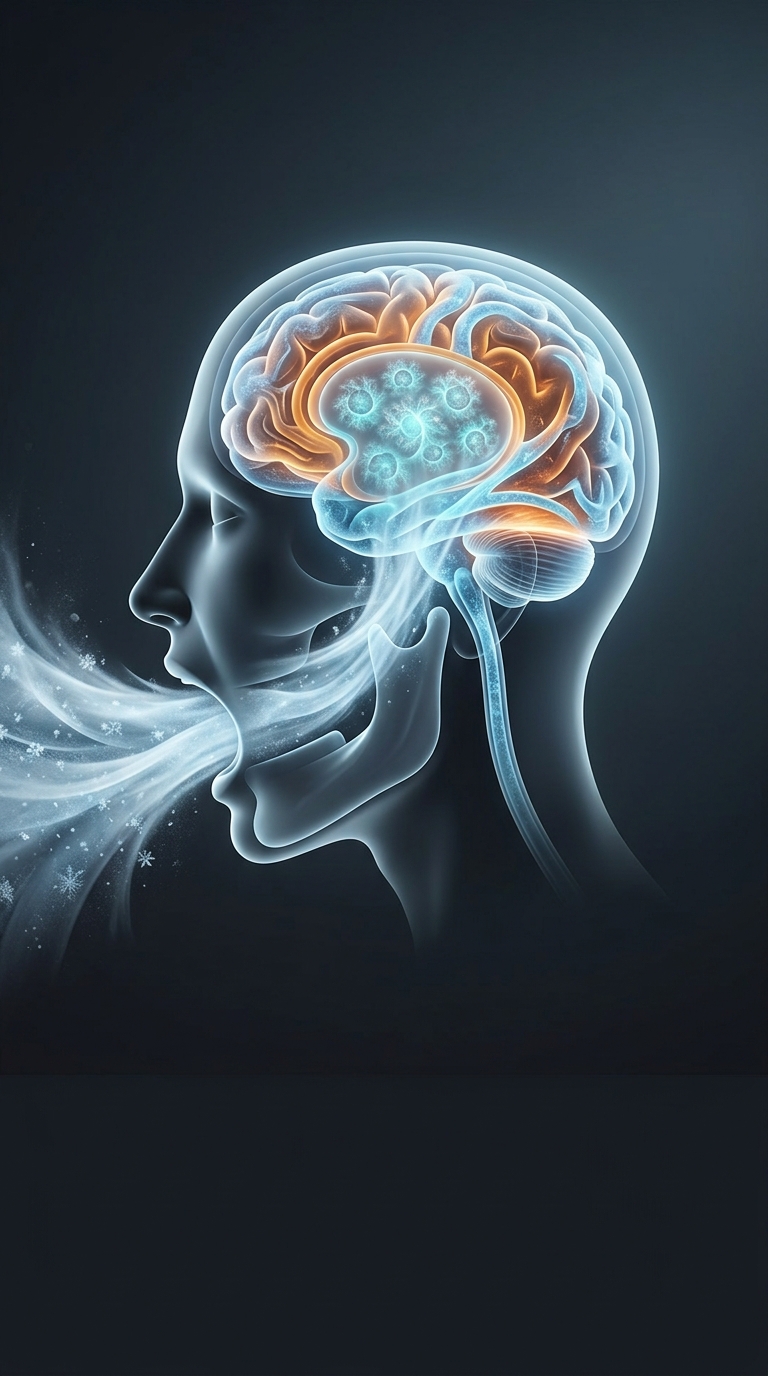
A yawn begins with a slow, unusually wide opening of the mouth. That movement stretches the muscles that close and move the jaw, along with soft tissues around the cheeks and throat. The jaw’s temporomandibular joints—the hinges just in front of the ears—also travel through a much larger range than they do during speech or chewing.
The stretch is only part of the motion. A yawn typically brings a deep inhalation, a brief pause, and then an exhalation as the mouth closes. The throat and facial muscles shift along with the jaw, making the yawn a coordinated movement rather than simply a large breath.
What the movement may do
The wide opening changes pressure and movement in the mouth and throat. It may also help shift fluid in nearby tissues, though the precise role of that effect is not settled. This is why describing a yawn as the lungs “asking for air” misses much of what is happening: the jaw and surrounding structures are actively moving, too.
The next time a yawn spreads across someone’s face, notice how far the jaw drops compared with a spoken word. That exaggerated stretch is the most visible part of a movement involving the face, throat, and breathing muscles together.