From forest children to leaf-masked spirits
The Koroks’ change is tied to the world of The Legend of Zelda: The Wind Waker. In its story, the Great Deku Tree explains that the Kokiri—forest-dwelling children from earlier games—became Koroks after the Great Flood reshaped the land. The new form suits a world where forests are scattered across islands: Koroks can travel through the air and help plant trees.
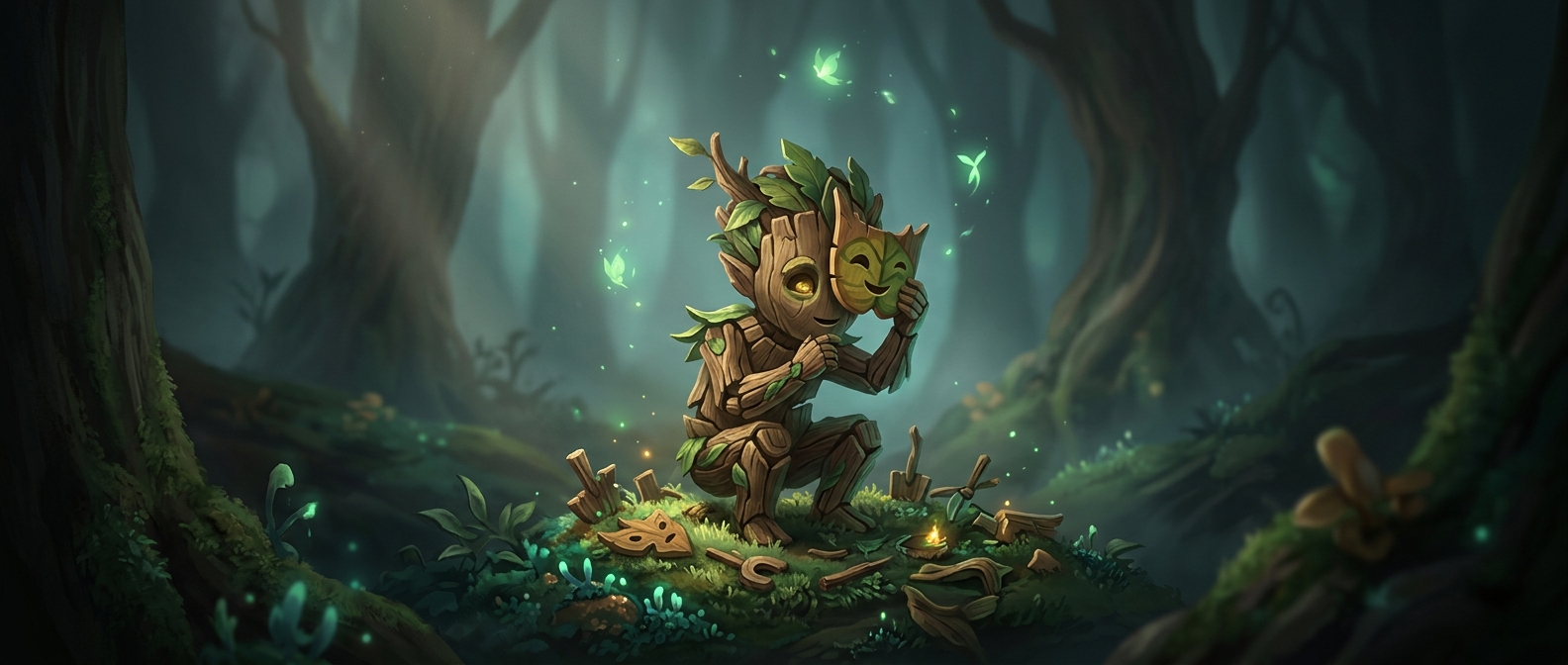
Their leaf-like faces are more than a visual flourish. They make the Koroks read as small woodland beings rather than ordinary children, while their drifting movement reinforces their connection to trees and wind.
A hiding place turns into a game system
Later games made the Koroks’ habit of hiding part of exploration itself. A rock in an odd position, a ring of stones with one gap, or another small interruption in the landscape can signal that something is worth investigating. The player tests the environment, discovers a Korok, and receives a seed.
That structure rewards close attention without requiring a marked trail to every secret. In Breath of the Wild, the seeds can be traded to expand Link’s equipment capacity, so a tiny encounter also supports a practical goal. The result is that a plain rock can become a question: what happens if Link lifts it?