The danger is often the setting, not the camera
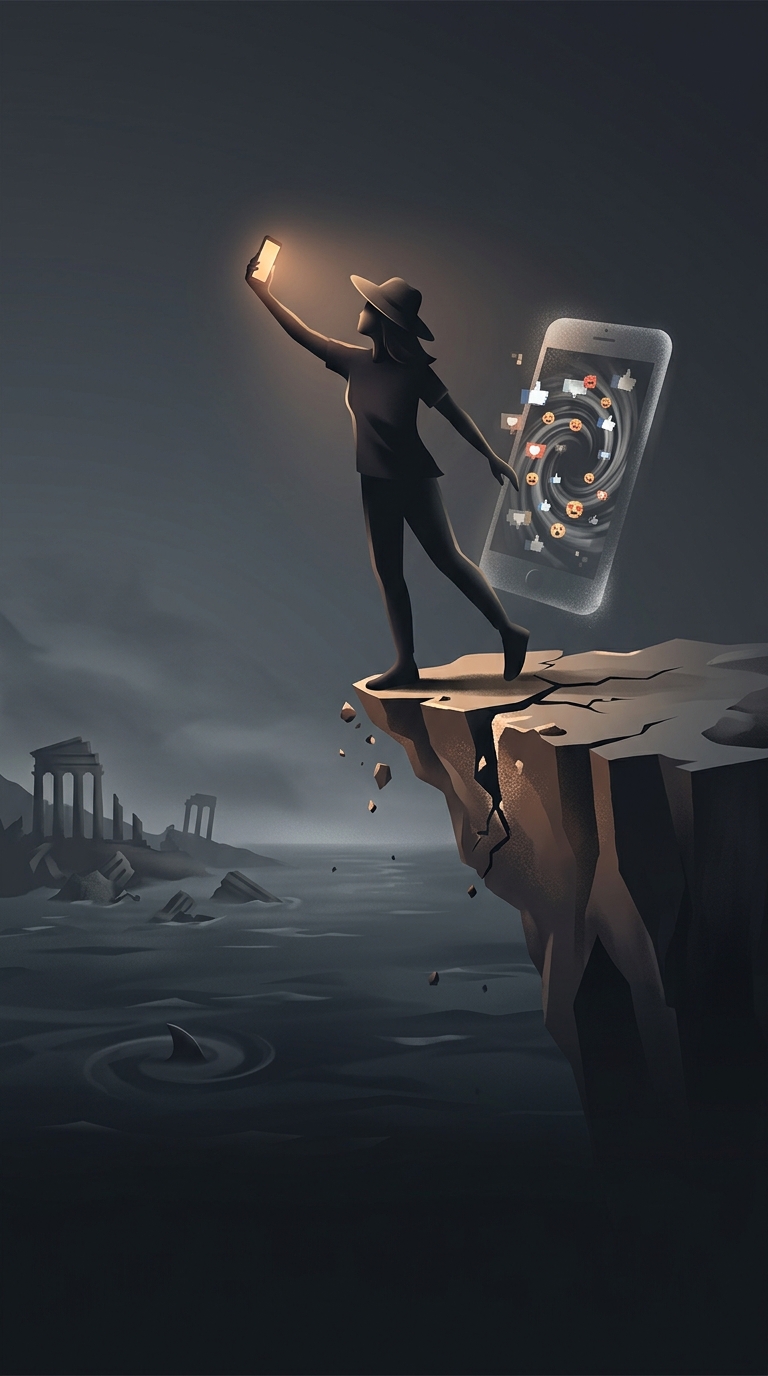
A selfie can turn a familiar travel hazard into an immediate one. To frame a dramatic background, someone may step closer to a cliff edge, enter water with strong currents, or approach an animal. Looking at a screen also shifts attention away from the ground, surf, or wildlife nearby. The phone does not create those hazards; it can make people less alert to them at the moment they matter most.
A small change in position can remove a margin of safety
Many scenic places have little room for error. Loose rock, slippery surfaces, sudden waves, and uneven paths can make a seemingly minor step consequential. In the ocean, a current can carry a swimmer away from shore before the danger is obvious. Around wild animals, moving closer for a photo can provoke a reaction—or put a person in the way of an animal moving through its habitat.
The risk comes from combining these conditions with divided attention and pressure to get a striking image. A person focused on the shot may not notice a change in footing or water, and may keep adjusting their position instead of backing away.
Why the comparison is striking
Fatal, unprovoked shark attacks are rare and memorable. Photo-related deaths, by contrast, can arise from many ordinary travel settings and different kinds of accidents. That is why the global toll attributed to taking selfies can surpass the annual number of fatal, unprovoked shark attacks: the danger is not one dramatic predator, but repeated exposure to cliffs, currents, and wildlife while people seek a better view.
The practical consequence is simple: choose the viewpoint before opening the camera, and take the picture from behind a barrier or on stable ground. A safer frame may be less dramatic, but it keeps the landscape where it belongs—in the background.