How a Deepfake Can Stay in Sync on a Live Call
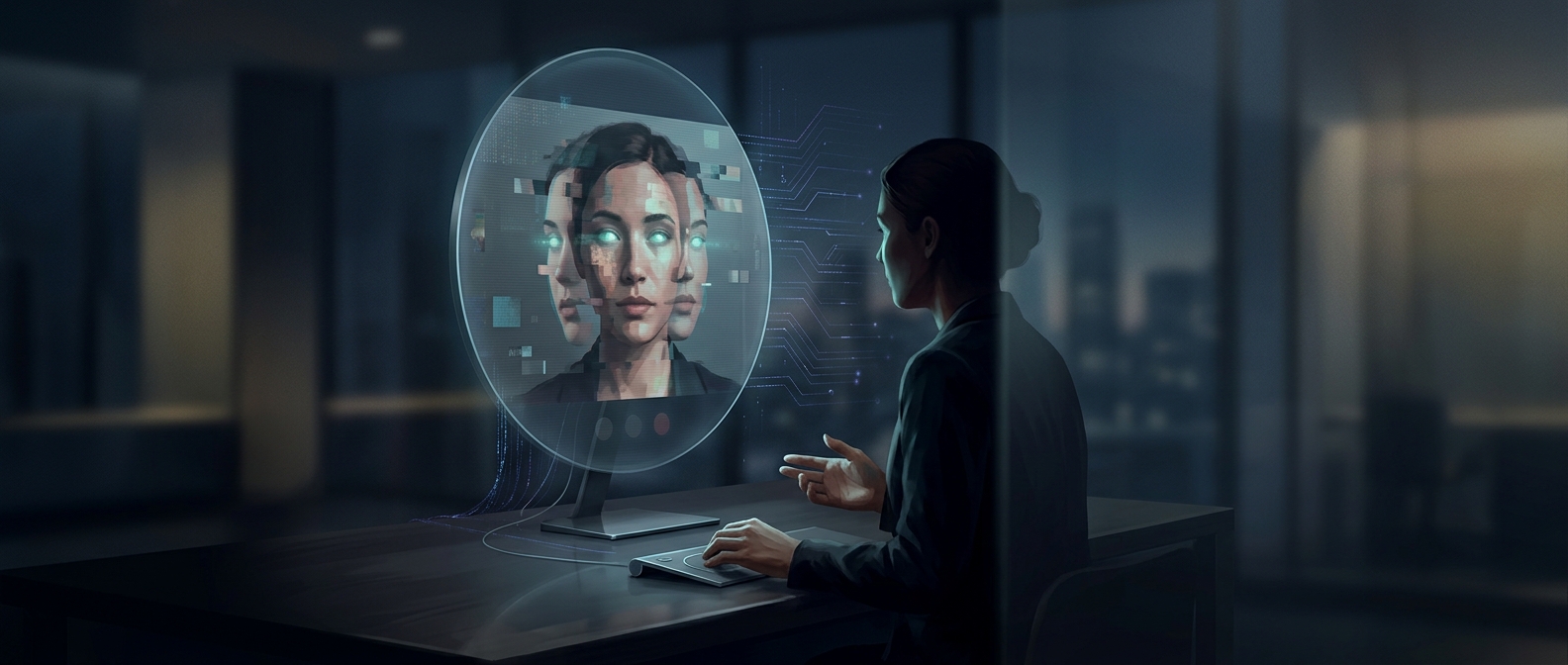
A live face swap works by separating what the camera captures from what the viewer sees. The caller’s camera records a real person’s movements; software detects facial landmarks—features such as the eyes, nose, and mouth—and uses them to position a different, computer-generated face over the image. As the person turns, blinks, or speaks, the replacement is adjusted frame by frame to follow.
That is why a convincing disguise can still show natural motion. The expressions are genuine movements, but they are being mapped onto an invented or borrowed appearance. The resulting video is then sent through the call as if it were an ordinary webcam feed.
Why an Interview Is a Useful Target
Video interviews often happen remotely, under time pressure, and with limited ways to check who is actually present. A recruiter may focus on answers, experience, and eye contact while the software handles the visual disguise in the background. A smooth conversation therefore does not, by itself, establish that the face on screen belongs to the applicant.
Live face replacement also has constraints. It must keep the synthetic face aligned with the real one as lighting changes and the person moves; glitches can appear around facial edges or during unusual angles. But ordinary expressions—nodding, smiling, speaking—are not proof of identity, because those movements can come from the person operating the disguise.
The Identity Check Has to Reach Beyond the Image
The practical shift is that a video feed can no longer be treated as identity verification on its own. Employers may need to compare information across the application, conversation, and other verification steps, especially when a role involves sensitive access. The key distinction is simple: a live image can show a live person without showing that person’s real face.