The Seine Changes the Pace of Paris
A walk beside the Seine offers a rare pause in a city that often feels close and hurried. Along many stretches, the riverbanks open into broad paths where pedestrians can keep moving without weaving through café terraces or street traffic. The water also gives the eye somewhere to rest: instead of tracking the next obstacle, you can follow the current beneath bridges and watch the opposite bank come into view.
Why Evening Makes the Walk Feel Different
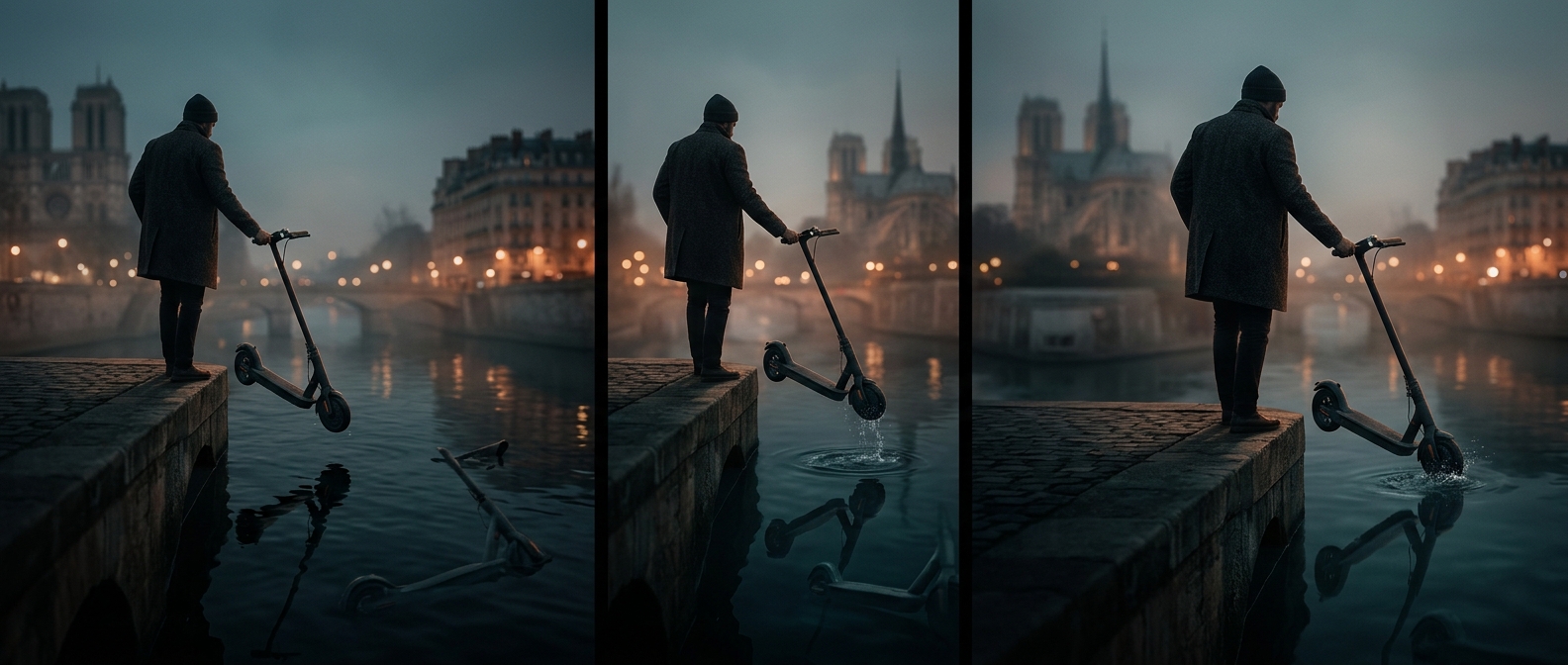
At sunset, the river becomes a surface that catches and softens the city’s lights. Stone façades, bridge arches, and passing boats are reflected in broken, shifting patterns. The familiar landmarks remain, but the changing light makes them feel less like a checklist and more like part of a scene unfolding around you.
The setting also changes how people use the city. A riverside path invites a slower kind of movement—strolling, stopping, lingering—rather than the purposeful pace of getting to work or finding a table. Musicians and other walkers add a human soundtrack, while the open space lets small moments feel less crowded than they might on a busy street.
When the Postcard Becomes Personal
That contrast is what gives the walk its force. The same city that demanded patience earlier now offers a stretch of time with no errand attached. The romance is not proof that Paris is effortlessly perfect; it is the feeling of finding calm inside its everyday bustle. A riverbank, a fading sky, and a few unhurried steps can turn a famous view into a memory that belongs to you.