Why a Nighttime Eiffel Tower Photo Is Different
The Eiffel Tower’s iron structure is old enough to be in the public domain, meaning copyright no longer restricts ordinary use of the building itself. The nighttime illumination is a separate creative work: its lighting design was installed in 1985 and remains protected under French copyright law.
That distinction matters when a photograph is used commercially. A company using an image of the illuminated tower in an advertisement or for sale may need permission for the protected lighting design, even though the tower’s architecture can be photographed freely. The issue is not that cameras are forbidden at night; it is how the resulting image is used.
The Lights Become Part of the Picture
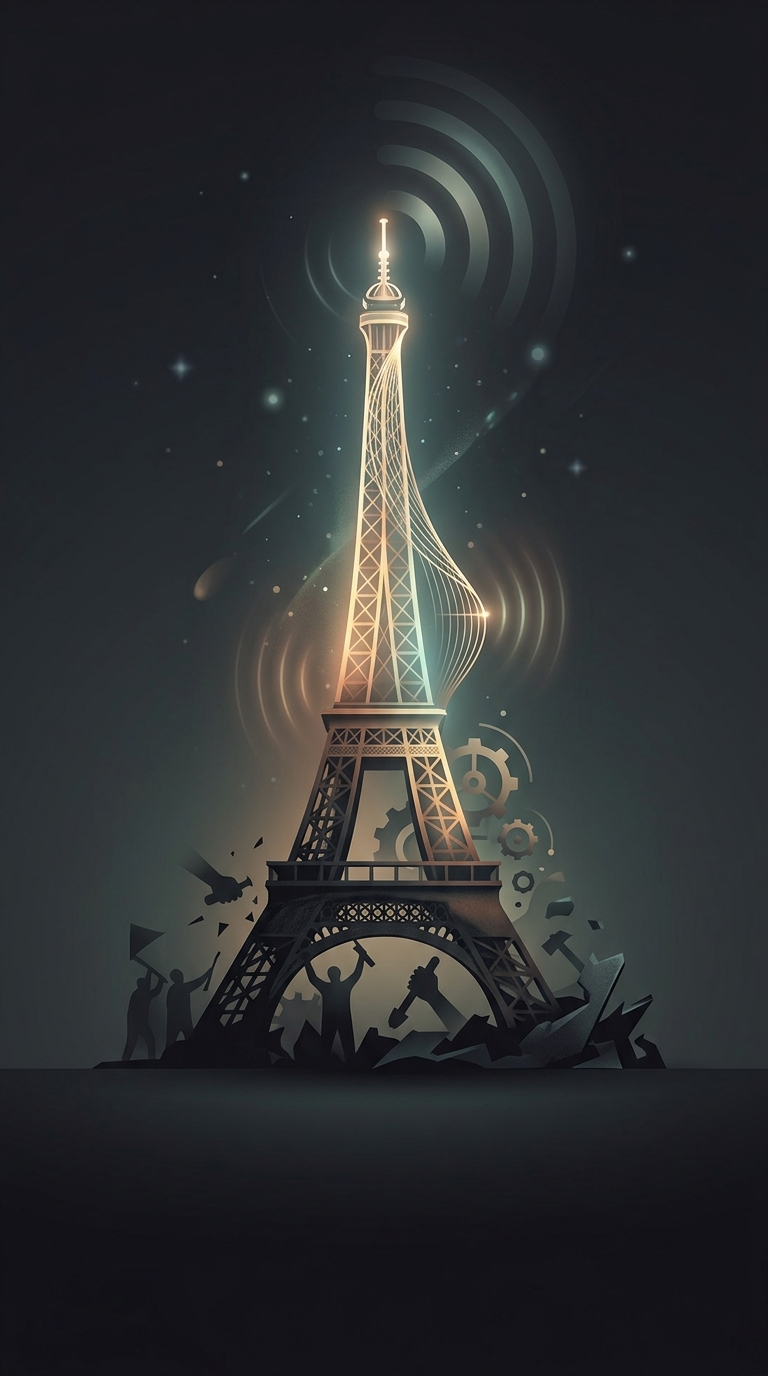
After dark, the tower’s appearance comes from more than its familiar outline. The designed illumination transforms the structure into a bright, changing spectacle, so a nighttime image can reproduce both the public-domain architecture and the copyrighted lighting work at once. In practical terms, a personal snapshot and a commercial campaign are not treated as the same kind of use.
That is why the daytime silhouette is generally simpler to use commercially than its glowing counterpart. The ironwork may be free to depict, but the lights that make the tower unmistakably a nighttime landmark add a separate layer of rights.