Hands Are Hard to Draw From Pixels
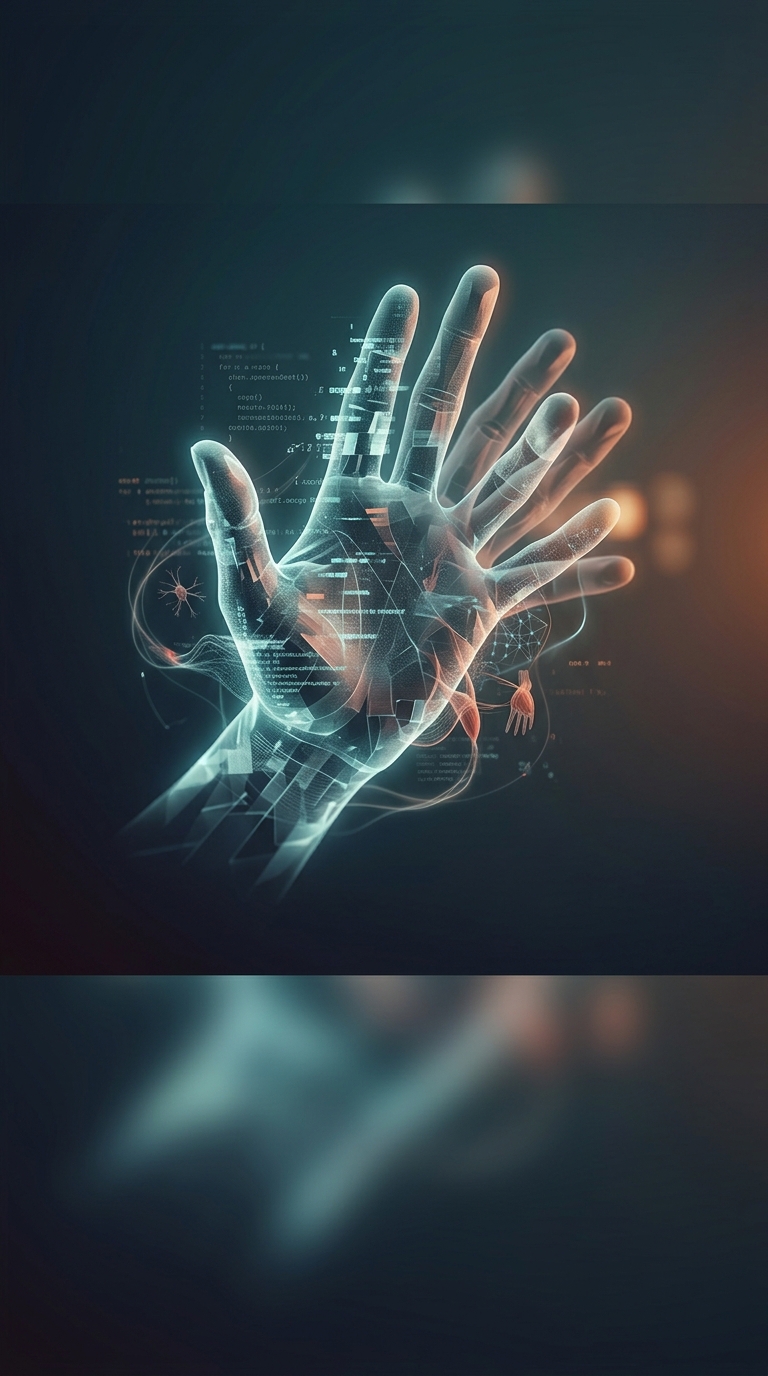
An image generator does not build a hand by placing five anatomically labeled fingers onto a palm. It learns patterns from images and their accompanying text, then generates an image that resembles those patterns. A hand may look like a simple shape to a person, but visually it is a dense arrangement of narrow, overlapping parts: fingers bend, cross, disappear behind one another, and change apparent length with perspective.
That makes hands unusually easy to misread. A partly hidden finger can look like two separate shapes; a crease or shadow can resemble a joint. The model must produce a plausible overall image while resolving all those small ambiguities at once.
The Model Learns Appearance, Not Anatomy
During training, a generator sees many images of hands from different angles, at different sizes, and in different lighting. It learns which visual patterns tend to occur together, but it does not necessarily learn a reliable rule that every ordinary hand has five digits. In a crowded scene, hands may occupy only a few dozen pixels, or be blurred, cropped, or obscured. Those imperfect examples make the pattern harder to learn consistently.
The generation process adds another challenge. Many image models refine a picture from rough visual structure toward finer detail. If the hand’s shape is already ambiguous at the rough stage, later refinement can turn that uncertainty into a convincing-looking but anatomically inconsistent finger. The error may be especially noticeable when a hand is prominent, because viewers know its structure well and can count the digits.
Why the Mistakes Are Less Common Now
Image generators have improved at hands through better training, higher-resolution generation, and techniques that let systems focus more closely on specific regions. Some tools can also regenerate or edit a small area after the first image is made. These methods reduce errors, but they do not make every hand reliable: unusual poses, overlapping fingers, and tiny background figures remain difficult cases.
The extra finger is not a deliberate design choice. It is a visible sign of a deeper limitation: producing a convincing pattern is not the same as understanding the object’s structure. A hand can look strikingly realistic at a glance and still fail the simple test of counting its fingers.