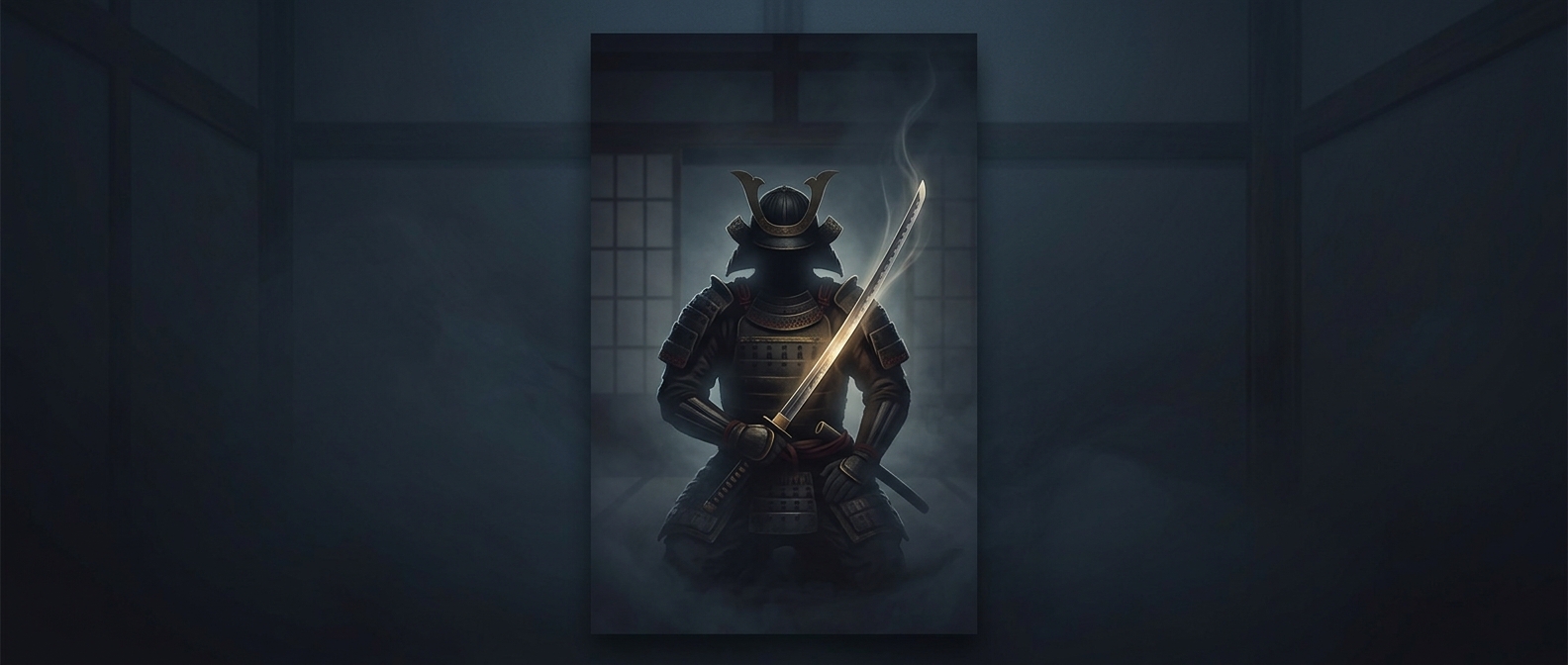
The katana was positioned for the draw
A katana was commonly tucked through the waist sash, or obi, with its cutting edge facing upward. That orientation let the wearer bring the hilt forward and draw the blade along a path that could flow directly into an upward cut. The sword did not have to be pulled out first and then turned around to put its edge in the right position.
The scabbard, called a saya, mattered too. In a quick-draw technique, the hands coordinate the scabbard and sword: one helps guide the saya while the other draws the blade. The result can be a single continuous action rather than two separate steps—draw, then prepare to strike.
A carrying choice shaped the technique
Edge-up carry made a fast attack possible, but it did not make every draw an automatic strike. The wearer still had to control the blade’s angle and movement; training turned the arrangement into a usable technique. The practical advantage was that the sword’s position at the waist already matched the direction of a cutting draw.
This way of wearing the katana also distinguished it from the earlier tachi, which was typically suspended from the waist with its edge downward. Changing how a sword was carried changed how it could be drawn: with the katana’s edge-up position, the first movement could already be part of the cut.