How a forge could turn iron into harder steel
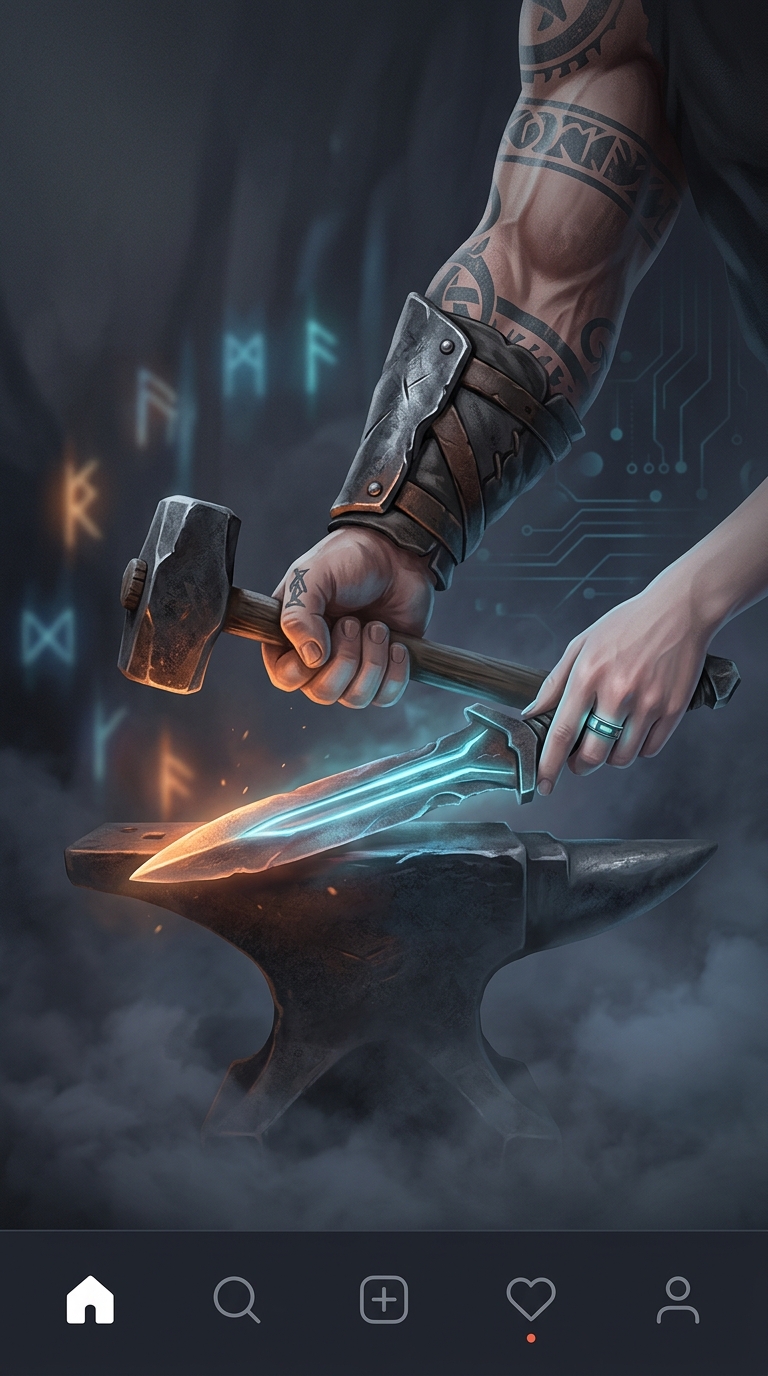
A Viking smith did not need a modern theory of chemistry to make steel. In a charcoal-fired forge, iron heated among carbon-rich fuel could absorb some carbon. That small change mattered: carbon makes iron harder, especially after the blade is heated and rapidly cooled, or quenched.
The process was difficult to control. A piece of iron might gain more carbon near its surface than deeper inside, and different parts of a bloom—the spongy mass of iron produced in a furnace—could vary in quality. A smith judged the result by familiar signs: how the metal worked under a hammer, how it held an edge, and how it behaved in use. The material could be improved through practice without anyone knowing carbon was responsible.
Hardness came with a tradeoff
A harder edge could stay sharp longer, but steel made too hard could become brittle and crack. Smiths therefore had to balance the edge against the blade’s need to withstand blows. Heating and cooling were practical tools for managing that balance, even when their underlying effects were understood through experience rather than scientific explanation.
This was not a single, deliberate invention of a secret “Viking steel.” Early medieval blades varied, and some famous high-quality swords may have relied on metal or techniques that traveled across long distances. But the forge offered a route to unexpectedly effective steel: ordinary materials, uneven charcoal heat, and accumulated craft knowledge could produce a blade tougher or sharper than its maker could explain in modern chemical terms.