A transplant experiment built around blood flow
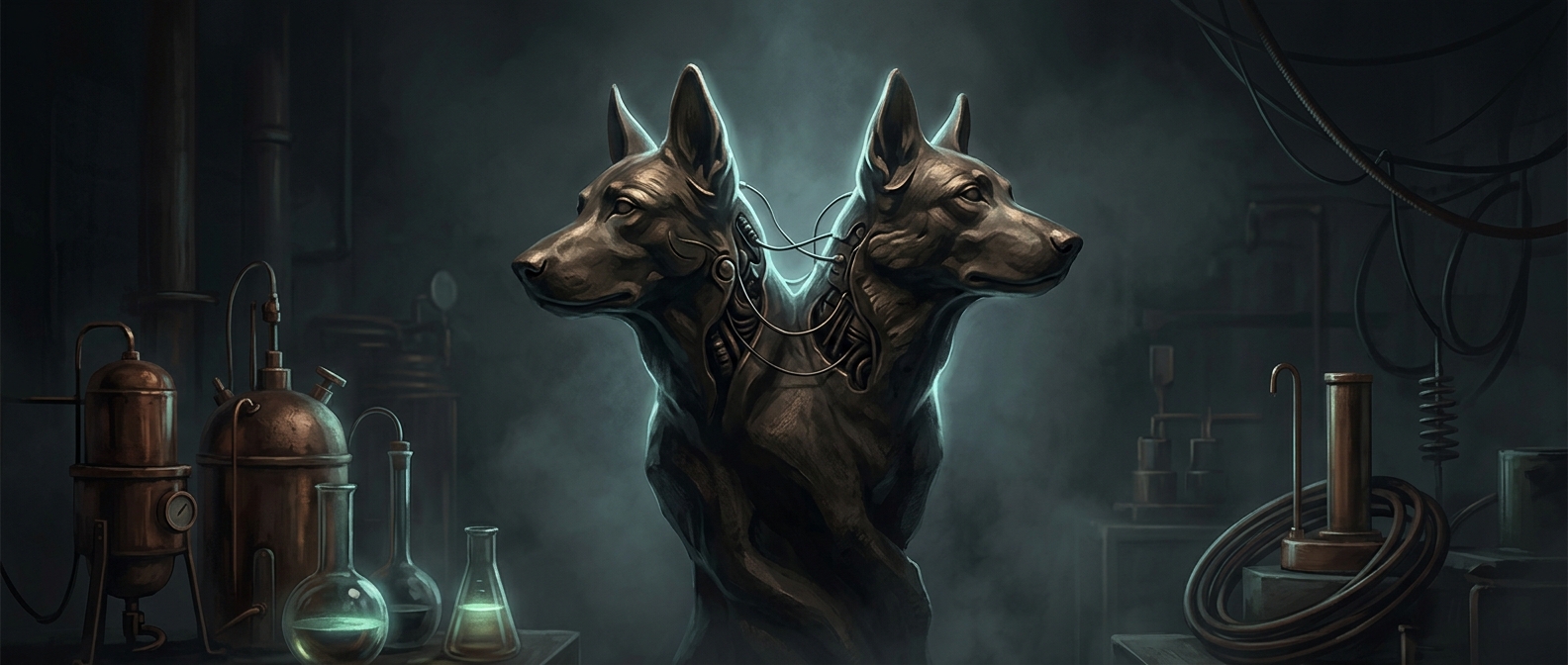
Vladimir Demikhov’s two-headed dog was not the result of joining two whole animals. In the early 1950s, the Soviet surgeon attached a puppy’s head and front legs to the neck and upper body of an adult German shepherd. The key challenge was keeping the grafted head alive: its tissues needed a continuing supply of oxygenated blood, just like any transplanted organ.
Demikhov connected major blood vessels so the adult dog’s circulation could serve both heads. The puppy’s head could show signs of life, including responding to its surroundings, while the larger dog remained the body sustaining it. The arrangement was a dramatic demonstration of vascular surgery—the repair and connection of blood vessels—but it did not create a stable, integrated animal.
What the demonstration could—and could not—show
The experiment addressed a practical problem for transplantation: a donor organ cannot function if surgeons cannot reconnect its blood supply. Keeping tissue perfused, or supplied with circulating blood, is one essential part of transplant surgery. Demikhov’s work helped make that challenge visible in an extreme form, but the two-headed animal was not a model for a complete head transplant. Connecting vessels could sustain tissue; it could not reconnect the spinal cord or make two nervous systems operate as one.
The dog survived only several days. That brief life exposed the distance between a surgical connection that works for a time and a transplant that can support an animal over the long term. The demonstration came at a grave cost: both animals were subjected to an invasive experiment, and neither could live normally. Its enduring significance lies in that tension—an advance in what surgeons could attempt, made inseparable from the suffering and limits of the method.