A keepsake from the end of Edison’s life
The story of the vial is also a story about Henry Ford’s regard for Thomas Edison. Ford had worked for the Edison Illuminating Company in Detroit before becoming known for automobiles, and he continued to admire the inventor. By the time Edison died in 1931, their connection had grown into a long friendship.
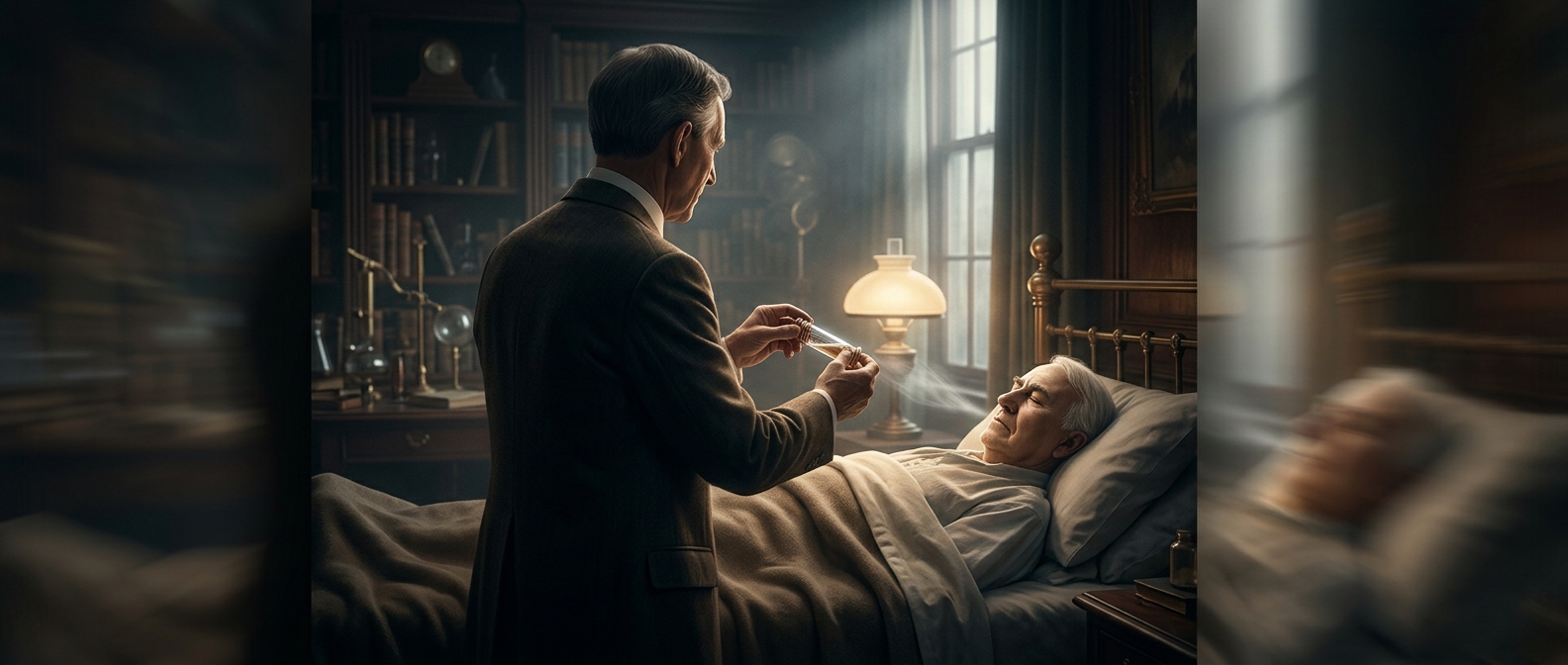
According to the account associated with the museum object, Ford wanted something tangible to remember Edison by. Edison’s son Charles reportedly caught air from his father’s bedside in a test tube, which Ford corked and kept. The tube’s importance lies less in what it could reveal about Edison’s final moments than in what it represented to Ford: a personal link to someone he regarded as a hero.
Why the vial still draws attention
A sealed tube makes an intimate, otherwise fleeting moment seem holdable. That contrast gives the object its force: it turns a private farewell into something that can be preserved, displayed, and passed on. The Henry Ford Museum’s possession of the vial also connects two influential figures through a small artifact rather than a machine or monument.
The claim that the tube contains Edison’s last breath remains part of the story attached to it, not a scientific measurement of the air inside. Its lasting significance is as a memorial—and as a reminder that even industrial titans could treasure an intensely personal keepsake.