A melody works like a command
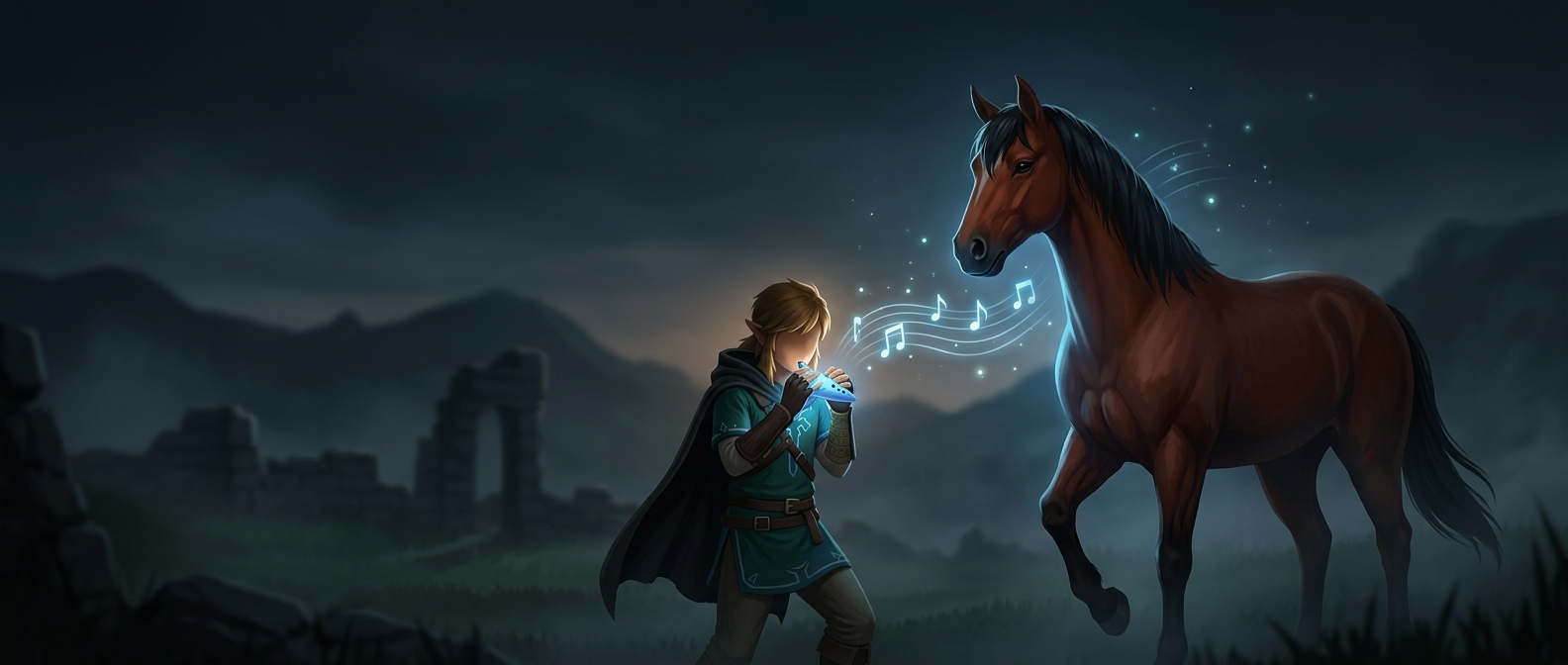
Epona’s response is tied to a particular six-note tune, not to the general idea of making noise or offering food. In The Legend of Zelda: Ocarina of Time, the player plays the melody on the ocarina; the game recognizes that sequence as a specific instruction and makes Epona appear when the game allows it.
That turns music into part of the control system. The ocarina is both an instrument and an interface: different tunes trigger different effects, and Epona’s Song has one clearly defined job. A whistle or carrot may suggest how someone might attract a real horse, but those actions are not inputs the game has assigned to this mechanic.
Remembering the tune is part of play
Because the command is a melody the player must learn and reproduce, calling Epona feels less like pressing a generic “summon” button. The song becomes a small piece of shared knowledge between player and game: recognize the notes, play them, and the world responds in a predictable way.
The memorable detail is that Epona is not summoned by any tune. The exact melody is the command.