How quad skates made dancing on wheels possible
Quad skates place four wheels in two pairs, one pair beneath the front of each foot and one beneath the back. That broad footprint gives skaters a steady base while they shift weight from edge to edge. Unlike skating straight ahead, dancing asks for repeated changes of direction: a quick pivot, a sideways glide, a stop held on the beat. The skate’s layout makes those moves easier to control.
The rink turns movement into choreography
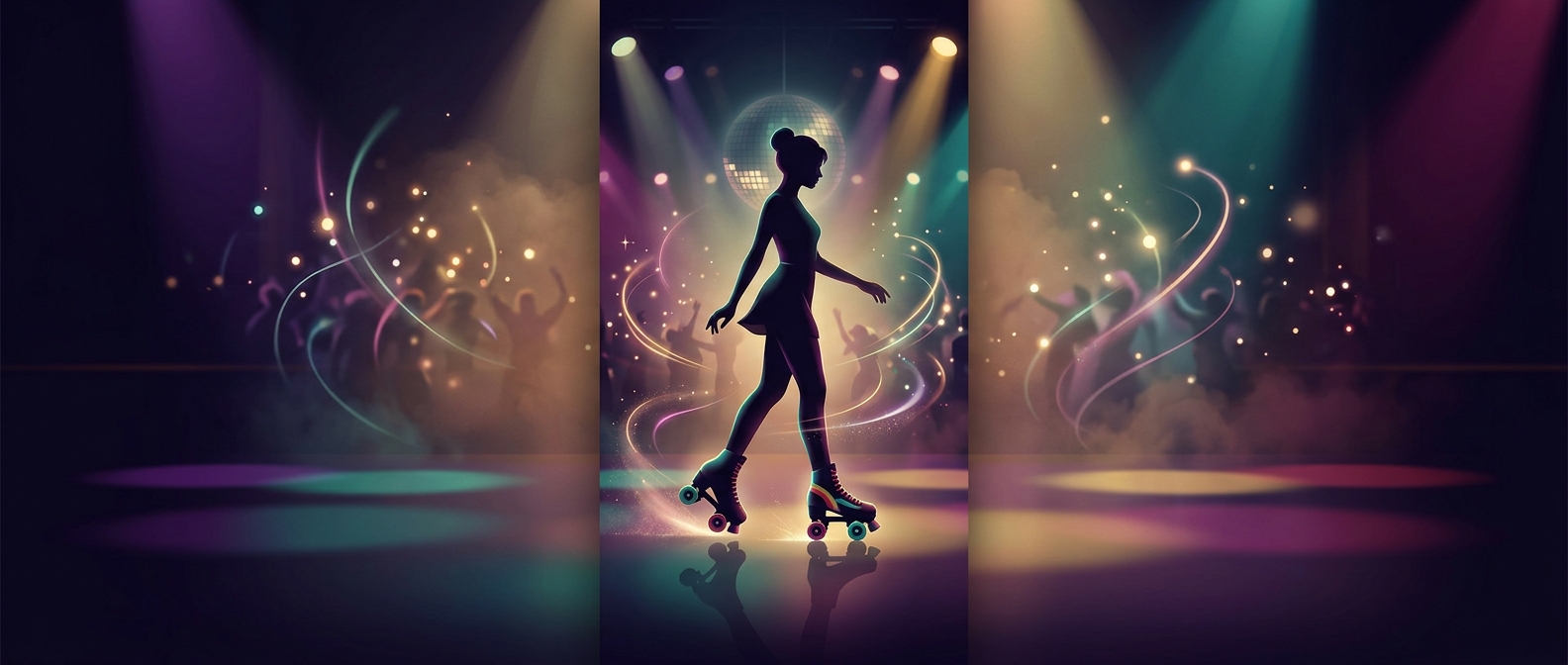
A smooth, enclosed rink gives dancers room to build speed without contending with traffic, curbs, or changing pavement. Its predictable surface also makes footwork more repeatable: skaters can practice the same turn or step until it fits the music. A steady disco beat helps organize the motion, giving each glide, shuffle, and pivot a rhythm to follow.
The result is a form of dancing that does not require a partner. Each skater can improvise alone, move in a group, or respond to the music in their own space. The rink becomes both dance floor and shared route, where people circulate while showing off individual styles.
Stability, with room for style
Four wheels do not make every maneuver effortless; balance and practice still matter. But the stable platform lets dancers make small, controlled adjustments rather than simply concentrating on staying upright. That is the key shift: the skates support not just travel across the floor, but expressive movement on it. A turn can become a dance step, and an ordinary lap around the rink can become part of the performance.