Why a Train Window Makes a Hello Feel Easy
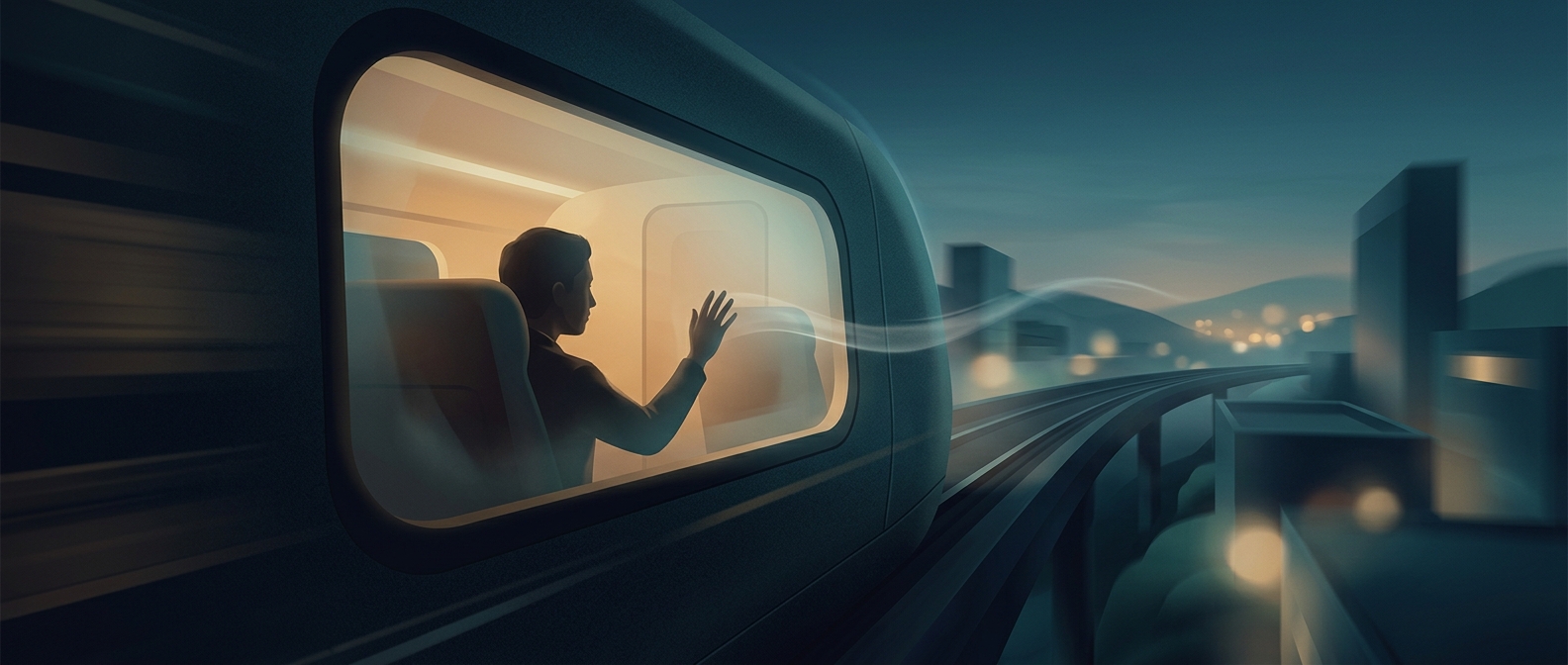
A moving train creates an unusual social arrangement: the people waving are close enough to see one another, but separated by glass and speed. The window acts like a frame, making a brief gesture legible without requiring the strangers to share a space or decide what to say next.
The train’s motion also sets a clear limit on the encounter. A wave can be returned—or missed—and then the view changes. Because the interaction ends on its own, it carries little of the pressure that can come with approaching someone who remains nearby.
A Small Exchange Along a Shared Route
For a moment, the train and the places beside the tracks become part of the same scene. Passengers see people and homes from a passing route; those outside see the train as it moves through theirs. The wave acknowledges that overlap without pretending the strangers know each other.
That is the charm of the gesture: it turns passing through someone else’s view into a tiny, mutual event. The train keeps going, but for an instant, two separate journeys have met.