Why One Phone Call Can Fill an Open Carriage
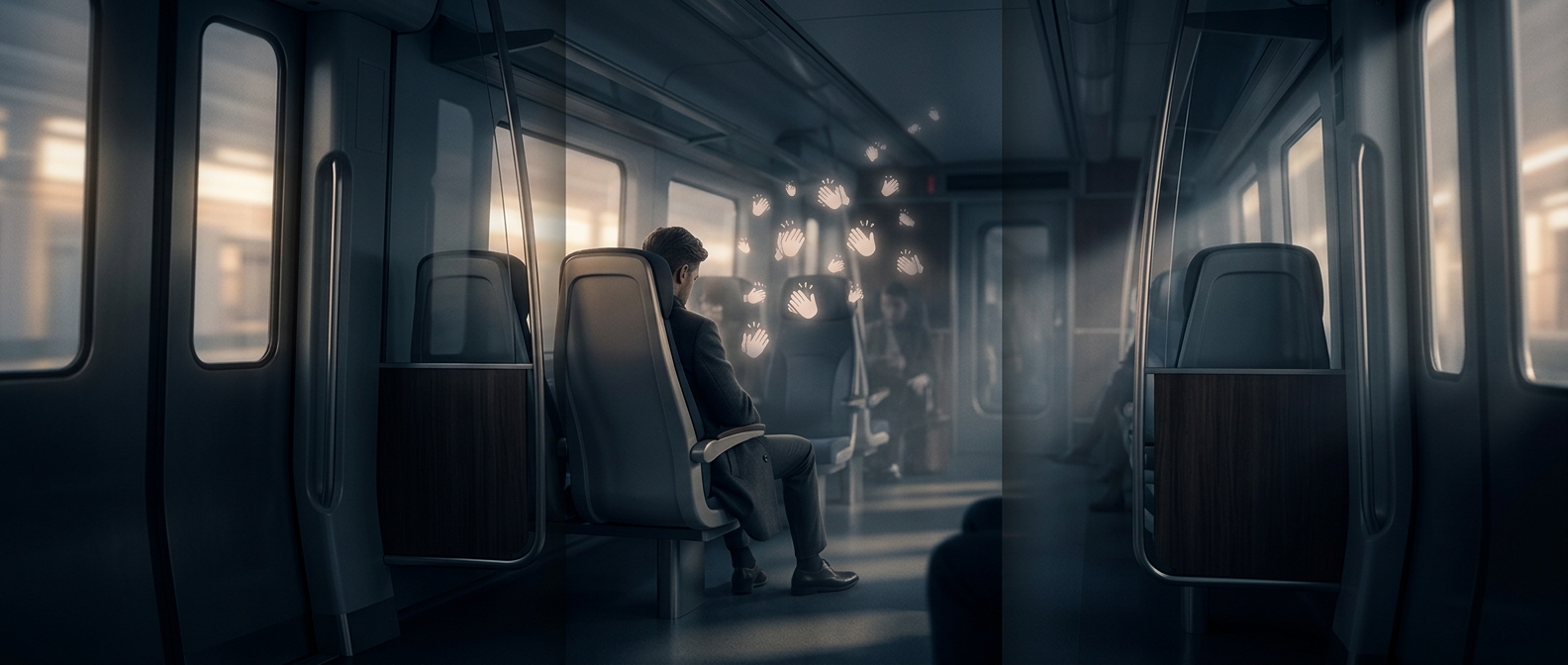
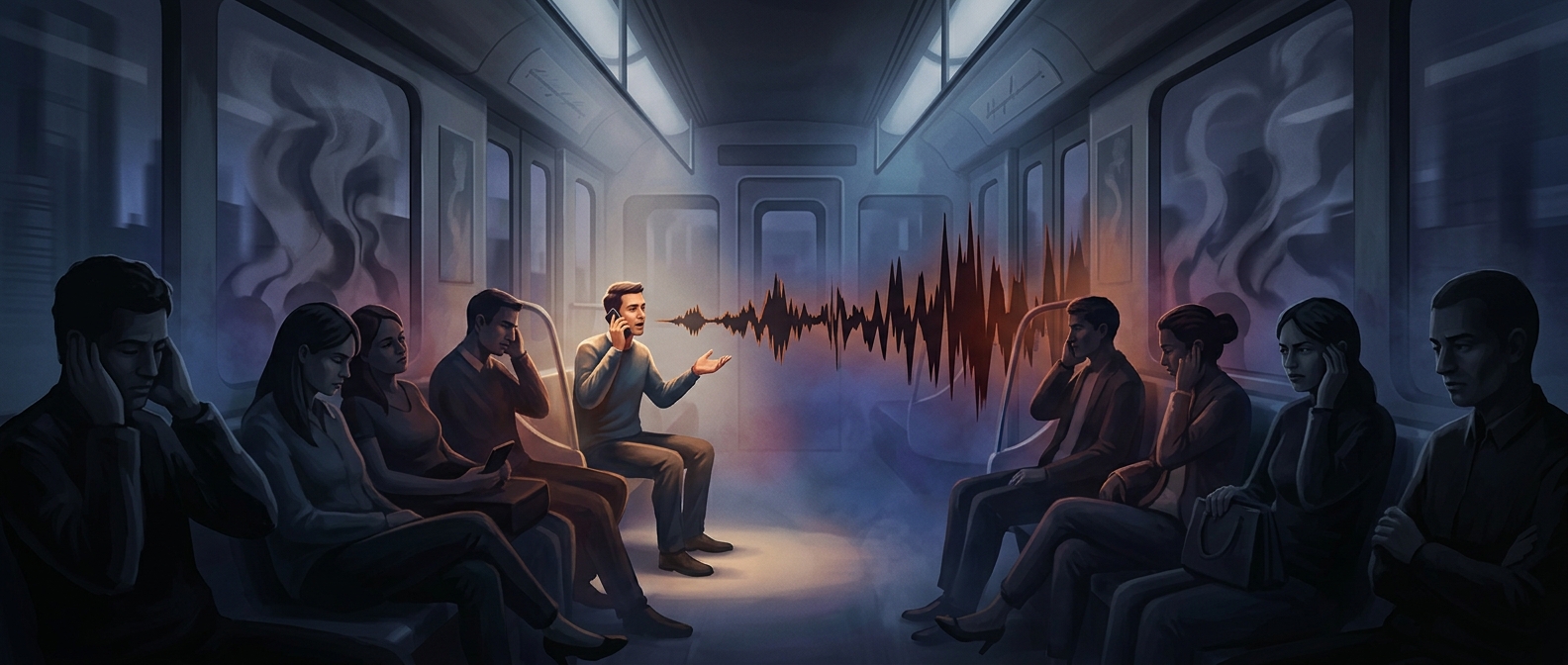
An open passenger carriage has no compartment doors or full-height walls to interrupt a conversation. A caller’s voice therefore has a relatively clear path across the shared seating area. The sound gets quieter as it spreads, but speech can remain understandable well beyond the person’s seat—especially when the carriage is calm and nearby passengers are not talking.
The carriage itself can add to the effect. Hard surfaces such as windows, floors, and ceilings reflect some sound rather than absorbing it, allowing voices to linger and blend with other noise. That does not make every call equally audible: distance, crowding, background noise, and the speaker’s volume all matter. But unlike a private compartment, the layout offers little acoustic separation between strangers.
Openness Trades Privacy for Shared Space
The same open layout makes it easier to move through the carriage and keeps passengers in one continuous space. Those advantages come with a social cost: people nearby cannot easily opt out of hearing a conversation. A call that would be ordinary in a private room can feel intrusive when its details reach a whole row of strangers.
That is why volume matters as much as the words themselves. Speaking loudly pushes the voice farther above the carriage’s background noise, making it easier for others to follow. In a space with no door to close, keeping a call quiet—or postponing it—is one of the few ways to restore a little privacy for everyone.