Where the color change begins
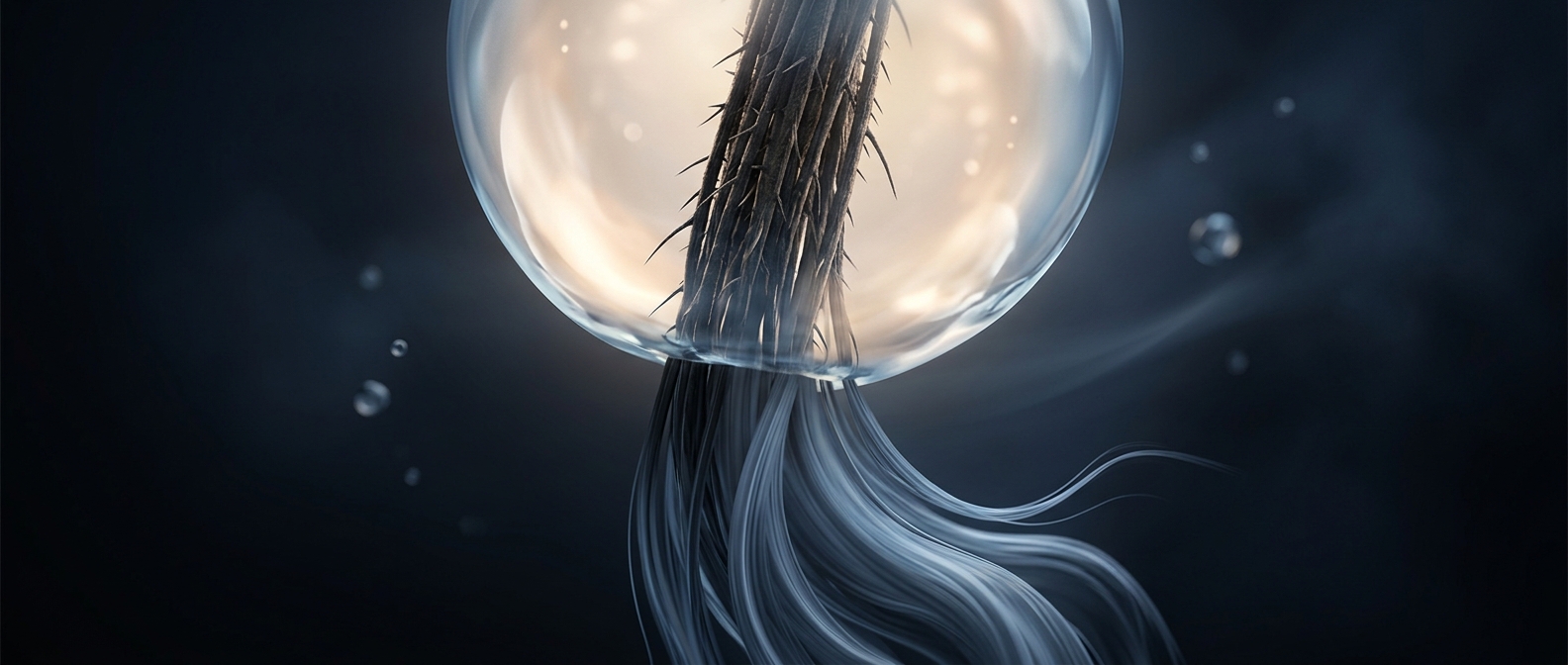
A growing hair strand gets its color before it emerges from the skin. In the follicle, pigment-making cells add melanin—the same family of pigments that colors skin—to the developing strand. Once that portion of hair has grown out, it is made of dead cells and cannot repair or recolor itself.
Follicles also produce small amounts of hydrogen peroxide as part of normal cell activity. The enzyme catalase helps break it down. If peroxide is not cleared effectively, it can interfere with the chemistry that makes melanin. Less pigment is then built into new hair, so the strand grows in paler or gray.
Why the change shows up over time
The key action is inside the follicle, not on the exposed hair. Sunlight and chemicals can fade or damage hair from the outside, but peroxide-related loss of pigment happens while the strand is forming. That is why a color change appears in new growth rather than spreading inward along an already-grown strand.
Aging and inherited traits influence when follicles lose pigment, and peroxide is one part of the process—not a complete explanation for every gray hair. The visible result is a record of what happened during growth: the same follicle can produce a differently colored strand as its pigment-making system changes.