Bread Made an Invisible Threat Concrete
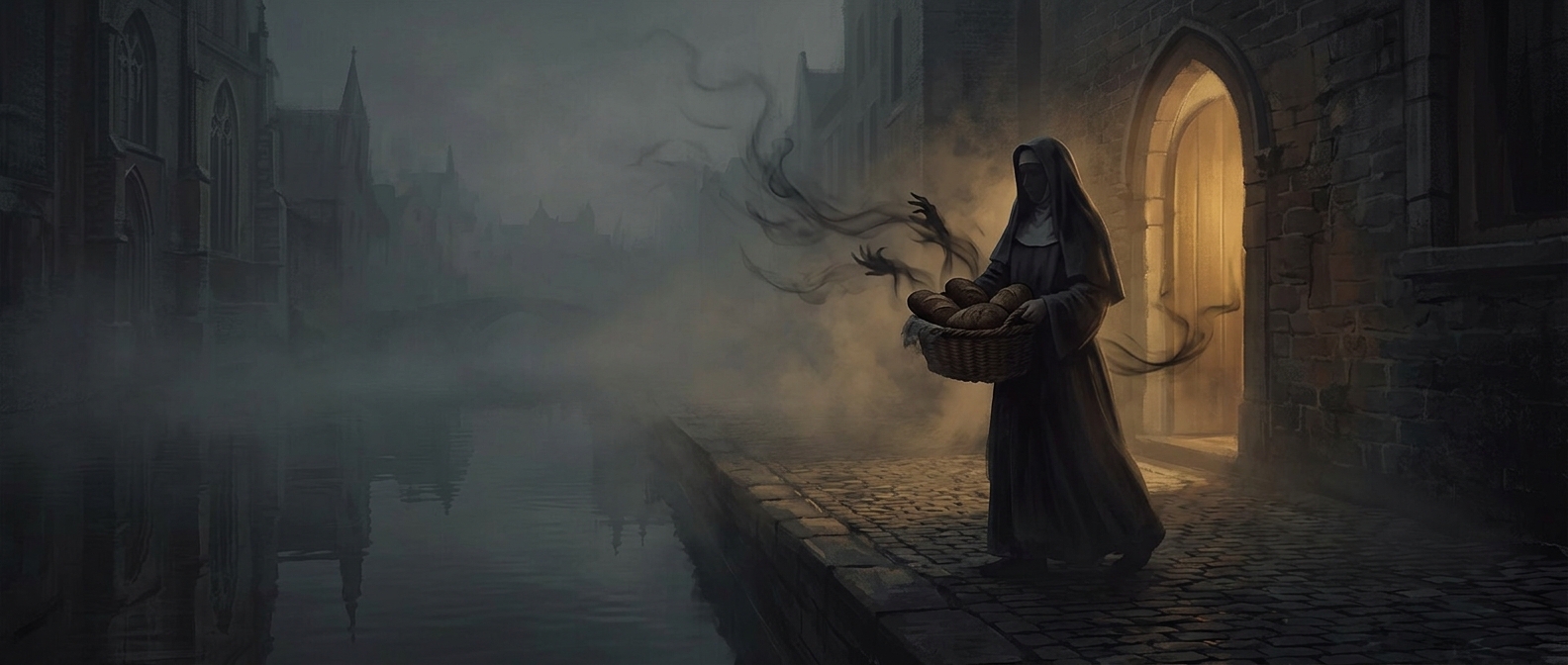
In the account, the alleged wizard’s bread gave the nuns’ distress a specific cause. A curse is difficult to see or prove; food can be touched, shared, and remembered as the moment trouble began. Calling it “demonic bread” turned an unseen spiritual danger into something with a place in the story: the convent’s meal.
That explanation belonged to a religious world in which demonic possession was understood as a real affliction, not simply a figure of speech. Unusual bodily behavior—such as vomiting, animal noises, or apparently impossible movement—could be read as evidence that an outside force had taken control. The reported acts therefore served as signs within the possession narrative, linking the nuns’ bodies to the suspected curse.
A Shared Story of Distress
The claim also connected individual episodes into one account. If several nuns were behaving strangely, the supposed bread supplied a common origin, while the wizard supplied an agent to blame. That does not establish what caused the reported events; it shows how people at the time could organize frightening behavior into a story of spiritual attack.
The striking detail is how ordinary food became the hinge of an extraordinary explanation: the bread was imagined not merely as something eaten, but as the means by which danger entered the convent.