When Advice Columns Supplied Both Sides of the Conversation
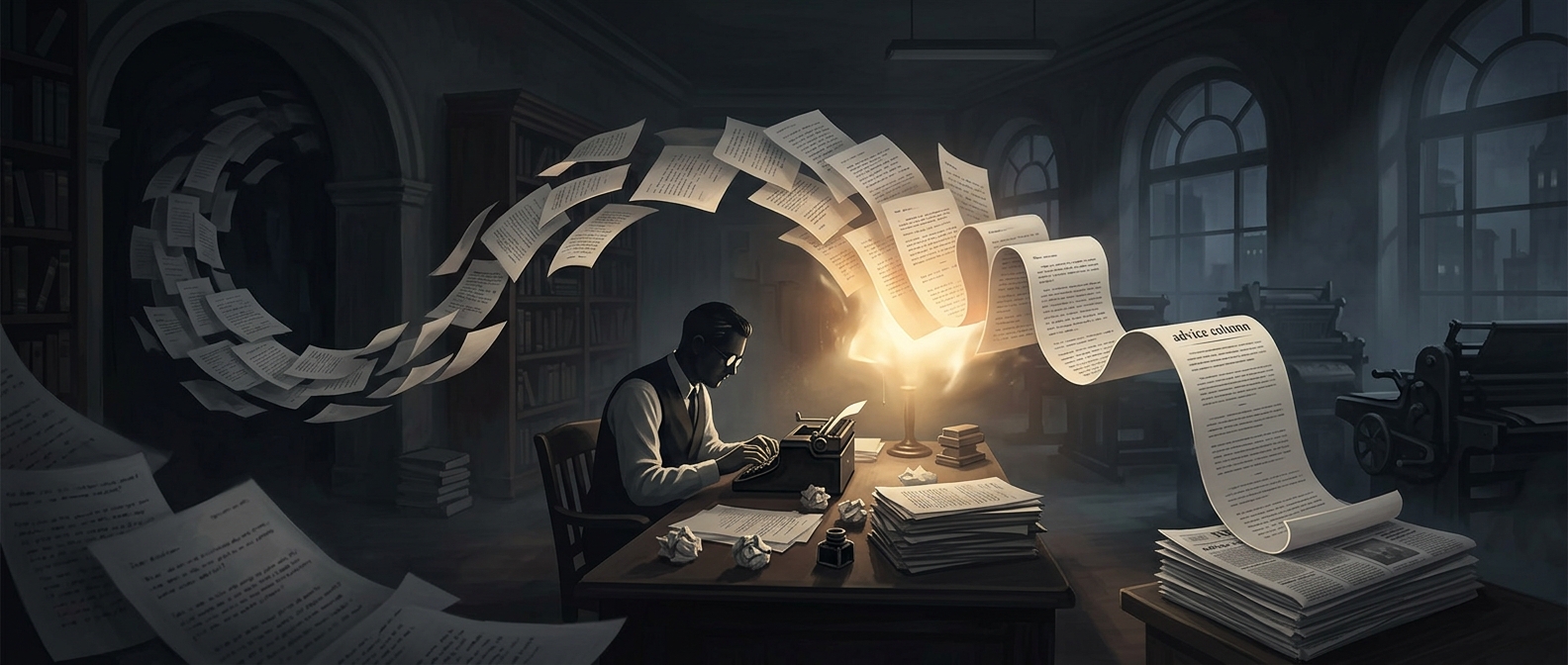
An advice column looked like a small public drama: a reader described a private problem, and a columnist replied. In some early newspapers, however, the same writer created both parts. The letter was not necessarily a message that had arrived in the mail; it could be a way to set up the answer.
A Ready-Made Shape for the Page
Newspapers needed material to fill their pages, and an advice column had a useful built-in structure. A question supplied a subject, a personal voice, and a reason for the columnist to speak. If genuine letters were scarce—or simply did not fit the space or topic—the writer could invent a plausible dilemma and respond to it.
That made the column more than a mailbox. It was also a form of authored entertainment and instruction, packaged as an exchange. A fictional question could let the columnist address a common worry without waiting for a reader to raise it, while the answer gave the piece its punchline, judgment, or practical guidance.
The Appearance of a Reader’s Voice
The device depended on readers accepting the letter as a conversational opening. Its everyday details could make advice feel personal and immediate, even when the exchange had been composed as a whole. That did not mean every letter in an early advice column was invented; it means the format could blur the line between reader correspondence and material written for the page.
The result was a column that seemed to answer its audience while also helping create the conversation it presented. A question and reply could fill space, entertain, and deliver advice in one compact feature.