A newspaper puzzle became a public argument
Crosswords arrived as a new kind of newspaper entertainment: readers filled numbered squares with words that fit both across and down. The format turned vocabulary and general knowledge into a small daily challenge, one people could work through at their own pace—and return to when they had a spare moment.
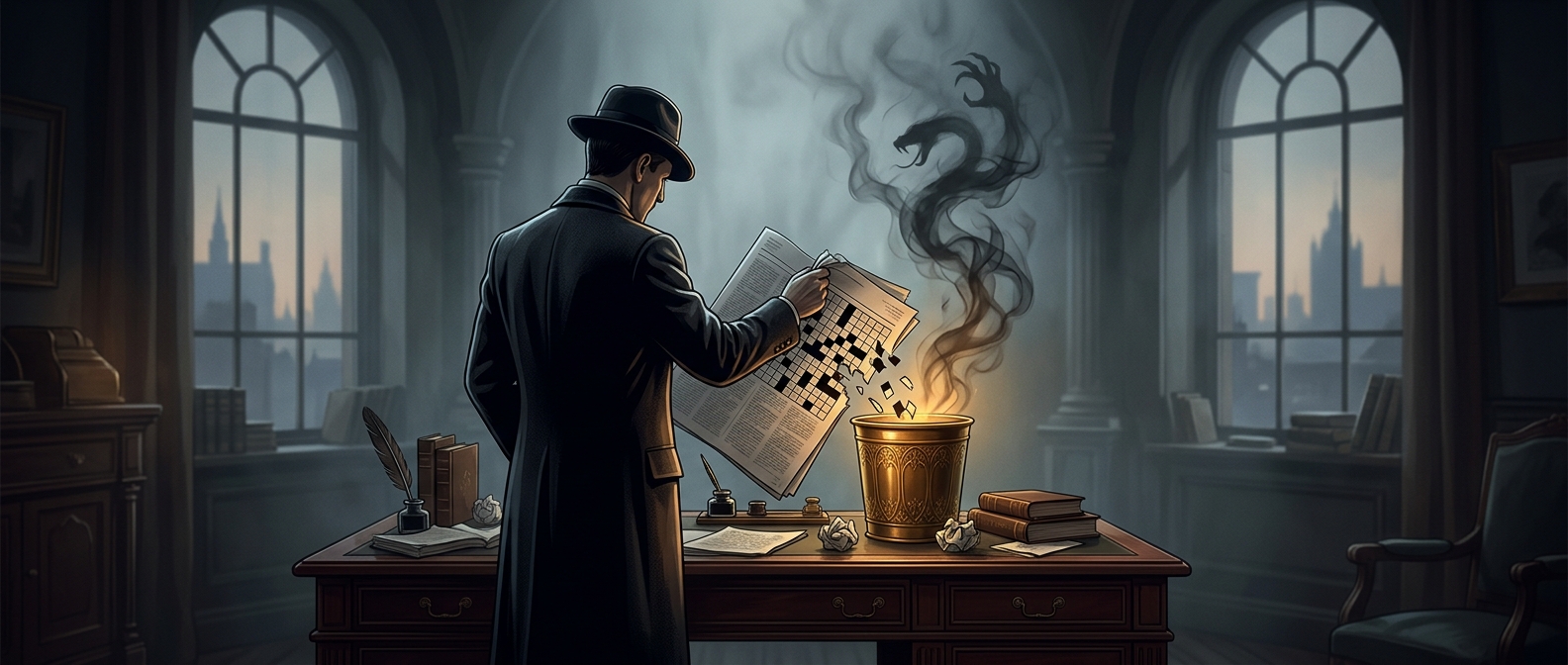
That ordinary appeal also made the puzzles easy to dismiss. Critics could frame time spent solving them as idleness, or as a distraction from more serious reading. Calling the pastime sinful was a moral judgment about how readers used their leisure, not a criticism of how the puzzle worked.
Reader demand changed the editor’s calculation
An editor’s initial contempt did not settle the matter. Readers wanted the puzzles badly enough that the paper eventually printed them. The reversal captures a basic tension in newspaper publishing: editors decide what belongs on the page, but audience response can make a supposedly trivial feature hard to ignore.
Once printed, a crossword offered more than a diversion. It gave readers a reason to linger over the paper and a recurring challenge they could share with other solvers. A pastime dismissed as a fad had become something readers were willing to demand—and an editor could no longer simply wave away.