Familiar symbols let a cartoon move quickly
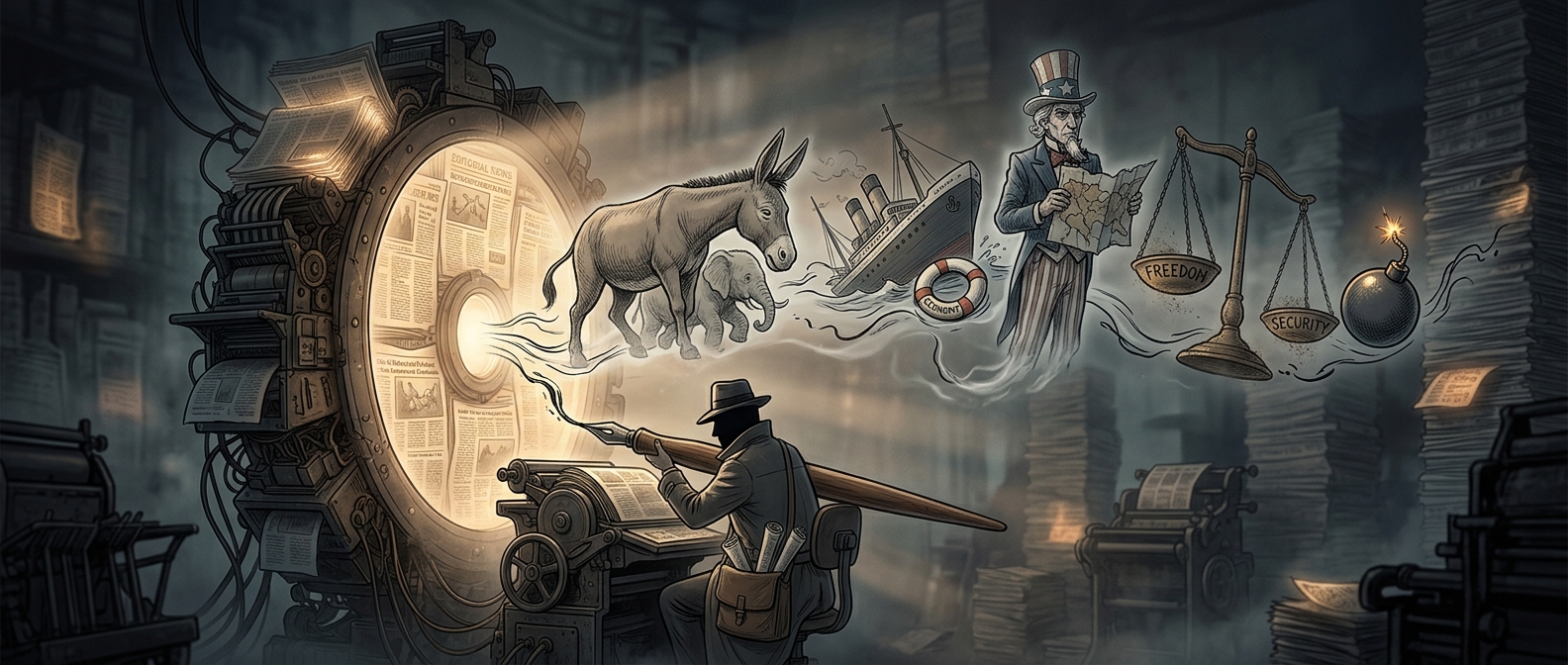
A political cartoon has little room to explain a complicated dispute. A sinking ship can suggest that an institution or policy is in trouble; an anchor can imply that something is holding it back. Because readers already recognize these images, the cartoonist can spend the space on the argument—who is steering, what is dragging the ship down, or who is watching it sink—instead of spelling out every premise.
That makes a symbol a kind of visual shorthand. Its meaning is not fixed like a dictionary definition: the labels, setting and characters around it steer the interpretation. A grim reaper, for instance, can stand for an approaching danger, but the cartoon’s details determine what that danger is and who is responsible.
Reuse creates both clarity and limits
When a recognizable image returns in a new cartoon, readers can compare the events without learning a fresh visual code each time. The repetition also gives artists a way to make a complicated subject legible at a glance, especially in a small printed space or a fast-moving news cycle.
The tradeoff is that a familiar symbol can become predictable or flatten a complicated story into a simple crisis. Cartoonists can refresh it by changing the scale, assigning it an unexpected role or placing it beside a sharply observed detail. The old image gets attention; the new context supplies the point.